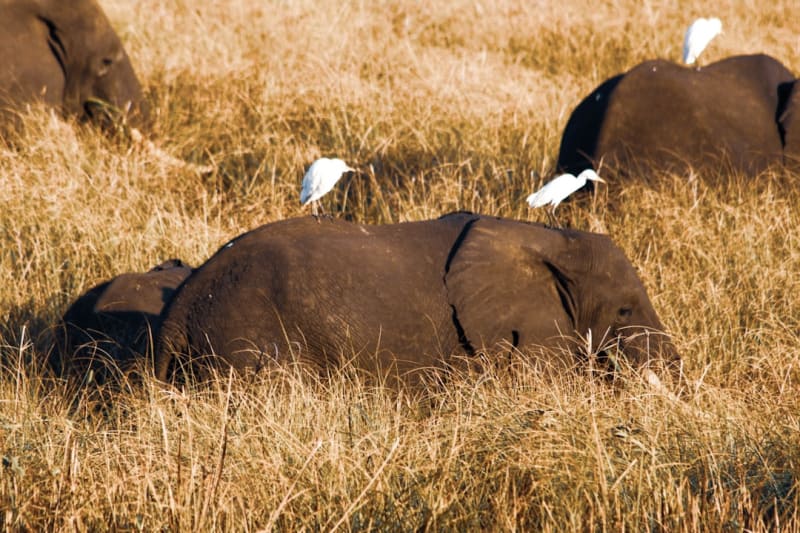
African Elephant Conservation in Mozambique (2026)
Mozambique's elephant population suffered a severe poaching crisis, falling from just over 20,000 to an estimated 10,300 in five years. Protection, landscape management and community partnerships remain essential to recovery, particularly in Niassa Reserve and Quirimbas National Park [1].

Quick answer: African elephant conservation in Mozambique remains a high-priority challenge in 2026. A Government of Mozambique and Wildlife Conservation Society survey reported an estimated 48% national decline in five years, from just over 20,000 elephants to approximately 10,300, with poaching identified as the main cause . Mozambique's recovery depends on effective protected-area management, intelligence-led law enforcement, habitat protection, community participation and reliable monitoring.
Last reviewed July 2026. Conservation data changes — see the cited sources for the latest figures.
Why elephant conservation matters in Mozambique
Mozambique contains extensive savanna, miombo woodland, coastal forest and wetland habitats that can support African savanna elephants (Loxodonta africana). The country is also part of a wider southern and eastern African conservation landscape, so elephants do not necessarily remain within national park boundaries. Protecting Mozambique's herds therefore requires cooperation across protected areas, community land and international borders.
African elephants are classified as Endangered, while African forest elephants (Loxodonta cyclotis) are classified as Critically Endangered . Mozambique's conservation focus is primarily on savanna elephants, although its forests and woodland habitats are also important for biodiversity. Elephants influence vegetation structure and help shape habitats used by other species; their loss can therefore affect wider ecological processes .
The country's conservation history includes both severe losses and important institutional responses. The Great Elephant Census found that Tanzania and Mozambique experienced the greatest declines recorded in the survey, with the two countries together losing an estimated 73,000 elephants to poaching over five years . A separate Mozambique survey, led by the national government with WCS and funded through partners including the Paul G. Allen Family Foundation and USAID, documented the national decline to approximately 10,300 elephants .
These figures are historical survey baselines rather than a new 2026 national census. Elephant numbers can change between surveys, and comparisons are most reliable when the same areas and methods are used. The IUCN African Elephant Specialist Group stresses that dependable population and distribution monitoring is necessary for targeting conservation action and assessing whether it works .
The main threats to Mozambique's elephants
Poaching for ivory
Poaching has been the most immediate threat to several Mozambique elephant populations. The national survey attributed the estimated 48% decline directly to rampant elephant poaching in the country's most important populations . The Great Elephant Census also identified Mozambique as one of the countries experiencing the most serious losses during the survey period .
Niassa Reserve illustrates the scale of the crisis. A U.S. Fish and Wildlife Service project summary reported that elephants in the reserve numbered fewer than 2,000 in 2018, less than 10% of the population estimated there a decade earlier . That project focused on strengthening anti-poaching operations in the Chuilexi Conservancy area of the wider Niassa landscape, in partnership with Fauna and Flora International .
Poaching is not only a wildlife issue. It is connected to organised criminal networks, the illegal ivory trade and the security of rangers and communities. The Mozambique survey described criminal gangs as a major force behind the decimation of elephants and forests . The IUCN has also warned that, although poaching had a stronger impact in eastern and central Africa, southern Africa—including Mozambique—was facing an emerging poaching threat during its assessment period .
Habitat loss and fragmentation
Elephants need large, connected landscapes because they travel between feeding, water and seasonal refuge areas. Roads, agriculture, settlement expansion, timber extraction and other land-use changes can reduce available habitat or divide formerly connected ranges. The IUCN identifies habitat modification as one of the principal threats to African forest elephants, alongside ivory poaching and human-elephant conflict .
In Quirimbas National Park, land-use and land-cover changes between 1979 and 2017 were examined in published research cited in the conservation literature . The park's coastal and woodland setting makes landscape management especially important: conservation must account for wildlife habitat while recognising that people depend on surrounding land and natural resources.
Human-elephant conflict
When elephants move through cultivated areas or near settlements, they can damage crops, threaten livelihoods and create safety concerns. Communities may then experience elephants as a cost rather than an asset. The IUCN lists human-elephant conflict among the principal threats to forest elephants , and WWF describes community-based wildlife management as a way to link elephant protection with benefits for local people .
Conflict mitigation is therefore not an optional addition to anti-poaching work. Measures need to be designed locally and supported over time. They can include land-use planning, better information about elephant movements, practical crop-protection methods and systems that ensure communities have a meaningful role in decisions about wildlife and protected areas.
Climate pressure and drought
Climate variability can change the availability of water and forage, alter elephant movements and increase contact between elephants and people. A 2026 study using 19 years of GPS data examined how African elephants change space use and habitat selection across drought timescales . The research underlines why conservation planning needs to account for changing drought duration, frequency and intensity rather than treating elephant ranges as static.
For Mozambique, this means protecting seasonal movement routes and water-dependent habitats is important even where a landscape currently appears sufficiently large. Drought can push elephants beyond protected-area boundaries, increasing both conflict risk and exposure to illegal killing.
What is being done to protect elephants?
Protected-area law enforcement
Effective protected-area management is the foundation of elephant protection. The Chuilexi Conservancy project in Niassa Reserve was designed to strengthen anti-poaching operations and monitoring, benefiting elephants as well as other wildlife including lions and buffalo . Its activities included support for field protection and monitoring, demonstrating the practical importance of funding patrol capacity rather than relying only on national policy commitments.
WWF reports that it supports governments with elephant conservation strategies, population surveys, CITES implementation and the Monitoring the Illegal Killing of Elephants system, commonly known as MIKE . WWF also describes work to train park guards, villagers and communities in elephant conservation and management, including a park-management partnership in Quirimbas National Park .
Law enforcement is most effective when it combines ranger patrols with intelligence, usable communications, case preparation and cooperation between agencies. Conservation organisations and governments increasingly describe this as intelligence-led protection rather than simply increasing patrol kilometres. The available Mozambique research supports the need for this approach because the national decline was linked to criminal gangs rather than isolated opportunistic hunting .
Monitoring and evidence-based management
Reliable monitoring helps managers distinguish a genuine population recovery from a temporary change in sightings. The Great Elephant Census provided a standardised continent-wide baseline for savanna elephants, while the IUCN African Elephant Database brings together aerial surveys, dung counts and expert information for status assessments .
Carcass data can also reveal illegal killing. Our World in Data reports a 2016 carcass ratio of 32% for Mozambique, compared with an Africa-wide ratio of 11.9%; a carcass ratio above 8% is generally associated with a shrinking population because deaths exceed the replacement rate . These figures should be interpreted as survey-period indicators, not as a current 2026 poaching rate.
Newer monitoring methods are also relevant. GPS tracking can show how elephants respond to drought and changing habitat conditions . Acoustic monitoring, aerial surveys, ranger observations and carcass recording can complement one another, particularly in large landscapes where no single method provides a complete picture.
Community conservation and responsible tourism
Long-term elephant conservation cannot be delivered by rangers alone. People living near parks and wildlife corridors need safe, predictable and fair relationships with conservation authorities. WWF's work in Mozambique includes community-based wildlife management plans intended to protect elephants while providing benefits to local people . This principle is particularly important where elephants leave parks and enter farming landscapes.
Tourism can contribute when it creates legitimate local income, supports conservation employment and gives protected areas a reason to remain economically valuable. However, the existence of tourism does not automatically prove that money reaches conservation or communities. Travellers should ask lodges and operators how park fees, conservation levies, employment and community partnerships are managed.
Visitors can compare options using SafariFind's guide to Mozambique safari lodges with wildlife viewing, while travellers planning a first trip can use the overview of Mozambique safari routes for 2026. Travellers can book conservation-supporting safaris on SafariFind, but should still verify each operator's claims, conservation partners and community commitments before paying.
Results and setbacks: what the evidence shows
| Evidence | What it indicates | Important limitation |
|---|---|---|
| Approximately 48% national decline in five years | Poaching caused a severe reduction in Mozambique's elephant population | The survey is a historical baseline, not a 2026 census |
| Approximately 10,300 elephants in the reported national estimate | Mozambique retained a significant but heavily depleted population | Survey coverage and methods matter when comparing future estimates |
| Fewer than 2,000 elephants in Niassa Reserve in the 2018 project summary | Niassa faced an acute protection crisis and required strengthened anti-poaching work | The figure refers to the project period, not a current reserve count |
| 32% carcass ratio reported for Mozambique | The survey-period mortality signal was consistent with a declining population | Carcass ratios are not equivalent to an annual poaching percentage |
| Community and park-management initiatives in Quirimbas | Conservation planning can link habitat protection with local livelihoods | The research does not provide a quantified national recovery result |
The overall picture is therefore mixed. Mozambique has clear conservation partners, protected landscapes and tested tools for monitoring and protection. It also experienced one of the continent's most serious elephant declines, and the supplied research does not establish a nationwide 2026 population recovery. Claims of success should be judged against transparent population surveys, carcass trends, ranger performance, conflict outcomes and evidence that communities benefit.
How travellers can help responsibly
- Choose operators that identify their park-management partners, conservation fees and community programmes rather than using vague sustainability language.
- Follow guide instructions and keep a respectful distance from elephants. Do not pressure guides to approach animals, block movement or create stressful sightings.
- Never buy ivory or other wildlife products. Illegal ivory demand is directly linked to the poaching threat documented in Mozambique .
- Support lodges and conservancies that employ local residents, purchase locally where possible and explain how tourism benefits surrounding communities.
- Consider the full trip footprint, including flights, vehicles, water use and waste, while remembering that conservation claims should be supported by evidence.
- Use reputable health and entry guidance before travel. SafariFind's resources on Mozambique vaccinations and health rules and Mozambique visa requirements address practical planning questions; these travel matters are separate from elephant conservation outcomes.
Planning searches that need country-specific answers
Travellers often compare zanzibar vs mozambique, search for the best time of year for wildlife viewing in serengeti, or look for reviews of tanzania safari companies specializing in wildlife photography. Those are different destinations and should not be used as evidence about Mozambique's elephant status. Similarly, the question do south africans need a visa for mozambique belongs in travel planning rather than conservation assessment. The responsible way to evaluate a Mozambique safari is to examine the specific park, operator, conservation partner and community model involved.
The outlook for African elephants in Mozambique
Mozambique's elephants can only recover if protection reduces illegal killing faster than populations are lost, while habitat remains connected and communities are able to live safely alongside wildlife. The country's priorities are clear: maintain capable law enforcement in Niassa and other key landscapes, improve monitoring, protect movement routes, reduce conflict and make conservation benefits visible to local people.
The most credible outlook is cautious rather than celebratory. Conservation partnerships provide practical tools and examples of responsible management, but Mozambique's historic population collapse and the lack of a supplied nationwide 2026 census mean that recovery should be demonstrated through new, comparable data. For travellers, supporting well-run protected areas and transparent local partnerships is one useful contribution—but it must complement, not replace, government responsibility and professional conservation management.
Frequently Asked Questions
How many elephants are left in Mozambique in 2026?
The research supplied does not provide a new nationwide 2026 census. The most recent national estimate cited here was approximately 10,300 elephants after a reported 48% decline in five years .
What is the biggest threat to elephants in Mozambique?
Poaching for ivory has been the principal documented threat, particularly in important populations such as Niassa Reserve . Habitat loss, human-elephant conflict and climate-related pressure also affect long-term survival .
What happened to elephants in Niassa Reserve?
A 2018 U.S. Fish and Wildlife Service project summary reported that Niassa's elephants numbered fewer than 2,000, less than 10% of the population estimated there a decade earlier .
Is Mozambique's elephant population recovering?
The available research confirms conservation action but does not establish a nationwide 2026 recovery. New comparable surveys, carcass monitoring and population trends are needed to demonstrate recovery .
Which organisations protect elephants in Mozambique?
The Government of Mozambique works with organisations including the Wildlife Conservation Society, WWF and Fauna and Flora International on surveys, protected-area management, community conservation and anti-poaching initiatives .
Where are elephants protected in Mozambique?
The research specifically identifies Niassa Reserve and Quirimbas National Park as important conservation landscapes. Niassa has been the focus of strengthened anti-poaching work, while WWF has supported park-management and community initiatives in Quirimbas .
How does tourism help elephant conservation in Mozambique?
Tourism can support protected areas, conservation employment and local livelihoods when fees and partnerships are transparent. Travellers should verify how an operator's money reaches conservation and communities rather than assuming every safari has the same impact.
What can tourists do to help Mozambique's elephants?
Choose transparent operators, follow wildlife-viewing rules, avoid ivory, support locally beneficial businesses and ask specific questions about conservation partnerships and community benefits.
Are African elephants endangered?
African savanna elephants are classified as Endangered, while African forest elephants are classified as Critically Endangered . Mozambique's elephant conservation work primarily concerns savanna elephants.
Why is elephant monitoring important in Mozambique?
Monitoring shows whether populations are declining or recovering and helps managers target protection. The IUCN African Elephant Specialist Group identifies reliable population and distribution data as essential for assessing conservation effectiveness .
Sources
- Govt of Mozambique announces major decline in national elephant population
- African forest elephant (Loxodonta cyclotis) status report
- The state of the world's elephant populations
- African Elephant Numbers Plummet 30 Percent, Landmark Survey Finds
- Poaching behind worst African elephant losses in 25 years – IUCN report
- Project summaries: African elephant 2018(official)
- Protecting and connecting landscapes stabilizes populations of the Endangered savannah elephant(official)
- African elephants: Giants of the savanna and forest
- Scientific Publications - Elephants Without Borders
Related to
Ready to start your safari adventure?
Explore curated safari packages and find your perfect African adventure with verified operators.