African Wild Dog Conservation in Kenya 2026: Status & Threats
Fewer than 7,000 African wild dogs remain in Africa, with Kenya's populations concentrated in northern rangelands. Habitat fragmentation, disease, and human-livestock conflict drive decline—but coordinated vaccination, community coexistence, and landscape connectivity programmes are showing measurable recovery.
Quick Answer: African Wild Dogs in Kenya Today
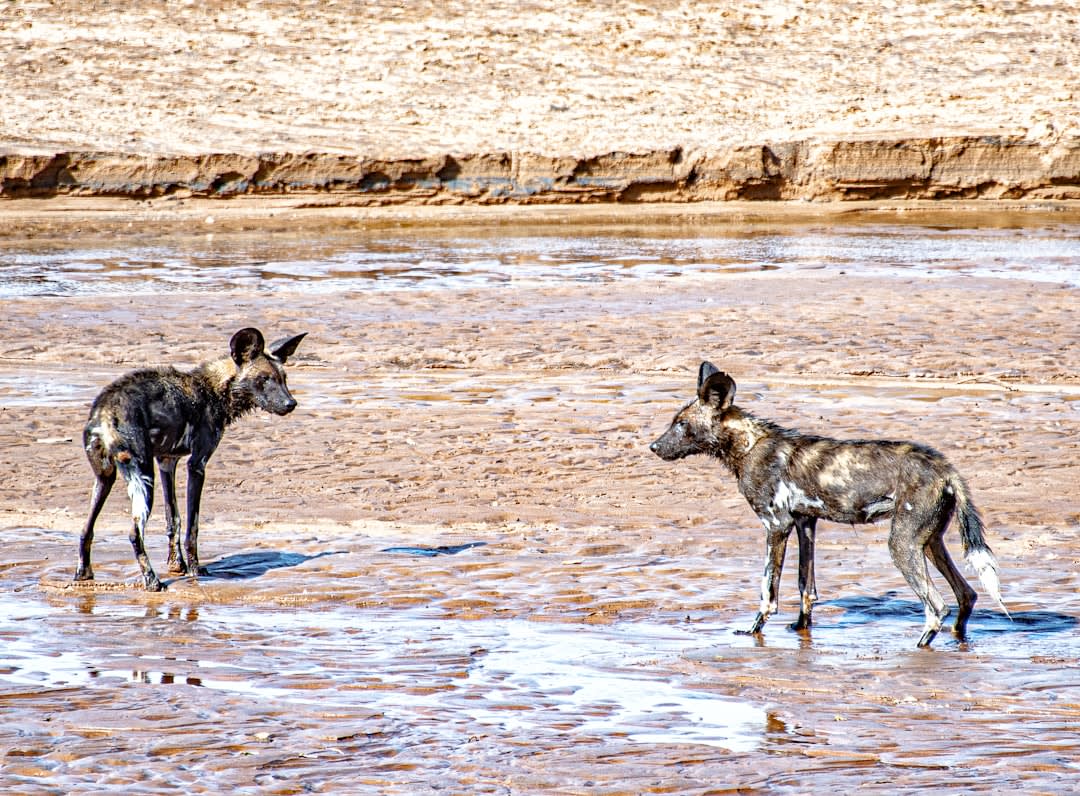
African wild dogs (Lycaon pictus) are classified as Endangered by the IUCN. Fewer than 7,000 individuals remain across all of Africa, with Kenya's populations primarily found in the northern rangelands of Laikipia, Samburu, and Isiolo counties. In 2024–2026, coordinated vaccination campaigns, community engagement, and habitat connectivity work are stabilizing some packs, though disease outbreaks and human-wildlife conflict remain acute threats.
Why African Wild Dogs Matter in Kenya
African wild dogs are apex carnivores that regulate herbivore populations and maintain ecosystem balance across Kenya's arid and semi-arid rangelands. Unlike lions or leopards, they are highly social pack hunters with sophisticated cooperative behaviour—they care for wounded pack members, hunt collaboratively, and maintain a strict dominance hierarchy with minimal aggression. No two individuals have identical coat patterns, making them individually recognizable and valuable for long-term monitoring.
Kenya's wild dog populations represent a critical conservation frontier. The species historically ranged across the country but now survives almost entirely outside formal protected areas, on private and community lands where coexistence with pastoralists and their livestock is essential. This makes Kenya both a challenge and an opportunity: the survival of the species depends not on fortress conservation, but on learning to share landscapes with people.
Population & Distribution
Kenya's African wild dog population is concentrated in the northern rangelands. The Laikipia-Samburu-Isiolo landscape now harbours most of Kenya's remaining packs. Historical records show wild dogs once ranged near Mount Kilimanjaro and even along the Kenyan coast, but habitat fragmentation has compressed their range dramatically.
Individual packs are small. A single wild dog pack typically includes 7–15 individuals, though historically packs of up to 100 were recorded. Home ranges are enormous: average ranges span 300–800 km², with some packs ranging over 3,000 km². During denning season (when pups are being raised), ranges contract sharply to around 80 km².
The population remains precarious. A devastating distemper outbreak in Ol Pejeta Conservancy in recent years decimated the resident packs, demonstrating how quickly gains can be reversed. Recovery is possible—wild dog populations can rebound quickly with access to larger, continuous range—but only if disease and conflict are controlled.
Major Threats to Survival
1. Habitat Fragmentation & Landscape Conversion
The primary driver of wild dog decline is habitat loss and fragmentation. Rapid expansion of human settlements, agriculture, roads, and infrastructure breaks up the vast, continuous landscapes that wild dogs need. Fragmented populations become isolated, reducing genetic diversity and increasing vulnerability to local extinction.
Because wild dogs require such large home ranges (300–3,000 km²), they inevitably encounter humans and livestock. As human land use intensifies, available prey declines, forcing wild dogs to hunt livestock more frequently.
2. Human-Wildlife Conflict & Retaliatory Killing
When wild dogs kill livestock, pastoralists often retaliate by shooting or poisoning them—sometimes mistakenly blaming wild dogs for predation actually caused by lions or hyenas. This persecution is a leading cause of mortality in Kenya's rangelands.
Retaliatory killing is often driven by economic desperation: a single livestock loss can represent significant loss to a subsistence pastoralist. Without compensation or alternative livelihood support, tolerance for wild dogs collapses.
3. Infectious Disease
African wild dogs are susceptible to canine distemper, parvovirus, and rabies—diseases spread by domestic dogs. Contact with human settlements and feral dog populations exposes wild dogs to these pathogens. Rabies has been a major factor in recent local extinctions across East Africa.
The 2023 distemper outbreak at Ol Pejeta Conservancy killed resident packs in a matter of weeks, underscoring how rapidly disease can erase conservation gains. Larger populations have greater capacity to recover from disease outbreaks; small, isolated packs often go extinct.
4. Road Mortality & Snares
Wild dogs travelling on roads face collision risks from speeding traffic. Wire snares set by bushmeat poachers also cause significant mortality, as wild dogs are caught attempting to escape the landscape or hunt in snare-dense areas.
Conservation Programmes & Organisations at Work
The Rangewide Conservation Program for Cheetah and African Wild Dog (ZSL/WCS)
The Zoological Society of London (ZSL) and Wildlife Conservation Society (WCS) jointly lead the most comprehensive wild dog conservation effort in Kenya. Dr Sarah Durant (ZSL/WCS) heads the Rangewide Conservation Program, which operates entirely outside protected areas on private and community lands in Laikipia, Samburu, and Isiolo counties.
The programme's four core objectives are:
- Develop sustainable coexistence tools for wild dogs, cheetahs, people, and livestock
- Understand and manage infectious disease risks (particularly rabies and distemper)
- Identify and protect landscape corridors and connectivity
- Promote community engagement and livelihood alternatives
Samburu-Laikipia Wild Dog Project (MPALA Research Centre & Zoological Society of London)
The Samburu-Laikipia Wild Dog Project, coordinated through MPALA Research Centre in partnership with ZSL, combines field research with community-based intervention. The project focuses on:
- Volunteer-based dog vaccination campaigns to eliminate human rabies and protect wild dog populations
- One Health approaches integrating human public health, domestic animal health, and wildlife conservation
- Conflict resolution mechanisms, including fair-price compensation for livestock losses
- Knowledge sharing between communities, rangers, and conservation teams
The project has trained community health workers to vaccinate domestic dogs against rabies, protecting both human public health and wild dog populations.
Protecting the Pack: African Wild Dog Conservation in Kenya (Fauna & Flora International)
Fauna & Flora International supports wild dog conservation across Kenya, Mozambique, and South Sudan. In Kenya, the organisation has documented both successes and setbacks: the Ol Pejeta Conservancy pack showed remarkable recovery before the 2023 distemper outbreak. Fauna & Flora's work emphasises that wild dog populations can rebound quickly if given access to larger, continuous range and if disease and conflict are managed.
IUCN SOS African Wildlife Initiative
The IUCN's SOS African Wildlife Initiative has awarded grants totalling €10.8 million to 91 civil society organisations across sub-Saharan Africa, with 70% being national organisations. In Kenya, grants support long-term threatened species programmes and rapid-action emergency response for wild dogs and other carnivores. The initiative has helped place approximately 40 million hectares of key wildlife habitats under improved management and develop 37 action plans for better species protection.
Vaccination Campaigns & Disease Management
Rabies vaccination is a cornerstone of wild dog conservation in Kenya's rangelands. The Samburu-Laikipia project and partner organisations have mobilised volunteer-based campaigns to vaccinate domestic dogs in communities adjacent to wild dog range. This protects both human health (rabies kills an estimated 59,000 people globally per year) and wild dog populations by reducing pathogen spillover.
Domestic dog vaccination is cheaper and more sustainable than vaccinating wild dogs directly, and it builds community support for conservation.
Landscape Connectivity & Protected Areas
Wild dogs require continuous, large-scale landscapes to survive. Kenya's protected areas alone are insufficient—most parks are too small to support viable wild dog populations. The solution is landscape connectivity: identifying and protecting wildlife corridors that allow wild dogs to move between fragmented habitats.
The Rangewide Conservation Program is mapping these corridors in the Laikipia-Samburu-Isiolo landscape, identifying key movement routes and working with private and community landowners to maintain them. This approach recognises that wild dogs' survival depends on sharing land with people, not on removing people from the landscape.
Community Engagement & Coexistence Models
Kenya's wild dog conservation succeeds or fails based on community acceptance. Most wild dogs live on community and private lands where pastoralists depend on livestock for survival.
Conservation programmes are implementing coexistence tools:
- Livestock compensation schemes: Fair-price purchase of livestock killed by wild dogs, removing the economic incentive for retaliatory killing
- Improved livestock management: Training in predator-proof bomas (livestock enclosures) and herding practices
- Roadside warning signs: Alerting drivers to wild dog presence, reducing road mortality
- Employment opportunities: Hiring community members as rangers, guides, and research assistants
- Ecotourism benefits: Revenue from wildlife viewing that supports local economies
- Domestic dog management: Vaccination and sterilisation campaigns that protect both human and wildlife health
These interventions address the root cause of conflict: economic vulnerability. When communities see wild dogs as a source of income (through tourism, employment, and reduced disease burden) rather than purely as a threat, tolerance increases.
Tourism's Role in Funding & Awareness
Safari tourism in Kenya generates significant revenue, and community conservancies increasingly use wildlife viewing fees to fund conservation. Visitors to northern Kenya's rangelands can encounter wild dogs on guided safaris, and tourism revenue supports ranger patrols, community engagement, and research.
Responsible safari operators and lodges working in wild dog range contribute directly to conservation by employing local guides, funding anti-poaching patrols, and supporting vaccination campaigns. When booking a safari in Kenya, choosing operators committed to conservation amplifies the impact of your visit.
Results, Challenges & Outlook
Documented Progress (2019–2026)
- Vaccination scale-up: Community-based rabies vaccination campaigns have expanded across Laikipia and Samburu counties, protecting both domestic dogs and wild dog populations
- Pack monitoring: Long-term field studies have identified individual packs, tracked movements, and documented reproduction and mortality, enabling targeted interventions
- Landscape mapping: Identification of critical wildlife corridors has informed land-use planning and community engagement
- Funding mobilisation: IUCN SOS and other grant programmes have directed €25,000–€450,000+ to Kenyan wild dog projects, enabling sustained work
Ongoing Challenges
- Disease vulnerability: Small, fragmented populations remain at high risk of catastrophic disease outbreaks (as demonstrated by the 2023 distemper event at Ol Pejeta)
- Habitat pressure: Expansion of human settlements and infrastructure continues to fragment wild dog range
- Conflict persistence: Retaliatory killing still occurs when livestock losses are high and compensation is delayed or inadequate
- Road expansion: New roads in northern Kenya increase wild dog mortality and habitat disruption
- Funding gaps: Sustained conservation requires long-term funding; short-term grants limit programme continuity
Population Resilience & Recovery Potential
Wild dogs have demonstrated rapid recovery capacity when given larger, continuous range and protection from disease and conflict. The Ol Pejeta recovery (before the distemper outbreak) showed that even small populations can rebound within a few years with active management. This suggests that Kenya's wild dogs are not beyond recovery—but only if landscape connectivity is maintained, disease is actively managed, and community tolerance is sustained.
How Travellers Can Support African Wild Dog Conservation
Choose conservation-committed operators: When booking a safari in Kenya's northern rangelands, select operators and lodges that fund anti-poaching patrols, community engagement, and research. Ask about their conservation partnerships and contributions.
Support community conservancies: Stay in or donate to community conservancies in Laikipia and Samburu, where tourism revenue directly funds wild dog protection and community livelihood programmes.
Respect wildlife at a distance: Maintain safe distances from wild dogs and other predators to avoid disturbing pack behaviour, especially during denning season.
Learn and share: Educate yourself and others about wild dog ecology and conservation challenges. Awareness drives support for habitat protection and coexistence policies.
Advocate for landscape connectivity: Support policy initiatives that protect wildlife corridors and sustainable land use in Kenya's rangelands.
SafariFind helps travellers book wildlife-viewing safaris with conservation-minded operators across Kenya. By choosing operators committed to wild dog protection, your visit directly funds the vaccination campaigns, community engagement, and habitat monitoring that keep Kenya's wild dogs alive.
Last Reviewed July 2026
African wild dog conservation data changes regularly. See the cited sources below for the latest population estimates, disease reports, and programme updates.
Frequently Asked Questions
How many African wild dogs are left in Kenya?
Exact numbers for Kenya alone are not separately published, but Kenya's wild dog population is part of fewer than 7,000 individuals remaining across all of Africa. Kenya's populations are concentrated in the northern rangelands of Laikipia, Samburu, and Isiolo counties, with populations estimated at low densities due to habitat fragmentation. The most recent documented packs in Kenya number in the low dozens, making them highly vulnerable to disease and conflict.
Why are African wild dogs endangered in Kenya?
Wild dogs are endangered due to four main threats: (1) habitat fragmentation caused by human settlement and infrastructure, which breaks up the vast landscapes they need; (2) human-wildlife conflict and retaliatory killing when wild dogs hunt livestock; (3) infectious diseases like rabies and canine distemper spread by domestic dogs; and (4) road mortality and snares. All of these threats converge in Kenya's shared rangelands, where wild dogs live outside protected areas.
What is Kenya doing to protect African wild dogs?
Kenya's wild dog conservation relies on coordinated programmes by ZSL/WCS, Fauna & Flora International, MPALA Research Centre, and IUCN-funded initiatives. Key actions include: (1) community-based rabies vaccination campaigns, (2) livestock compensation schemes to reduce retaliatory killing, (3) landscape connectivity mapping to identify wildlife corridors, (4) long-term pack monitoring and research, and (5) community employment and ecotourism revenue schemes. These programmes operate on private and community lands in Laikipia, Samburu, and Isiolo counties.
Can visitors see African wild dogs on safari in Kenya?
Yes, wild dogs can be encountered on guided safaris in northern Kenya's rangelands, particularly in Laikipia and Samburu counties where community conservancies and private reserves operate. However, wild dogs are elusive and sightings are not guaranteed. When visiting these areas, choose operators that contribute to wild dog conservation through funding patrols, community engagement, and research.
How large are African wild dog home ranges?
African wild dog home ranges are enormous. Average ranges span 300–800 km², but some packs range over 3,000 km². During denning season (when pups are being raised), ranges contract to around 80 km². This massive space requirement is why wild dogs cannot survive in small protected areas and must share landscapes with human communities.
What is the biggest threat to wild dogs in Kenya right now?
Habitat fragmentation is the primary long-term threat, but infectious disease is the most acute short-term danger. The 2023 canine distemper outbreak at Ol Pejeta Conservancy killed resident packs in weeks, demonstrating how rapidly disease can erase conservation gains. Rabies remains a persistent threat across all of Kenya's wild dog range.
How do wild dog packs work?
African wild dogs live in packs averaging 7–15 individuals, though packs of up to 40 have been recorded. Packs have a strict social hierarchy dominated by a single breeding pair (usually monogamous for life). Unlike other canines, wild dogs show remarkable cooperation and minimal aggression—they care for wounded and sick pack members, hunt collaboratively, and have complex vocalisations including a distinctive bell-like contact call.
What role do community conservancies play in wild dog conservation?
Community conservancies in Laikipia and Samburu are critical because most wild dogs live on community and private lands outside protected areas. Conservancies generate tourism revenue that funds ranger patrols, anti-poaching efforts, community engagement, and livestock compensation schemes. They also employ local people as guides and rangers, creating economic incentives for wild dog protection.
How does rabies vaccination help wild dogs?
Rabies is spread to wild dogs through contact with infected domestic dogs, and it has caused local wild dog extinctions. Community-based vaccination of domestic dogs protects wild dogs by reducing the reservoir of infection in the landscape. This approach is more sustainable and builds community support than attempting to vaccinate wild dogs directly.
Can wild dog populations recover quickly?
Yes. Wild dog populations can rebound quickly when given access to larger, continuous range and protection from disease and conflict. The Ol Pejeta Conservancy demonstrated rapid recovery before the 2023 distemper outbreak. This suggests Kenya's wild dogs are not beyond recovery, provided landscape connectivity is maintained and vaccination campaigns continue.
Sources
- African wild dog facts | Fauna & Flora International
- Cheetah and wild dog conservation: Kenya Rangelands Wild Dog and Cheetah Project | ZSL
- Kenya Rangelands Wild Dog and Cheetah Project (ZSL) – Project Objectives & Field Work
- African wild dog conservation challenges and successes | Fauna & Flora International
- African Wild Dog | African Wildlife Foundation
- About Wild Dogs | African Wildlife Conservation Fund
- African Wild Dogs: Speed, Packs & Survival | WWF
- African Wild Dog – Challenges & Solutions | African Wildlife Foundation
- Canine disease threat to African wild dogs | Fauna & Flora International
- Samburu-Laikipia Wild Dog Project – MPALA Research Centre
- Kenya | IUCN SOS African Wildlife Initiative
Related to
Ready to start your safari adventure?
Explore curated safari packages and find your perfect African adventure with verified operators.


