Last reviewed August 2026. Conservation data changes — see the cited sources for the latest figures.
Quick answer: Safari tourism funds conservation in Mozambique through lodge and park revenue, private tourism concessions, community enterprises, conservation agreements and broader partnerships that strengthen protected-area management. In practice, tourism is one part of a mixed financing model: the Niassa Carnivore Project states that expensive activities such as anti-poaching are funded through philanthropy, while tourism income is directed towards Mozambique, Niassa Reserve and local communities.
Examples include African Parks’ management partnership with Mozambique’s National Administration of Conservation Areas (ANAC) in Bazaruto Archipelago National Park, community revenue-generating projects around Gorongosa National Park, and World Bank-supported programmes that used ecotourism and sustainable natural-resource businesses to support protected areas and rural livelihoods.
Why ecotourism and conservation funding matter in Mozambique
Mozambique’s protected landscapes include marine reserves, coastal wetlands, savannas, miombo woodlands and large transboundary conservation areas. These places support wildlife and local livelihoods, but conservation authorities and their partners must fund field operations, community engagement, ecological monitoring, infrastructure and law enforcement across difficult terrain.
The economic case for conservation is particularly important because more than 70% of Mozambique’s population relies on natural resources for income or subsistence, according to WWF. The same source describes ecotourism businesses as one of the ways people derive income from the natural environment. That creates both an opportunity and a responsibility: tourism should make intact ecosystems more valuable than destructive land uses, while ensuring that communities receive a fair share of the benefits.
Mozambique’s conservation system also depends on institutions beyond individual parks. The World Bank’s MozBio programme supported the technical, institutional and financial capacity of ANAC, BIOFUND and the National Fund for Sustainable Development (FNDS). Its design included tourism concessions, public-private partnerships, sustainable financing and livelihood support.
How does safari tourism fund conservation?
Visitors usually contribute through several connected channels rather than through one universal conservation charge. The exact flow of money depends on the park, concession, operator and agreement in place.
| Funding route | What it can support | Example from the research |
|---|
| Park and tourism revenue | Protected-area operations, visitor services and conservation management | African Parks reports gross park revenue within its 2022 management-account figures and manages Bazaruto with ANAC. |
| Tourism concessions | Lodges, camps, employment, infrastructure and private-sector investment linked to protected areas | MozBio supported ANAC’s proposed business capacity for public-private partnerships and tourism concessions. |
| Community enterprises | Alternative livelihoods and locally managed businesses that reduce pressure on natural resources | Gorongosa supported beekeeping, ecotourism and fish-farming projects with a combined reported value of US$200,469 in 2023. |
| Direct conservation tourism | Community conservation payments and reserve protection | The Niassa Carnivore Project reports that visitors to Mpopo Trails Camp directly contribute to community conservation, with a stated model targeting at least 70% of income to Mozambique and at least 50% to communities within Niassa Reserve. |
| Blended public and donor finance | Long-term institutional capacity, restoration and conservation-compatible development | MozBio closed with US$32.1 million for institutional strengthening and US$13.7 million for conservation-compatible rural development, according to the World Bank completion review. |
These mechanisms are complementary. A safari booking may pay for accommodation, guiding, transport and park access; a concession agreement may also create employment or fund infrastructure; and donor finance may cover the core conservation work that tourism cannot reliably fund.
Where safari tourism is supporting conservation
Bazaruto Archipelago National Park
The Bazaruto Archipelago is a marine conservation example rather than a conventional big-game safari destination. African Parks and ANAC signed a management agreement in 2017. African Parks describes the park as home to thousands of marine species and more than 6,800 people, with dolphins, sharks, whales, manta rays and turtles among its marine megafauna.
Tourism in a marine park can connect visitor spending with the protection of habitats and species, but the funding model remains broader than tourism alone. African Parks’ 2022 financial information shows grant funding, gross park revenue and endowment income as separate sources, demonstrating why protected areas need diversified finance.
Gorongosa National Park and the Cheringoma landscape
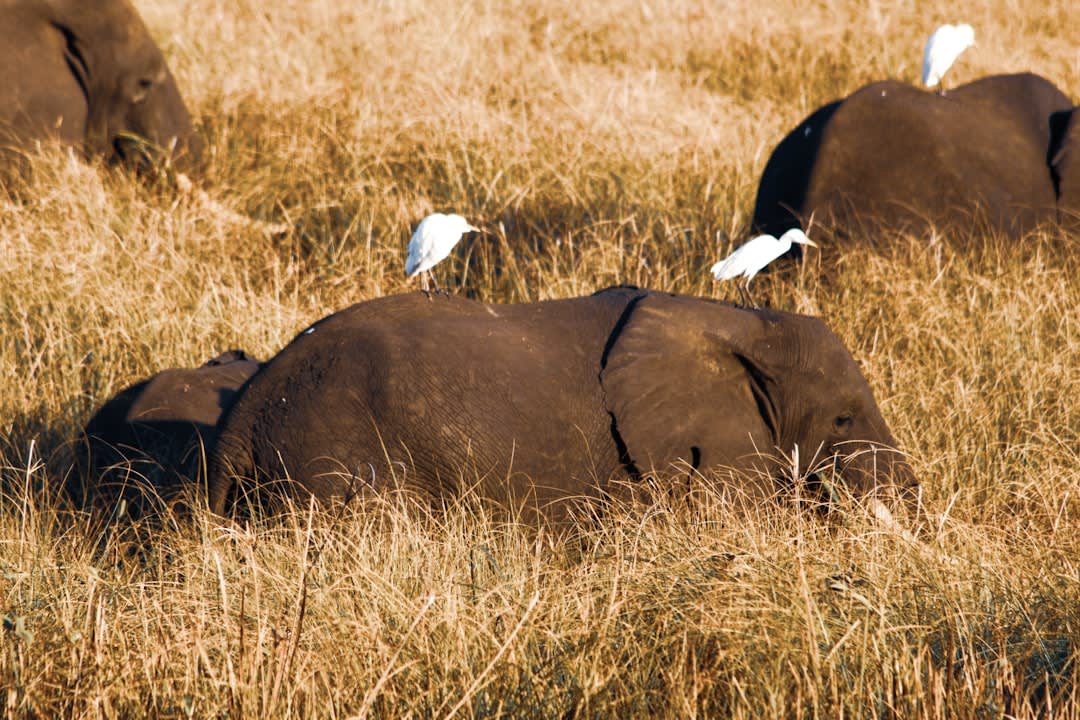
Gorongosa illustrates how tourism can sit alongside restoration, science and community development. A 2026 review identifies herbivore restoration, carnivore reintroduction, elephant-human interactions and lion conservation as major themes in the park’s conservation work.
The Gorongosa Restoration Project’s 2023 highlights report records 19 new community natural-resource management plans, bringing the total to 60, as well as 41 new conservation agreements with villages. The report also records support for 307 community rangers and community projects in beekeeping, ecotourism and fish farming valued at US$200,469. These figures describe programme activity, not proof that tourism alone paid for it; the report presents Gorongosa as a coordinated programme involving government, conservation, science, livelihoods and tourism.
The 2023 report also records the proclamation of the Cheringoma Community Conservation Area and the opening of Muzimu Lodge. Travellers interested in the wider landscape can explore SafariFind’s Cheringoma Plateau destination guide.
Niassa Reserve
Niassa Reserve demonstrates both the potential and the limitations of tourism finance in a remote protected area. The Niassa Carnivore Project’s 2023 annual report says that anti-poaching is expensive and funded through philanthropy, helping ensure conservation and development continue when tourism is weak.
The same report describes a transparent community-conservation tourism model at Mpopo Trails Camp. It states that the model aims for at least 70% of income to benefit Mozambique and at least 50% to go directly to communities within Niassa Reserve, rather than external booking agents and shareholders. This is a programme-specific target, not a standard applied across every Mozambican safari or lodge. Travellers should therefore ask each operator how revenue is divided.
Trans-frontier conservation areas
Mozambique’s conservation planning also connects tourism with landscapes that cross national borders. In 2005, the World Bank approved a US$10 million credit for a Trans-frontier Conservation Area and Tourism Development Project covering Chimanimani, Lubombo and Greater Limpopo. The project aimed to increase community revenues through environmentally sustainable tourism, strengthen public and community capacity, and engage the private sector in ecotourism.
A related Peace Parks Foundation account describes a wider package of US$33.7 million in grants and credits from the World Bank, the Global Environment Facility and Japan, including a US$20 million World Bank credit, a US$10 million GEF grant and a US$3.7 million Japanese grant. These are historical programme commitments from 2005, not a current annual tourism budget, but they show how ecotourism has long been treated as part of a regional conservation-finance strategy.
The threats conservation funding must address
Tourism revenue has value only when it supports responses to real conservation pressures. Mozambique’s protected areas face a combination of ecological, financial and social challenges.
- Illegal wildlife use and anti-poaching costs: The Niassa Carnivore Project describes anti-poaching as expensive and says philanthropy remains important to sustaining it. This underlines why visitor revenue alone should not be presented as sufficient for ranger teams, intelligence, patrols and other protection work.
- Habitat degradation and land-use pressure: Research on Limpopo National Park describes development programmes, fauna reintroduction, ecotourism and local development as linked elements of the park’s restoration process. MozBio likewise funded land-use planning, landscape management and sustainable value chains such as beekeeping, agroforestry, wildlife and fisheries products, and ecotourism.
- Human-wildlife conflict: The 2026 review of Gorongosa includes elephant-human interactions among the park’s central conservation issues. Community planning and livelihood initiatives are therefore conservation tools as well as development activities.
- Climate and coastal risks: WWF reports more floods, wildfires, landslides and droughts associated with changing weather patterns in Mozambique, making nature-based livelihoods harder to sustain. In March 2026, IUCN reported that the “Save Our Mangroves Now!” initiative marked its tenth anniversary and that partners continue to focus on mangrove governance, ecological restoration, local capacity and community participation.
- Unreliable tourism markets: The Niassa example shows that conservation must continue when tourism fails or visitor numbers are low. Remote parks need endowments, grants, government support and other dependable sources of finance, not only lodge occupancy.
Results and setbacks: what the evidence shows
Mozambique has clear examples of conservation and community programmes producing tangible outputs. Gorongosa’s reported management plans, village agreements, community enterprises and ranger support show investment in local institutions as well as wildlife. Bazaruto’s management partnership has advanced knowledge of the park’s biodiversity and ecology while supporting a protected marine landscape with substantial human dependence on its resources.
Institutional finance has also expanded beyond individual tourism projects. The World Bank’s MozBio completion review reports that the project closed at US$32.1 million against an appraisal amount of US$15 million for institutional strengthening, while the conservation-compatible rural-development component closed at US$13.7 million against a US$13 million appraisal amount. These figures reflect total project financing at closing, not money generated by visitors.
At community level, the UNDP Global Environment Facility Small Grants Programme reports that, since 2005, it has funded and technically supported 287 projects by community-based organisations, civil-society organisations, NGOs and academia. Its Mozambique strategy for 2024–2028 reports average grants of US$19,965, with grants ranging from US$2,000 to US$45,000, excluding co-financing. Again, this is grant finance rather than safari revenue, but it illustrates the wider funding ecosystem required to make conservation-compatible livelihoods viable.
The setbacks are equally important. Tourism income is not evenly distributed, remote protected areas can remain dependent on philanthropy, and community benefits vary by agreement. Climate shocks, conflict between people and wildlife, habitat pressure and the high cost of protection continue to challenge conservation managers. A lodge opening or increase in visitor spending is therefore not, by itself, evidence of a successful conservation outcome.
How travellers can support conservation responsibly
- Ask where your money goes. Request a clear explanation of park fees, conservation levies, concession payments, staff employment and community benefits. The Niassa Carnivore Project’s published revenue model shows the level of transparency travellers can look for.
- Choose locally connected operators. Prefer businesses that employ Mozambican guides and staff, buy locally where practical, and can explain their relationship with ANAC, park authorities or community organisations.
- Stay longer and travel thoughtfully. Longer stays can spread the value of one visit across guiding, accommodation, transport and local services, although the research does not establish a universal financial formula for this effect.
- Respect wildlife and communities. Follow guide instructions, keep distance from animals, avoid requesting unethical sightings, and seek permission before photographing people or villages.
- Support conservation beyond a holiday. Consider a direct donation to a credible park or conservation organisation, especially where tourism is seasonal or anti-poaching and community work require year-round funding.
- Book with informed expectations. Travellers can book conservation-supporting safaris on SafariFind, while checking the individual operator’s published policies and programme partnerships before paying.
Conclusion
Safari tourism can fund conservation in Mozambique by turning protected landscapes and seascapes into sources of employment, community income and park revenue. Its strongest contribution comes when tourism is integrated with accountable management partnerships, community governance, restoration, science and diversified finance.
The responsible conclusion is not that every safari pays directly for wildlife protection. In Niassa, philanthropy still supports costly anti-poaching work; in Bazaruto, grants and endowment income sit alongside park revenue; and in Gorongosa, tourism forms part of a much larger restoration and community programme. Visitors help most when they choose transparent operators, respect local rights and understand that conservation is a long-term partnership rather than a product purchased at the lodge.
Frequently Asked Questions
How does safari tourism fund conservation in Mozambique?
It contributes through park and lodge revenue, tourism concessions, community enterprises, conservation agreements and partnerships with protected-area authorities. Tourism is one part of a wider funding mix that also includes grants, philanthropy and endowment income.
Does every safari payment go directly to wildlife conservation?
No. Payments may cover accommodation, staff, transport, guiding, park operations and conservation activities, and the division varies by operator and agreement. Travellers should ask for a transparent explanation of revenue flows.
Which Mozambique parks use tourism to support conservation?
Examples include Bazaruto Archipelago National Park, Gorongosa National Park, Niassa Reserve and protected areas connected through trans-frontier conservation initiatives.
What is the role of communities in Mozambique’s conservation tourism?
Community programmes can include natural-resource management plans, conservation agreements, ranger support and businesses such as beekeeping, fish farming and ecotourism. Gorongosa reported 19 new community plans and 41 new village conservation agreements in 2023.
Can tourism replace conservation grants in Mozambique?
No. Tourism income can be seasonal and uneven, while activities such as anti-poaching require reliable year-round funding. The Niassa Carnivore Project reports that philanthropy funds expensive anti-poaching work when tourism is insufficient.
How much funding did the World Bank’s MozBio programme provide?
The World Bank completion review reports US$32.1 million at closing for institutional strengthening and US$13.7 million for conservation-compatible rural development.
How can travellers choose a responsible safari in Mozambique?
Ask how fees and profits are distributed, whether local people are employed and supported, and which park or community programmes receive money. Choose operators that publish clear conservation and community-benefit information.
Why are mangroves important to conservation tourism in Mozambique?
Mangroves support biodiversity, livelihoods and climate resilience. IUCN reported in 2026 that partners in the Save Our Mangroves Now initiative were continuing work on governance, restoration and local capacity.
What are the main threats to conservation in Mozambique?
Key challenges include costly wildlife protection, habitat and land-use pressure, human-wildlife conflict, climate-related floods and droughts, and the financial risk of relying too heavily on tourism.
Does tourism support marine conservation in Mozambique?
Yes. Bazaruto Archipelago National Park is a marine example where tourism operates alongside a management partnership between African Parks and ANAC, protecting marine biodiversity and supporting a park home to more than 6,800 people.