Protecting Rwanda’s National Parks: Conservation in 2026
Rwanda’s national parks are combining strong wildlife protection with tourism revenue-sharing, habitat restoration and community enterprise. Akagera’s wildlife recovery and Volcanoes National Park’s gorilla conservation are major successes, but habitat pressure, funding needs and unequal community benefits remain important challenges.

Quick answer: Rwanda’s national park conservation model combines government leadership through the Rwanda Development Board, specialist park-management partnerships, ranger protection, scientific monitoring, habitat restoration and tourism revenue-sharing. Akagera National Park has restored large mammals including lions, eastern black rhinos and southern white rhinos, while Volcanoes National Park remains a heavily protected mountain-gorilla landscape; however, high population density around some parks, financial and staffing pressures, habitat loss and uneven distribution of community benefits continue to test the model.
Last reviewed August 2026. Conservation data changes — see the cited sources for the latest figures.
Why national park conservation matters in Rwanda
Rwanda’s protected-area network safeguards several unusually important landscapes within a small, densely settled country. The country has designated almost 10% of its land and inland water as protected areas and has pledged to restore two million hectares of deforested and degraded land. Its parks protect contrasting ecosystems: Akagera is Central Africa’s largest protected wetland and Rwanda’s last remaining refuge for savannah-adapted species, while the Albertine Rift forests of Nyungwe and the volcanic montane habitat of Volcanoes National Park support highly specialised wildlife.
Volcanoes National Park is best known for mountain gorillas and golden monkeys. Yale’s account of field studies in Rwanda notes that golden monkeys live in groups of about 100 and have benefited from conservation work in the park. The mountain-gorilla story also has a long conservation history: Volcanoes National Park was established in 1925, and Dian Fossey’s field research in the 1960s helped draw international attention to gorilla protection.
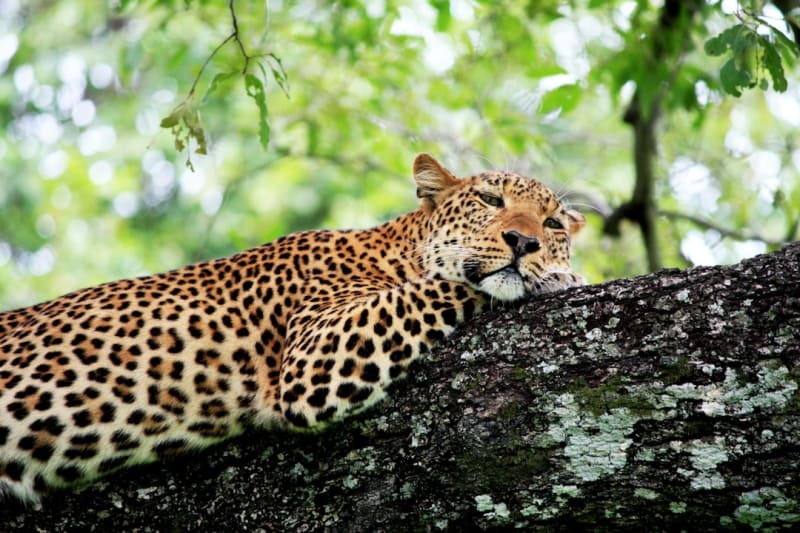
Akagera demonstrates a different conservation priority: rebuilding a functioning savannah ecosystem. The Rwanda Development Board invited African Parks to partner in managing Akagera in 2010, with the dual aim of supporting conservation and using tourism to contribute to economic improvement. Lions were reintroduced in 2015, eastern black rhinos in 2017 and 2019, and 30 southern white rhinos in 2021. A further 70 southern white rhinos arrived in June 2025 through the Rhino Rewild Initiative.
The main threats to Rwanda’s protected areas
Poaching and unauthorised resource use
Poaching is not reported in the supplied research as a single national total, but park-management evidence shows why patrols, intelligence and community participation remain necessary. In Nyungwe National Park, African Parks reported steadily finding fewer snares as its eco-ranger programme developed. In Volcanoes National Park, a study of conservation-development interventions found a statistically significant negative relationship between overall integrated investment and unauthorised resource use.
The same study cautioned against assuming that every intervention works equally well. Its analysis covered projects and funding in and around Volcanoes National Park from 2006 to 2015 and found that conservation NGO funding had a significant negative effect on unauthorised resource use, while tourism revenue-sharing funding did not show the same effect in that analysis. The researchers also identified gaps between some revenue-sharing investments and illegal-activity hotspots. This is an important qualification: community benefits matter, but their location, design and ability to reach households under pressure can determine whether they reduce threats.
Habitat loss and pressure on land
Rwanda’s parks sit beside communities that need farmland, water, employment and infrastructure. The International Gorilla Conservation Programme describes Volcanoes National Park as existing in one of Africa’s most densely populated rural settings, with population densities in surrounding sectors ranging from around 350 to more than 1,000 people per square kilometre. Such pressure makes the long-term protection of forest edges, wildlife corridors and watersheds a social as well as ecological task.
The proposed Volcanoes National Park Expansion Program illustrates the scale of the challenge. The programme describes an intended expansion of 3,740 hectares and a 6,620-hectare land-use buffer zone, alongside projected benefits for gorilla habitat, tourism and nearby residents. These are programme projections rather than completed results, so they should be treated as planned outcomes, not as evidence that every target has already been achieved.
Human-wildlife conflict and unequal benefits
Where protected areas meet farms and settlements, conservation must address both wildlife protection and household welfare. The IGCP assessment found that high population density near Volcanoes National Park diluted the overall economic impact of community conservation activities and called for better targeting of interventions. The implication is practical: revenue-sharing and livelihood programmes need to reach people who experience the greatest costs or have the fewest alternatives, rather than being measured only by the total number of projects.
Climate and wider environmental change add another layer of risk. Rwanda’s conservation work includes watershed protection, wetland restoration, reforestation and low-carbon development. Yale reports visible results from urban-wetland restoration and conservation of key watersheds, while Rwanda’s national climate strategy targets a 38% reduction in emissions relative to business as usual by 2030. These measures can support biodiversity and local resilience, but they do not remove the need for direct park protection and careful land-use planning.
What is being done to protect Rwanda’s parks?
Government and long-term management partnerships
The Rwanda Development Board is a central government partner in protected-area conservation. In Akagera, it works with African Parks under a management partnership that began in 2010. In Volcanoes National Park, the Conservation and Development Master Plan links habitat restoration with sustainable agriculture, enterprise development and community priorities across the wider landscape.
Nyungwe also shows how conservation increasingly combines formal law enforcement with local participation. African Parks’ Nyungwe programme reports 92 trained rangers working under standard operating procedures and, as of 2025, 100 unarmed eco-rangers drawn from districts surrounding the forest. The eco-rangers work alongside park rangers in ten-day shifts, receive uniforms, safety equipment and a monthly allowance, and can train for formal park positions.
African Parks describes its Nyungwe approach as allocating 40% of effort to law enforcement and 60% to community intervention. That balance recognises that patrols alone cannot resolve resource-use pressures if nearby households lack viable alternatives. The same source reports that park infrastructure construction in 2023–24 engaged 300 local workers over 16 months, illustrating how procurement and employment can be connected to conservation objectives.
Species recovery and habitat restoration
Akagera’s reintroductions have rebuilt ecological functions that had been lost or weakened. The park’s lion reintroduction in 2015, eastern black-rhino reintroductions in 2017 and 2019, and southern-white-rhino introductions in 2021 and 2025 form part of a broader restoration strategy rather than isolated wildlife releases. Travellers interested in the species-specific work can read SafariFind’s guides to lion conservation in Rwanda and black-rhino conservation in Rwanda.
Around Volcanoes National Park, the African Wildlife Foundation reports that it worked with the Rwanda Development Board and EcoPlanet Bamboo Rwanda to restore 27 hectares using more than 28,000 indigenous plants. AWF says mountain gorillas and other wildlife are already using the restored area. The programme also connects habitat recovery with enterprise development and climate-smart agriculture rather than treating restoration as a stand-alone planting exercise.
Research, monitoring and conservation skills
Field research and training help park managers respond to changing conditions. Protais Niyigaba, park manager at the Nyungwe Management Company, describes field studies as a way for students to understand the financial pressures, staffing needs and social complexity of real conservation work. The Rwanda Wildlife Conservation Association’s 2022–2026 strategic plan likewise identifies capacity-building for young Rwandan veterinarians and conservationists as a key organisational aim.
Community trackers and field teams also provide close wildlife monitoring. In January and February 2026, Virunga’s community trackers documented several mountain-gorilla births in families in the Mikeno sector, including twin births in the Bageni family and births in the Mapuwa, Rugendo, Munyaga and Masibo families. These records concern Virunga National Park in the Democratic Republic of the Congo, not Rwanda’s Volcanoes National Park, but they demonstrate the value of consistent, family-level monitoring across the shared Virunga mountain-gorilla landscape.
Community participation and tourism’s role
Tourism can support conservation in two ways: by generating direct park revenue and by creating jobs, services and businesses that make intact landscapes economically valuable. African Parks states that tourism is a major generator of Akagera’s revenue and that those funds support local employment and sustainable-development projects. In 2025, African Parks described Akagera as the first park to operate as a financially self-sustaining conservation landscape.
Akagera also allocates 10% of park income to Rwanda’s revenue-sharing scheme. According to African Parks, this supports community projects including schools, healthcare facilities and cooperatives. Revenue-sharing has been a Rwandan government policy mechanism since 2005, with income from gorilla permits, hiking permits and other ecotourism activities redistributed to community development.
Financial self-sufficiency should not be confused with the end of conservation funding needs. Visitor numbers, international support, operating costs and unexpected ecological or security pressures can change. The strongest model is therefore one in which tourism revenue complements public funding, philanthropy, conservation finance, local enterprise and transparent benefit-sharing.
Recent community-enterprise work around Volcanoes National Park illustrates this broader approach. In July 2026, AWF reported equipping 132 entrepreneurs and 160 farmers with business and climate-smart agriculture skills through its Rwanda programme for 2020–2025. The Rwanda Wildlife Conservation Association’s strategic plan set goals of signing 1,000 conservation agreements with community members by 2026, creating 264 contracted conservation jobs, reaching at least 65,100 people annually through conservation campaigns and securing at least 20% of its annual budget through social-enterprise initiatives. These are stated targets and planned indicators, not proof that every target has been met.
Travellers can book conservation-supporting safaris on SafariFind, including visits to Akagera and gorilla trekking in Volcanoes National Park. A responsible booking should make clear which permits, park fees, guiding services and community contributions are included. SafariFind’s guide to community conservation in Rwanda provides further context on why local benefits are central to durable protection.
Results and setbacks: an honest assessment
| Conservation area | Reported progress | Remaining qualification |
|---|---|---|
| Akagera National Park | Lions, eastern black rhinos and southern white rhinos have been reintroduced; the park reported financial self-sufficiency in 2025 and directs 10% of income to revenue-sharing. | Financial self-sufficiency depends on continuing revenue and effective management; the supplied research does not provide a complete wildlife census or a national threat trend. |
| Volcanoes National Park | Mountain-gorilla and golden-monkey conservation has benefited from intensive protection, research and community programmes. | High population density, staffing and financial pressures, and uneven community benefits remain challenges. |
| Nyungwe National Park | Formal rangers and community-based eco-rangers support patrols; African Parks reports fewer snares being found over time. | The supplied research does not provide a park-wide population estimate or a quantified poaching reduction. |
| Landscape restoration | AWF reports restoration of 27 hectares with more than 28,000 indigenous plants around Volcanoes National Park. | Restoration must be maintained and connected to land-use planning, livelihoods and watershed protection. |
The broad conclusion is positive but conditional. Rwanda has built credible institutions and partnerships, recovered wildlife in Akagera and connected conservation with tourism and community development. At the same time, conservation outcomes depend on whether benefits reach the right households, whether habitat expansion is socially workable, whether parks retain skilled staff and whether funding remains reliable. The evidence supports progress, not complacency.
How travellers can help responsibly
- Choose legitimate operators and permits. Use official or clearly authorised channels for gorilla trekking, park entry and guiding. Permit income is part of the tourism-finance system described in Rwanda’s conservation research.
- Ask where your money goes. Look for transparent information about park fees, local guides, accommodation employment and community projects rather than accepting unsupported claims about conservation impact.
- Follow wildlife rules. Keep distance, avoid loud behaviour, never feed animals and follow ranger instructions. These practices reduce disturbance in sensitive habitats.
- Support local businesses. Use locally owned guides, craftspeople, cooperatives and accommodation providers where possible. Community enterprise is an explicit part of current conservation planning around Volcanoes National Park.
- Reduce pressure on natural resources. Conserve water, minimise waste and choose operators with credible environmental policies, particularly in water-stressed or densely settled landscapes.
- Do not seek close contact with gorillas. Responsible gorilla tourism follows veterinary and ranger guidance because disease transmission and disturbance can harm habituated groups.
For trip planning, SafariFind’s Akagera safari itinerary guide can help travellers understand how a park visit fits into a wider Rwanda journey, while its anti-poaching and wildlife-crime overview explains why ranger work and community partnerships remain necessary.
Frequently Asked Questions
What is Rwanda doing to protect its national parks?
Rwanda combines Rwanda Development Board leadership with park-management partnerships, ranger patrols, wildlife monitoring, habitat restoration, tourism revenue-sharing and community enterprise. African Parks manages Akagera and Nyungwe in partnership with Rwanda’s government, while conservation organisations support work around Volcanoes National Park.
Which national parks are most important for conservation in Rwanda?
Akagera, Nyungwe and Volcanoes National Park are central to Rwanda’s conservation work. Akagera protects a major wetland and savannah ecosystem, Nyungwe protects forest habitat, and Volcanoes protects mountain-gorilla and golden-monkey habitat.
How successful has wildlife conservation been in Akagera National Park?
Akagera has reported major restoration milestones, including lion reintroduction in 2015, eastern black-rhino reintroductions in 2017 and 2019, and southern-white-rhino introductions in 2021 and 2025. African Parks also reported that the park became financially self-sustaining in 2025.
How does tourism support conservation in Rwanda?
Tourism generates park revenue, employment and local-development funding. In Akagera, 10% of park income is allocated to Rwanda’s revenue-sharing scheme for projects such as schools, healthcare facilities and cooperatives.
What are the biggest threats to Rwanda’s national parks?
The main documented pressures are poaching and unauthorised resource use, habitat and land pressure, high population density near parks, staffing and financial needs, and the challenge of ensuring that community benefits reach households facing the greatest conservation costs.
Are mountain gorillas increasing in Rwanda?
The supplied research describes mountain-gorilla conservation as a success story and reports benefits from intensive protection and community programmes, but it does not provide a current Rwanda-only population figure.
What is being done to restore habitat around Volcanoes National Park?
AWF, the Rwanda Development Board and EcoPlanet Bamboo Rwanda have restored 27 hectares with more than 28,000 indigenous plants. The Volcanoes National Park Conservation and Development Master Plan also links restoration with sustainable agriculture and enterprise development.
How are communities involved in conservation in Rwanda?
Communities participate through revenue-sharing, conservation agreements, contracted conservation jobs, eco-ranger programmes, climate-smart agriculture and local enterprises. The Rwanda Wildlife Conservation Association’s 2022–2026 plan includes targets for agreements, jobs and conservation education.
What can tourists do to support conservation in Rwanda?
Travellers can use authorised operators, pay required park and permit fees, follow ranger instructions, choose locally beneficial services, reduce waste and ask operators to explain how tourism supports parks and communities.
V2Ui.sources
- Akagera | African Parks(official)
- Canopy 2024 Article - Rwanda: A Decade of Field Studies in Conservation | Yale School of the Environment
- AWF Backs Nearly 300 Rwandans to Drive Conservation Enterprise | African Wildlife Foundation
- Virunga National Park | Support Our Conservation Efforts
- Rwanda Wildlife Conservation Association Strategic Plan 2022–2026
- Conservation in Rwanda | Journeys With Purpose
- Where Gorilla Conservation Began | Journeys With Purpose
- Assessing impacts from community conservation interventions in Rwanda | International Gorilla Conservation Programme
- Volcanoes National Park Expansion Program in Rwanda, Africa | Paris Peace Forum
- Process Framework Rwanda Wildlife Conservation Bond(official)
- Effects of integrated conservation-development projects on unauthorized resource use in Volcanoes National Park, Rwanda
Related to
Ready to start your safari adventure?
Explore curated safari packages and find your perfect African adventure with verified operators.