Loading SafariFind...

The Busanga Plains represent one of Africa's most pristine and remote wilderness destinations. Located in the northwestern region of Kafue National Park, Zambia's oldest and largest national park, this extraordinary wetland ecosystem spans approximately 800 square kilometers (72,000 hectares). The plains are sustainably fed by the Lufupa River, a tributary of the Kafue River, creating a unique landscape that sets them apart from the miombo woodlands that characterize much of the broader national park.
What makes Busanga Plains truly distinctive is its seasonal accessibility. This remote oasis remains flooded throughout most of the year, transforming into an accessible safari destination only during a brief five-month dry season. Despite being one of Zambia's most celebrated wildlife regions, the plains never feel crowded—visitors often spend entire days without encountering another safari vehicle, offering an authentic wilderness experience that increasingly rare in modern African tourism.
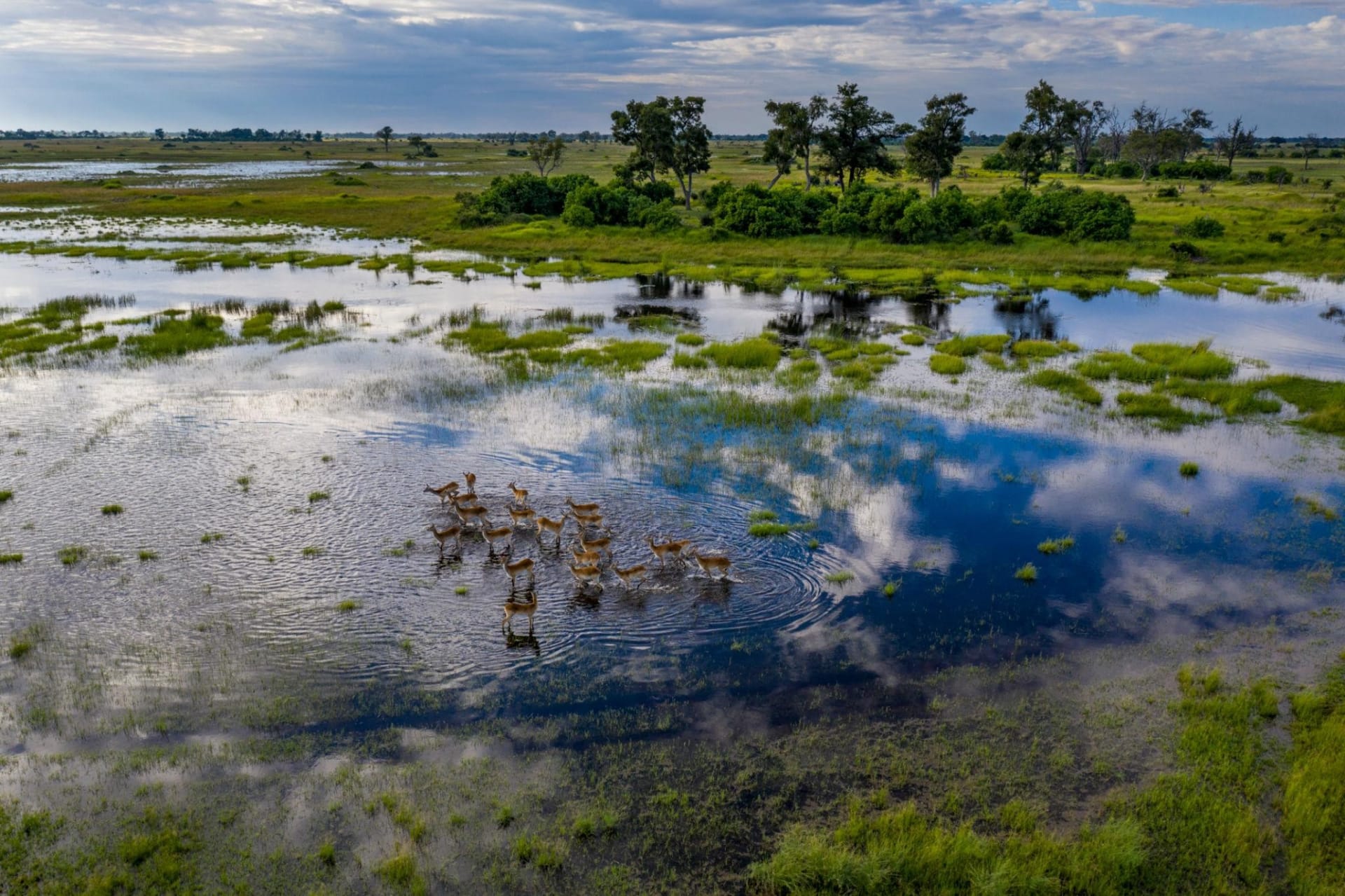
The Busanga Plains present a dramatically different landscape from surrounding areas. Flat grassland dambos stretch across the horizon, creating a swaying sea of golden grass interspersed with narrow channels and water courses. Scattered throughout are elevated wooded islands dotted with distinctive vegetation including date palms, sausage trees, and fig trees. During the wet season, these islands become isolated sanctuaries; as waters recede, they reveal the full expanse of the floodplain.
The Busanga Plains are officially recognized as a Ramsar-designated wetland system, supporting extraordinary concentrations of wildlife. The plains are best known for their remarkable populations of red lechwe, which were nearly extinct fifty years ago but have rebounded dramatically since Kafue's establishment. Watching huge herds of red lechwe leaping gracefully across shallow wetlands at sunrise is considered a quintessential Busanga experience.
Beyond lechwe, the plains support approximately 20 antelope species, including puku, roan antelope, sable, and the elusive sitatunga—a shy, swamp-dwelling species specially adapted to wetland environments. As flood waters recede between June and November, additional herbivores emerge, including wildebeest, zebra, and massive buffalo herds that create striking black silhouettes visible even from the air.
Busanga Plains earned legendary status in African safari circles for its exceptional lion populations, particularly males with imposing black manes. The plains' open grasslands provide ideal hunting grounds and excellent visibility for spotting these magnificent predators. Lions are frequently observed resting in the branches of sycamore fig trees, seeking refuge from the intense midday heat on the unshaded floodplain.
Beyond lions, visitors regularly encounter leopards, hyenas, jackals, and the nocturnal serval. Cheetahs are notably common in the Busanga Plains due to the open terrain and excellent visibility for hunting. Wild dogs are occasionally spotted, making the region a premier destination for big predator viewing. Kafue National Park forms part of an official lion conservation unit, contributing to ongoing protection of these iconic species.
The network of channels and water courses supports hefty pods of hippopotamus, which can be observed throughout the dry season as water levels drop. These semi-aquatic giants remain one of the most frequently encountered large animals in the region.
The Busanga Plains are an ornithological paradise, hosting over 450 bird species and representing some of Zambia's most significant wetland habitats. Notably, the plains provide sanctuary for half the world's population of wattled cranes—an endangered species. The endemic Chaplin's barbet and grey crowned cranes are among the region's special species.
Additional birdwatching highlights include secretary birds (abundant throughout the plains), Ross's turaco, black-backed barbet, and numerous roller, kingfisher, bee-eater, and heron species. Summer migrants including the lesser kestrel and Montagu's harrier add seasonal variety to the avian community. The sheer abundance and diversity of birdlife makes Busanga Plains exceptional for ornithology enthusiasts.
The Busanga Plains are accessible exclusively during the dry season, from July through October, with some sources extending access into November. This narrow five-month window represents the only period when the flooded wetlands become navigable for safari vehicles.
July to August offers the advantage of lower water levels and excellent game concentration as animals gather around remaining water sources. September and October provide pleasant temperatures and continued strong wildlife viewing, though some water channels may become less pronounced. The early dry season offers the most dramatic transformation of the landscape and the highest concentration of animals as they emerge from the retreating floodwaters.
Visitors should note that Busanga Plains is definitively a seasonal destination—the region is completely inaccessible during the wet season from November through June, when extensive flooding makes vehicle access impossible.
Open 4x4 safari vehicles remain the primary means of exploring the Busanga Plains. Early morning drives, when fog blankets the plains and animals are most active, offer the most dramatic wildlife encounters. The golden light of sunrise combined with the mist-covered landscape creates unforgettable photographic opportunities. Afternoon and sunset drives provide different lighting conditions and access to animals active during cooler evening hours.
Zambia pioneered the walking safari tradition in Africa, and this intimate approach to wildlife viewing is available in the Busanga Plains. Walking safaris bring visitors closer to nature and allow for more detailed observation of smaller species, plants, and ecosystem details impossible to appreciate from a vehicle.
With over 450 species present, dedicated birdwatching excursions represent a major draw for ornithology enthusiasts. Expert guides can direct visitors to specific species and explain the ecological significance of the various wetland inhabitants.
The combination of abundant wildlife, dramatic landscape features, and excellent visibility makes Busanga Plains exceptional for wildlife and landscape photography. The golden grasslands, tree-island formations, and dramatic lighting conditions create compelling compositions throughout the day.
Reaching Busanga Plains requires careful planning due to the remote location. Most visitors fly into Zambia via Lusaka's international airport, then arrange onward travel to Kafue National Park. Several airstrips serve the Busanga Plains region, with light aircraft flights from Lusaka or other Zambian destinations being the primary access method.
Several owner-run camps and lodges operate within the Busanga Plains region during the dry season, offering personalized service and expert guiding. These establishments typically provide all-inclusive packages including accommodation, meals, guided safaris, and transfers. The camps operate seasonally, closing during the inaccessible wet season months.
Numerous safari companies and travel specialists arrange Busanga Plains excursions. Reputable operators offer tailor-made itineraries, combining Busanga Plains with other Zambian destinations such as South Luangwa National Park (famous for walking safaris and Thornicroft's giraffe) or Lower Zambezi National Park (offering river-based activities). Victoria Falls can serve as an excellent itinerary conclusion.
Essential items include binoculars for wildlife viewing, camera equipment with telephoto lenses, sun protection (hat, sunscreen, sunglasses), and lightweight, neutral-colored clothing suitable for warm days and cool mornings. Insect repellent is recommended, and a light jacket or sweater provides comfort during early morning and evening game drives.
Visitors should consult healthcare providers regarding malaria prophylaxis, as the region is in a malaria-endemic area. Yellow fever vaccination may be required depending on travel history and destination countries. Comprehensive travel insurance is strongly recommended.
Game drives require moderate fitness levels, as early morning starts and extended periods in vehicles are standard. Walking safaris demand greater physical fitness. Visitors with mobility limitations should inform operators in advance to arrange appropriate itineraries.
Busanga Plains' status as a Ramsar-recognized wetland reflects its international conservation significance. Visitors should respect wildlife viewing guidelines, maintain appropriate distances from animals, and follow all camp regulations. Supporting camps and operators committed to sustainability and community development ensures tourism benefits local populations while protecting this pristine ecosystem.
Most safari packages span three to five nights, allowing sufficient time to experience the diverse wildlife and landscape features. Longer stays enable more extensive exploration and increase the probability of encountering rarer species such as cheetahs or wild dogs.
The Busanga Plains represent Zambia's answer to Africa's legendary safari destinations, offering abundant wildlife, pristine wilderness, and the privacy increasingly rare in modern African tourism. This remote wetland ecosystem, accessible only during a brief dry season window, rewards visitors with unforgettable encounters with red lechwe herds, magnificent lions, over 450 bird species, and the authentic African wilderness experience that defines transformative safari travel.
3 Days
$50 entry fee
$400 /day avg
Explore curated experiences for Busanga Plains
We are currently curating the best experiences for this destination. Please check back soon!
Book your dream safari to Busanga Plains today. We have great packages waiting for you.
View Packages