 1 / 41 / 4
Loading SafariFind...
1 / 4Transfer from Arusha to Central Serengeti National Park
Serengeti National Park
Meals: Lunch, Dinner
Serenity of Serengeti National Park
Serengeti National Park
Meals: Breakfast, Lunch, Dinner
From Serengeti to crater
Ngorongoro Crater
Meals: Breakfast, Lunch
Year Round
Year-round
| Season | Solo traveler | 2 people | 3 – 4 people | 5 – 6 people | 7+ people | Child rate | Single suppl. |
|---|---|---|---|---|---|---|---|
Year Round Year-round | $3,470 | $2,310 | $2,080 | $1,960 | $1,850 | $1,620 | $690 |
Child rate applies to travelers under 11 years. Single supplement applies to solo travelers taking their own room.
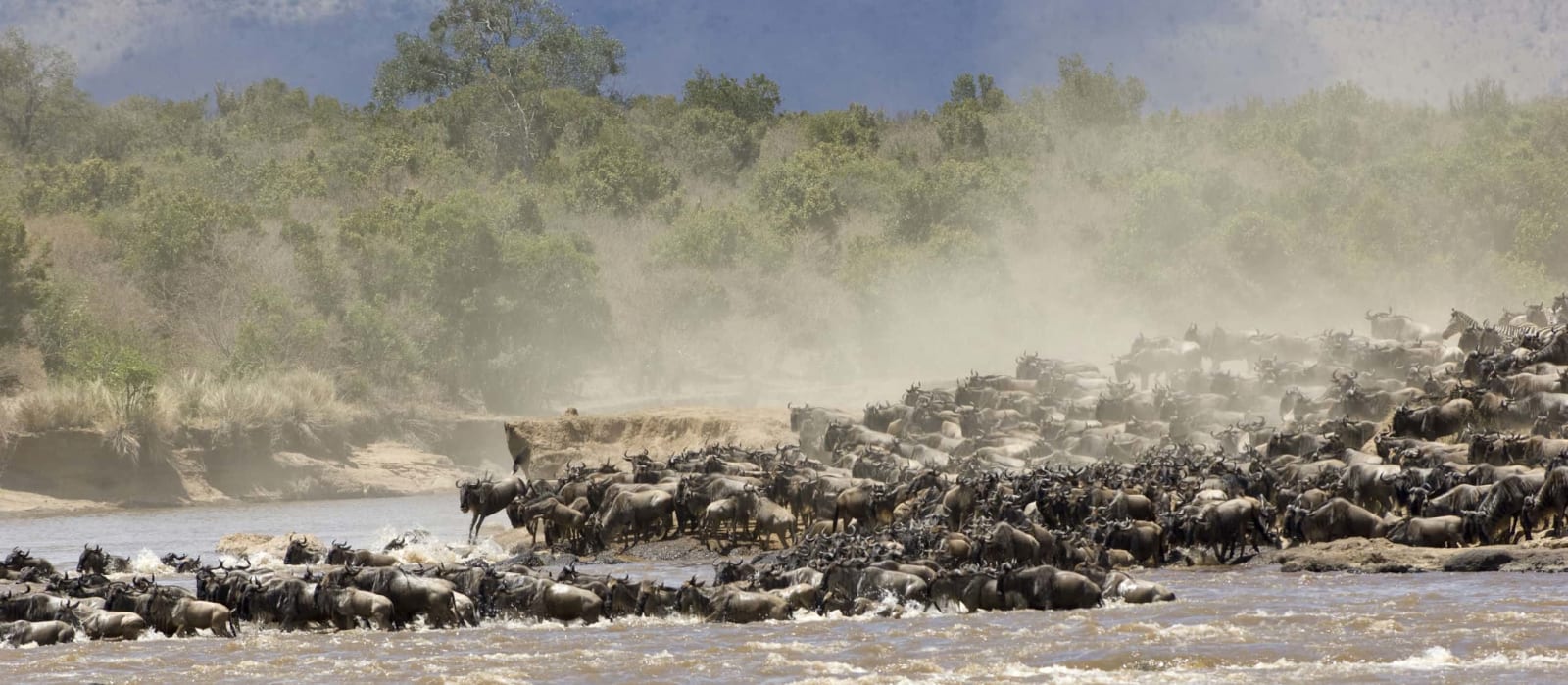
The Serengeti is home to an extraordinary diversity of wildlife, including the Big Five (lions, elephants, buffalo, leopards, and rhinoceros), as well as zebras, wildebeest, giraffes, hyenas, cheetahs, and countless bird species. The ecosystem supports over 1.5 million wildebeest and hundreds of thousands of zebras, making it one of the most wildlife-rich regions on Earth. During the Great Migration, you'll witness massive herds moving across the plains in search of fresh grazing lands, creating some of nature's most dramatic predator-prey interactions.
The Great Migration's timing varies throughout the year based on rainfall patterns and grass availability. Generally, the migration moves through different regions seasonally: the southern Serengeti (December to March) hosts calving season, the central plains (April to June) see the herds preparing to move north, and the northern Serengeti and Masai Mara border (July to October) feature dramatic river crossings. The best time depends on which phase of the migration you want to witness. Expert guides position you where the herds are most active during your specific travel dates, maximizing your chances of witnessing this extraordinary natural event.
Yes, three days is an ideal duration for a focused, high-impact safari experience in Tanzania's prime wildlife areas. Rather than spending time on lengthy transfers between distant locations, a three-day itinerary allows you to maximize game drives in concentrated ecosystems like the Serengeti and Ngorongoro Crater, which have exceptionally high wildlife densities. Two full days in the Serengeti during peak migration season, combined with a day in the Ngorongoro Crater, delivers more meaningful wildlife encounters than many longer safaris in less-concentrated areas. Quality of experience matters significantly more than quantity of days—three days of strategic game drives in these premier locations yield substantial sightings and authentic African experiences.
The Ngorongoro Crater is a massive volcanic caldera in Tanzania that forms a natural amphitheater roughly 20 kilometers across and 600 meters deep. Often called the 'Eighth Wonder of the World,' it's a UNESCO World Heritage Site that functions as a self-contained ecosystem. The crater floor supports an estimated 25,000 large animals, making it one of the highest concentrations of wildlife in Africa. Within this contained environment, you can encounter lions, elephants, buffalo, zebras, wildebeest, hyenas, and numerous other species in a single day of game drives. The crater's unique geography and enclosed habitat create exceptional viewing opportunities, and it serves as an ideal complement to open-plains safaris like those in the Serengeti.
While no safari can guarantee wildlife sightings due to the unpredictable nature of wild animals, the Serengeti and Ngorongoro Crater have exceptionally high concentrations of all five species: lions, elephants, buffalo, leopards, and rhinoceros. The Ngorongoro Crater, in particular, is renowned for reliable Big Five sightings due to its enclosed ecosystem and high animal density. Your chances increase significantly with experienced guides who understand animal behavior, seasonal patterns, and the best locations and times for spotting each species. Lions are typically most active during dawn and dusk, elephants congregate near water sources, and leopards are often spotted in rocky outcrops and acacia trees. Professional guides use their extensive knowledge to position you strategically throughout each game drive.
Pack neutral-colored, lightweight clothing in layers since temperatures vary significantly between dawn (cool) and midday (hot). Essentials include long-sleeved shirts and trousers for sun and insect protection, a warm fleece or jacket for early morning game drives, a wide-brimmed hat, sunglasses, and sturdy closed-toe hiking boots or safari shoes. Bring high-SPF sunscreen, insect repellent, and any personal medications. A camera with a good zoom lens, binoculars, and a small daypack are invaluable for game drives. Pack minimally as luggage space in safari vehicles is limited. Include toiletries, but many mid-range lodges provide basics. A headlamp or flashlight is useful for navigating after dark. Check weather forecasts for your specific travel dates, as conditions vary seasonally—the dry season (June to October) differs significantly from the rainy season (November to May).
Visa requirements for Tanzania depend on your nationality. Most visitors require a visa, which can be obtained on arrival at major airports, through an online e-visa system, or at a Tanzanian embassy before travel. Processing times and costs vary by country, so check the official Tanzanian immigration website or contact your nearest Tanzanian embassy well in advance of your trip. Additionally, ensure your passport is valid for at least six months beyond your travel dates. Some nationalities may qualify for visa-free entry or visa-on-arrival, but this changes periodically. It's essential to verify current requirements for your specific citizenship before booking your safari, as visa processing can take several weeks.
Health requirements for Tanzania vary based on your origin country and medical history. Yellow fever vaccination is recommended (and sometimes required for entry, depending on where you're traveling from), and malaria prophylaxis is strongly advised for most regions, including the Serengeti and Ngorongoro Crater. Consult with a travel health clinic 4-6 weeks before your departure to receive personalized recommendations based on your health status and itinerary. Routine vaccinations (MMR, tetanus, etc.) should be current. During your safari, take precautions against mosquito bites by wearing long sleeves at dawn and dusk, using insect repellent, and sleeping under mosquito nets. Drink only bottled or purified water, and practice good hygiene. Travel insurance that covers medical evacuation is highly recommended for remote safari locations.
A comprehensive private safari package typically includes transportation in a dedicated 4x4 safari vehicle, professional English-speaking guide services, all national park entrance fees, accommodation at mid-range lodges, meals, bottled water during game drives, and basic beverages like beer and wine. However, costs not included are usually international airfare, visa fees, travel insurance, travel vaccinations, tips and gratuities for guides and lodge staff, optional activities beyond the standard itinerary, and personal expenses. Some packages exclude premium alcoholic beverages. It's important to clarify with your operator exactly what's covered before booking, as inclusions can vary. Budget separately for items like travel insurance (highly recommended), visa processing, vaccinations, airport transfers if not specified, and gratuities—guides typically appreciate 10-15% of the tour cost in tips.
Game drives are strategically timed to coincide with peak animal activity periods. Early morning drives (typically starting before dawn) are ideal for spotting lions and other predators actively hunting, as cooler temperatures make prey vulnerable and predators more active. Mid-morning drives capture animals feeding and moving across the plains. Afternoon drives (after a lodge lunch break) offer opportunities to spot animals seeking shade and water sources. Evening drives near sunset are excellent for observing the final movements of the day and nocturnal animals beginning their activities. Most three-day safaris include multiple game drives daily, with durations typically ranging from 3-5 hours per drive. Your guide will adjust timings based on recent animal sightings and seasonal behavior patterns. This strategic scheduling maximizes your chances of witnessing diverse wildlife interactions throughout each day.
 VISION SAFARI & TOURSARUSHA, Tanzania
© 2026 SafariFind. All rights reserved.