 1 / 91 / 9
Loading SafariFind...
1 / 9Arusha to Momella Gate (1,500m) to Miriakamba Hut (2,500m)
Arusha Airport
Meals: Breakfast, Lunch, Dinner
Miriakamba Hut (2,500m) to Saddle Hut (3,570m)
Saddle Hut
Meals: Breakfast, Lunch, Dinner
Saddle Hut (3,570m) to Socialist Peak (4,566m) to Momella Gate (1,500m)
Arusha
Meals: Breakfast, Lunch
Year Round
Year-round
| Season | Solo traveler | 2 people | 3 – 4 people | 5 – 6 people | 7+ people | Child rate | Single suppl. |
|---|---|---|---|---|---|---|---|
Year Round Year-round | $1,490 | $990 | $890 | $840 | $790 | $690 | $300 |
Child rate applies to travelers under 12 years. Single supplement applies to solo travelers taking their own room.
Mount Meru is home to diverse wildlife despite being less crowded than nearby Mount Kilimanjaro. As you trek through the different ecological zones—from montane forest to open moorland—you may encounter buffalo, zebras, giraffes, and various antelope species in the lower elevations. The forested sections are particularly rich in birdlife, with numerous endemic species. The higher alpine zones have sparser wildlife but offer unique high-altitude flora. The variety of ecosystems along the route means you'll experience different wildlife habitats as you ascend, making it a naturalist's delight.
Mount Meru is generally considered more technically challenging than Kilimanjaro due to its steeper gradients and narrower ridges, particularly on the final ascent to Socialist Peak. However, it's slightly lower in elevation (4,566m vs. 5,895m), which can make acclimatization easier for some trekkers. The trek is well-suited for experienced hikers or those seeking a more adventurous alternative to Kilimanjaro. The 3-day itinerary is intensive, with significant daily elevation gains. While it requires good fitness and mountain experience, many trekkers find the dramatic scenery and fewer crowds make the challenge worthwhile.
The best trekking seasons for Mount Meru are during the dry seasons: June to October (long dry season) and January to February (short dry season). These periods offer the most stable weather, clearest skies for sunrise views from Socialist Peak, and the best visibility for spotting Mount Kilimanjaro in the distance. June to October is generally preferred as it coincides with the cooler months. The rainy seasons (November to December and March to May) make trails muddy and slippery, increase cloud cover at the summit, and can reduce wildlife visibility. Planning your trek during the dry season significantly improves your chances of a successful summit experience.
For a Mount Meru trek, pack layers as temperatures vary dramatically with elevation—from warm at the base to near-freezing at Socialist Peak (4,566m). Essential items include: a warm insulated jacket, thermal base layers, waterproof rain jacket and pants, sturdy trekking boots with good ankle support, warm hat and gloves, sunscreen and sunglasses, a headlamp or flashlight for the pre-dawn summit attempt, and a daypack for daily use. Bring moisture-wicking socks, comfortable camp shoes, and toiletries. Since meals and accommodation are provided, focus on personal items like medications, blister treatment, and any snacks you prefer. Trekking poles are highly recommended for the steep sections. Pack light but efficiently—porters can carry most items, but keep essentials in your daypack.
While Mount Meru's summit (4,566m) is lower than Kilimanjaro, altitude acclimatization is still important for a successful trek. The 3-day itinerary involves rapid elevation gain, ascending from 1,500m to 4,566m over just three days, which doesn't allow much time for acclimatization. Many trekkers arrive in Arusha a day or two before starting to allow their bodies to adjust. Spending time at moderate elevations before the trek helps reduce the risk of altitude-related discomfort. If you're coming from sea level, arriving a day early and staying in Arusha (at 1,500m elevation) can help. Staying well-hydrated, eating light meals, and moving at a steady pace during the trek also support acclimatization.
Yes, Mount Meru is an excellent acclimatization climb for those planning to summit Mount Kilimanjaro. Climbing Mount Meru (4,566m) before Kilimanjaro (5,895m) helps your body adapt to high-altitude conditions and builds confidence for the longer trek. The diverse terrain and elevation gain on Meru provide valuable acclimatization benefits. Many climbers do a Mount Meru trek in the days before or after a Kilimanjaro climb as part of a combined itinerary. The experience helps identify how your body responds to altitude, allowing you to adjust your pacing and hydration strategy for Kilimanjaro. Additionally, the dramatic scenery and technical challenges of Meru make it a rewarding climb in its own right, not just a stepping stone to Kilimanjaro.
The Mount Meru 3-day trek involves significant daily elevation gains. Day 1 takes you from Momella Gate (1,500m) to Miriakamba Hut (2,500m)—a gain of 1,000m. Day 2 climbs from Miriakamba Hut (2,500m) to Saddle Hut (3,570m)—a gain of 1,070m. Day 3 is the most challenging, ascending from Saddle Hut (3,570m) to Socialist Peak (4,566m)—a gain of 996m—before descending back to Momella Gate (1,500m), a total descent of 3,066m. The third day is particularly demanding as it includes the steep final push to the summit in the early morning darkness, followed by a long descent. The consistent daily gains and steep terrain require good cardiovascular fitness and mountain experience.
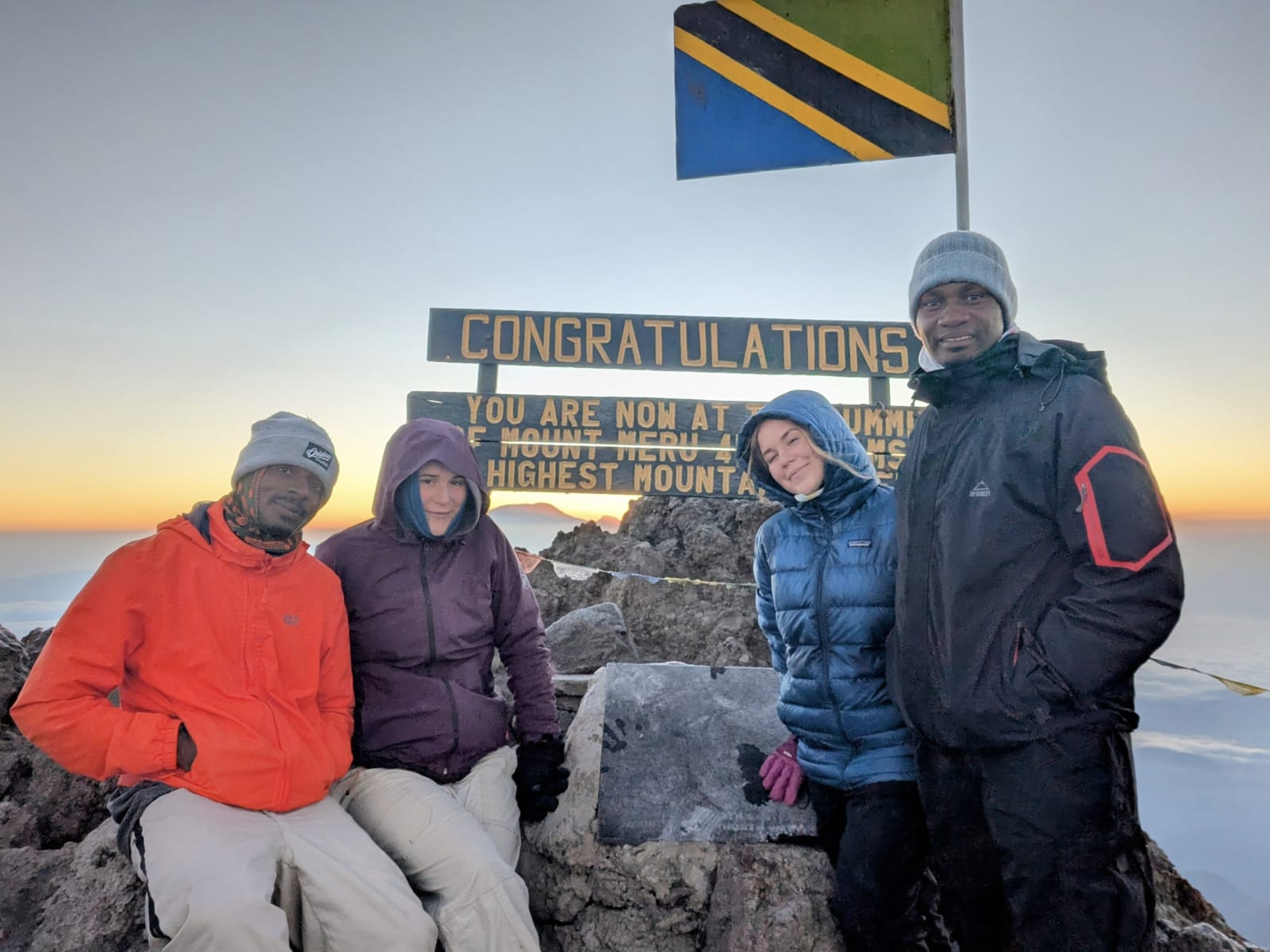
Yes, on clear days, Mount Kilimanjaro is often visible from Socialist Peak, Mount Meru's summit (4,566m). The view is particularly spectacular during the early morning summit push, when visibility is typically at its best before clouds develop later in the day. Seeing both peaks together—Meru in the foreground and Kilimanjaro in the distance—is one of the highlights of the trek. However, visibility depends on weather conditions; cloud cover and atmospheric haze can obscure the view. The best chances for seeing Kilimanjaro occur during the dry seasons (June to October and January to February) when weather is most stable and skies are clearest. Even if Kilimanjaro isn't visible, the sunrise views from Socialist Peak are spectacular in their own right.
Mount Meru receives significantly fewer trekkers compared to Mount Kilimanjaro, making it a less crowded alternative despite being Tanzania's second-highest peak. While exact numbers vary seasonally, Mount Meru attracts a fraction of Kilimanjaro's annual visitors, allowing for a more intimate mountain experience. The smaller crowds mean more solitude on the trail, quieter nights at the mountain huts, and a more personal interaction with your guide. This lower traffic also means less environmental impact and a more authentic trekking experience. If avoiding crowds is important to you, Mount Meru offers the perfect balance—it's a well-established trek with good infrastructure and support, but without the congestion of more popular peaks.
Three meals daily are provided throughout the 3-day Mount Meru trek: breakfast, lunch, and dinner. Meals are designed to fuel your body for the physical demands of trekking at altitude while catering to various dietary preferences. Breakfast typically includes hearty options to start your day before the morning climb. Lunch is usually packed or prepared at the huts to sustain you during the day's trek. Dinner at the mountain huts provides warm, nourishing meals to aid recovery. The meals are prepared by the trek support team and focus on nutritious, altitude-appropriate foods. If you have specific dietary requirements or restrictions, it's important to communicate these in advance. Mineral drinking water is also provided throughout the trek to support hydration at altitude, which is crucial for acclimatization and performance.
 Maasailand Adventure & AwarenessArusha, Tanzania
© 2026 SafariFind. All rights reserved.