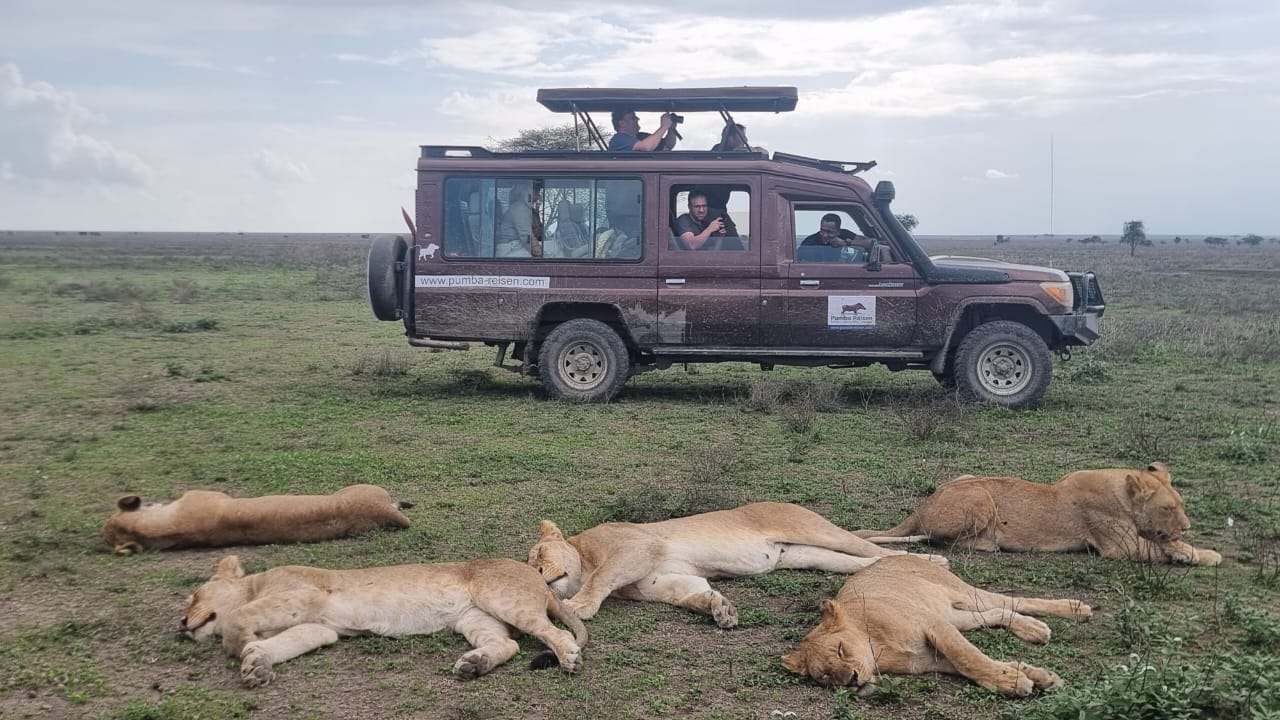
 1 / 4
1 / 4 3 daysshared
3-Day Shared Safari: Serengeti & Ngorongoro Crater
Highlights
- Shared group safari experience in a 4×4 safari vehicle with expert guide
Loading SafariFind...
1 / 4Arusha to Serengeti National Park
Serengeti National Park
Meals: Lunch, Dinner
Full-Day Serengeti Safari
Ngorongoro
Meals: Breakfast, Lunch, Dinner
Serengeti to Ngorongoro Crater – Return to Arusha
Arusha
Meals: Breakfast
Year Round
Year-round
| Season | 2 people |
|---|---|
Year Round Year-round | $800 |
The Serengeti is home to an extraordinary array of wildlife, including the Big Five (lions, elephants, buffalo, leopards, and rhinos), as well as zebras, giraffes, wildebeest, gazelles, hyenas, and numerous bird species. The park is particularly famous for hosting the Great Migration, where millions of wildebeest and zebras traverse the plains seasonally in search of fresh grazing lands. Game drives provide excellent opportunities to encounter these animals in their natural habitat, with sightings varying depending on the season and specific areas visited.
The best time to visit depends on what you want to experience. For the Great Migration in the Serengeti, visit between June and October when massive herds move through the northern plains. December to March is ideal for witnessing calving season and enjoying lush green landscapes. The Ngorongoro Crater is accessible year-round, though the dry seasons (June-October and January-February) offer the best game viewing as animals congregate around water sources. The wet season (November-December and March-May) brings fewer tourists and vibrant scenery, though some roads may be challenging.
Yes, the Ngorongoro Crater is one of the few places in Tanzania where you have a genuine chance of seeing black rhinos. The crater's enclosed ecosystem supports a small but stable population of these critically endangered animals. While sightings are never guaranteed due to their elusive nature and small numbers, the crater's concentrated wildlife and relatively small area increase your odds compared to other locations. Your professional guide will have knowledge of recent sightings and the best locations to search for them during your game drive.
A typical 3-day safari package includes all national park entrance fees, professional English-speaking guide services, accommodation throughout the itinerary, all meals (breakfast, lunch, and dinner), airport transfers, government taxes and VAT, bottled water during game drives, and use of a private 4x4 safari vehicle. This comprehensive approach allows you to focus entirely on the wildlife experience without worrying about logistics. However, international flights, travel insurance, visa fees, tips for your guide, alcoholic beverages, and personal expenses are typically not included and should be arranged separately.
Pricing for 3-day safaris to Serengeti and Ngorongoro varies depending on accommodation quality, season, and the operator. Shared safaris are generally more affordable than private tours because costs are distributed among multiple travelers. Budget options may range from $800-$1,500 per person, while mid-range packages typically fall between $1,500-$2,500. Premium accommodations can exceed $3,000 per person. Package prices usually include park fees, meals, guides, and transfers, making them better value than arranging components separately. It's worth comparing multiple operators and reading reviews to find the best balance of price and quality for your budget.
Visa requirements for Tanzania depend on your nationality. Most visitors require a visa, which can be obtained on arrival at Julius Nyerere International Airport in Dar es Salaam or applied for in advance through the Tanzanian embassy or online e-visa system. The process is typically straightforward and costs around $50-$100 USD. It's essential to check the specific requirements for your country well before your trip, as regulations can change. Your safari operator can provide guidance, but you should verify current requirements with official Tanzanian government sources or your nearest Tanzanian embassy to ensure you have all necessary documentation.
While specific vaccination requirements depend on your medical history and home country, most travelers to Tanzania are advised to be vaccinated against yellow fever, typhoid, and hepatitis A. Malaria prophylaxis is also commonly recommended, particularly for lower-altitude areas like the Serengeti. Consult with a travel health clinic or your doctor at least 4-6 weeks before your trip to receive personalized medical advice based on your health profile and the specific regions you'll visit. It's important to note that vaccination costs and health precautions are typically not included in safari packages, so plan and budget for these separately. Current health advisories can be checked through organizations like the CDC or WHO.
Pack lightweight, neutral-colored clothing in layers, as temperatures vary significantly between early mornings, midday heat, and evenings. Bring long sleeves and pants for sun and insect protection, comfortable walking shoes, and a warm fleece or jacket for early morning game drives. Essential items include a wide-brimmed hat, high-SPF sunscreen, sunglasses, and a good camera with extra batteries and memory cards. Binoculars enhance wildlife viewing, and a small backpack is useful for day trips. Toiletries should include insect repellent and any personal medications. Pack conservatively as luggage space in safari vehicles is limited. While most accommodations provide basic amenities, consider bringing your preferred toiletries and any specialized items you may need.
The drive from Arusha to Serengeti typically takes 5-7 hours, depending on road conditions, traffic, and the specific entry point to the park. The journey covers approximately 240-280 kilometers and passes through varied landscapes, including farmland, highlands, and eventually the Ngorongoro Conservation Area before reaching the park. Most safari itineraries break this journey strategically, often combining the drive with stops at viewpoints or the Ngorongoro Crater rim. Your professional guide will manage the logistics, and the drive itself can be scenic and educational, offering opportunities to learn about the region's geography, culture, and ecology. Bottled water is provided during the journey to keep you hydrated.
Seeing the Great Migration on a 3-day safari is possible but not guaranteed, as it depends heavily on the season and specific timing of your visit. The migration is most active in the Serengeti between June and October, when massive herds move through the northern plains. A 3-day itinerary provides limited time to locate the herds, but your experienced guide will use current knowledge of animal movements to maximize your chances. If the migration is not present during your visit, you'll still encounter abundant other wildlife including the Big Five and various herbivores. For the highest probability of witnessing the migration, consider visiting during peak months and allowing more time in the Serengeti if possible.
 Pumba ReisenArusha, Tanzania
© 2026 SafariFind. All rights reserved.