 1 / 61 / 6
Loading SafariFind...
1 / 6Depart Windhoek
Namib Desert
Meals: Dinner
Namib Desert & Marble Mountain Sundowner
Namib Desert
Meals: Breakfast, Lunch, Dinner
Return to Windhoek
Windhoek
Meals: Breakfast
Year Round
Apr 1 – Dec 31
| Season | Solo traveler | 2 people | 3 – 4 people | 5 – 6 people | 7+ people | Child rate | Single suppl. |
|---|---|---|---|---|---|---|---|
Year Round Apr 1 – Dec 31 | $870 | $730 | $870 | $870 | $870 | $610 | $260 |
Child rate applies to travelers under 11 years. Single supplement applies to solo travelers taking their own room.
The Namib Desert is home to a fascinating array of desert-adapted wildlife that has evolved to thrive in one of the world's oldest deserts. You may encounter oryx, springbok, and other antelope species, along with jackals, hyenas, and occasionally larger predators like lions and leopards. Birdwatchers will enjoy spotting species such as the Martial Eagle, Lappet-faced Vulture, and various larks. The wildlife viewing is best during early morning and late afternoon drives when animals are most active. A private reserve experience, like a sundowner drive, offers excellent opportunities to spot desert fauna in their natural habitat while enjoying the dramatic landscape.
Sossusvlei can be visited year-round, but the best time depends on your preferences. April to September offers cooler temperatures (15-25°C during the day) and is ideal for hiking and photography. December to February is hot (30-40°C) but offers fewer crowds and unique atmospheric conditions. The winter months (June-August) are particularly popular for sunrise visits to Dune 45 when temperatures are most comfortable. If you're interested in wildlife viewing on the private reserve, the cooler months also tend to offer better game viewing opportunities. Avoid the rainy season (November-March) if you prefer predictable weather, though the landscape is lush during this period.
Pack lightweight, breathable clothing in neutral colors for daytime activities, along with a warm jacket or fleece for early morning and evening when temperatures drop significantly in the desert. Essential items include a wide-brimmed hat, high-SPF sunscreen, and quality sunglasses to protect against intense UV rays and desert glare. Bring sturdy, closed-toe hiking boots for exploring the dunes and canyons. A camera with extra batteries is important, as batteries drain quickly in the cold. Don't forget a refillable water bottle—hydration is crucial in the desert environment. Consider binoculars for wildlife viewing and a light scarf for protection against dust. Since still and sparkling water is provided on the vehicle, you'll have hydration covered during transfers and activities.
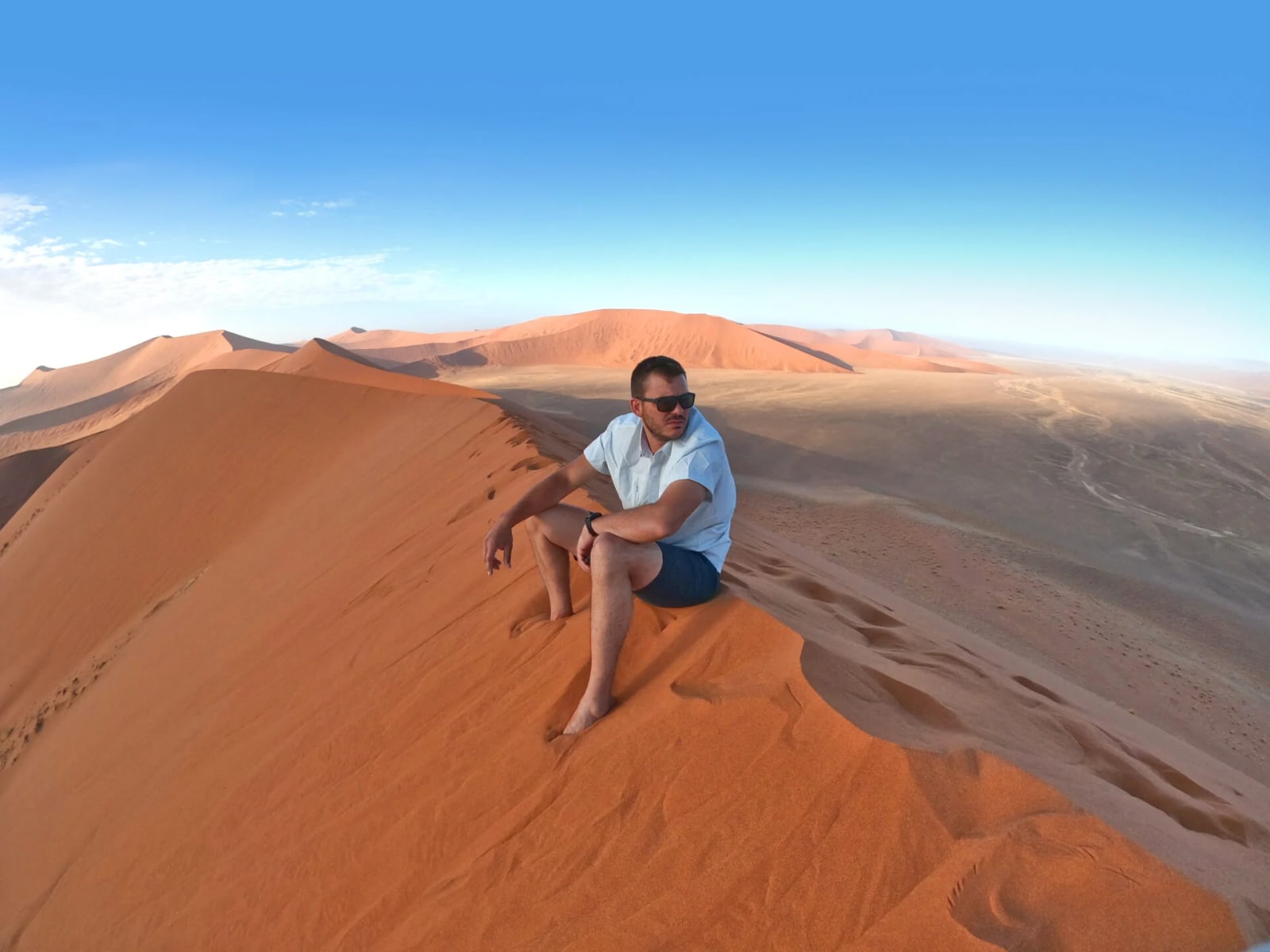
Dune 45 is one of the most photographed dunes in the world and is accessible to most fitness levels. The climb typically takes 30-45 minutes to reach the summit, depending on your pace and fitness level. The sand is soft and can be challenging, so take your time and wear proper footwear. The descent is usually quicker, taking about 15-20 minutes. Most visitors climb Dune 45 at sunrise to experience the dramatic lighting and avoid the midday heat. An early start is recommended, and your English-speaking guide will help pace the group and provide interesting information about the dune's geology and desert ecosystem during the climb.
Deadvlei is a striking white clay pan surrounded by some of the highest red sand dunes in the world, located within the Sossusvlei area. The name means 'dead marsh' in Afrikaans, and the pan is famous for its haunting beauty and surreal landscape. The white surface contrasts dramatically with the rust-colored dunes and the scattered, blackened camel thorn trees that died centuries ago when the dunes cut off water supply to the area. Deadvlei is a photographer's paradise, particularly in the early morning light. The stark, almost otherworldly scenery makes it one of Namibia's most iconic destinations. Visitors can walk among the dead trees and explore the pan, making it a must-see during any Sossusvlei adventure.
Yes, Sesriem Canyon is absolutely worth visiting and offers a completely different experience from the dunes. Located near Sossusvlei, this dramatic canyon was carved by the Tsauchab River over millions of years and is particularly impressive after the rainy season when water flows through it. The canyon walls tower up to 30 meters high, and hiking through it provides a cool respite from the desert heat. The name 'Sesriem' means 'six leather thongs' in Afrikaans, referring to the six leather thongs that early travelers had to tie together to lower buckets deep enough to reach water. The hike is relatively easy and takes about 45 minutes to an hour, making it accessible to most visitors. It's an excellent complement to dune exploration and offers unique geological insights into Namibia's landscape.
Visa requirements for Namibia depend on your nationality. Citizens of many countries, including most EU nations, the United States, Canada, Australia, and several African countries, receive a 90-day tourist visa upon arrival at no cost. However, some nationalities may require pre-arranged visas. It's essential to check the specific requirements for your country with the Namibian Ministry of Home Affairs or your nearest Namibian embassy well before your trip. Ensure your passport is valid for at least six months beyond your travel dates. While visa fees are not included in your safari package, planning ahead will ensure smooth entry into the country.
Vaccination requirements for Namibia vary depending on where you're traveling from and your personal health history. Yellow fever vaccination is recommended if you're arriving from endemic countries, though it's not required for entry to Namibia itself. Routine vaccinations (MMR, tetanus, etc.) should be up to date. Malaria prophylaxis is recommended for certain regions, though the Sossusvlei area is generally considered low-risk. Consult with a travel health clinic or your healthcare provider at least 4-6 weeks before your trip to discuss vaccinations and health precautions specific to your circumstances. Travel insurance, which should cover health-related issues, is not included in your package and is highly recommended.
Airport transfers from Windhoek Airport are available as an optional add-on at R 500 per person for each way (R 1,000 total for round-trip transfers). This is a convenient option if you don't have your own transportation or prefer not to arrange a rental vehicle. The transfer can be arranged in advance to ensure smooth arrival and departure logistics. Since the package includes accommodation and meals, arranging transfers helps create a seamless experience from the moment you land in Namibia. Contact your tour operator to book transfers when confirming your safari package.
Your 3-day Sossusvlei safari includes daily breakfast and dinner at your accommodation, plus one lunch during the excursions. This ensures you're well-nourished for your desert adventures while experiencing local Namibian cuisine. Breakfast typically includes hearty options to fuel your early morning dune climbs, while dinner offers a chance to relax and reflect on the day's experiences. The lunch provided during excursions is designed to be convenient and satisfying. However, additional meals, snacks, and all alcoholic beverages are at your own expense, allowing flexibility for personal preferences. Your guide can recommend local restaurants and shops where you can purchase additional food or drinks if desired. Still and sparkling water are provided on the vehicle throughout your journey to keep you hydrated.
 Getaway AfricaTrustedCape Town, South Africa
© 2026 SafariFind. All rights reserved.