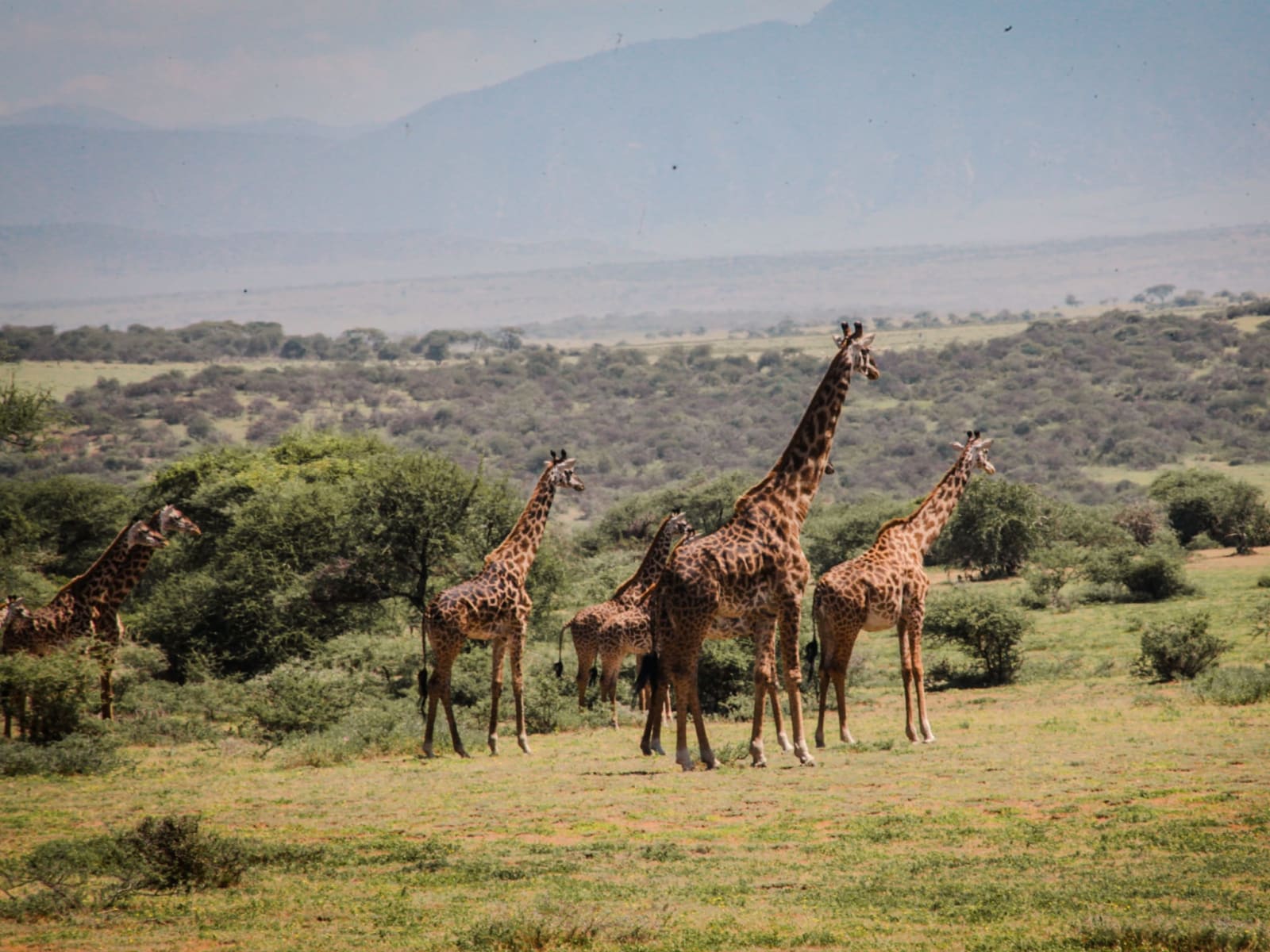
 1 / 6
1 / 6 3 daysshared
Loading SafariFind...
1 / 6Zanzibar → Serengeti National Park
Serengeti National Park
Meals: Dinner
Serengeti → Ngorongoro Conservation Area
Ngorongoro Crater
Meals: Breakfast, Lunch, Dinner
Ngorongoro Crater → Arusha → Zanzibar
Zanzibar
Meals: Breakfast
Year Round
Year-round
| Season | 2 people |
|---|---|
Year Round Year-round | $2,830 |
The Serengeti is home to an incredible diversity of wildlife, including the legendary Big Five—lions, leopards, elephants, buffalo, and black rhinos. You'll also encounter cheetahs, giraffes, zebras, wildebeests, hyenas, and hundreds of bird species. The specific animals you see depend on the season and location within the park. During the dry season (June to October), wildlife concentrates around water sources, making sightings more frequent. The Serengeti is also famous for hosting the Great Migration, where millions of wildebeest and zebras move across the plains—typically visible between December and July, depending on rainfall patterns.
The best time to visit depends on what you want to experience. The dry season (June to October) offers excellent wildlife viewing as animals gather around water sources, and the Great Migration typically reaches the northern Serengeti during this period. December to February is also good, with calving season bringing newborn animals and predator activity. The wet season (November and March to May) sees fewer tourists, lower prices, and lush green landscapes, though some roads may be challenging. For the most reliable wildlife encounters, plan your visit during the dry season months of June through October.
Yes, 3 days is sufficient to experience both the Serengeti and Ngorongoro Crater, especially on a fly-in safari where you maximize time on game drives rather than spending hours driving between locations. A 3-day itinerary typically includes at least one full day of game drives in the Serengeti and a crater descent in Ngorongoro, allowing you to see diverse wildlife and landscapes. However, if you have more time available, a 4 to 5-day safari would allow for more extensive exploration and increase your chances of witnessing rare wildlife encounters. The fly-in format is ideal for travelers with limited time who want to experience Tanzania's premier safari destinations without the long road transfers.
The Ngorongoro Crater is a UNESCO World Heritage Site and one of Africa's most spectacular natural wonders. It's the world's largest intact volcanic caldera, formed millions of years ago when a massive volcano collapsed inward. The crater spans about 19 kilometers across and descends approximately 600 meters, creating a unique self-contained ecosystem. What makes it truly special is the exceptional concentration of wildlife living within its boundaries—including black rhinos, hippos, lions, elephants, flamingos, and over 400 bird species. The crater's diverse habitats include grasslands, forests, and soda lakes, all contained within its dramatic volcanic walls. A game drive down into the crater offers an unforgettable experience of viewing wildlife in this remarkable natural sanctuary.
Visa requirements for Tanzania depend on your nationality. Most international visitors require a visa, which can typically be obtained on arrival at Tanzanian airports or applied for in advance through a Tanzanian embassy or online e-visa system. The process is generally straightforward for most nationalities. However, visa requirements and fees vary significantly by country, so it's essential to check the official Tanzanian immigration website or contact your nearest Tanzanian embassy well before your travel dates to confirm the specific requirements for your citizenship. Some travelers find it convenient to arrange their visa before arrival to avoid delays. Additionally, ensure your passport is valid for at least 6 months beyond your travel dates.
While specific vaccination requirements depend on your health history and home country, certain vaccinations are commonly recommended for travelers to Tanzania. Yellow fever vaccination is frequently advised, and proof of vaccination may be required if you're traveling from certain countries. Malaria prophylaxis is typically recommended, particularly for lower-altitude areas like Zanzibar and the Serengeti region. Other commonly recommended vaccinations include typhoid, hepatitis A and B, and routine immunizations. It's essential to consult with a travel medicine clinic or your healthcare provider at least 4 to 6 weeks before your departure to receive personalized health advice based on your medical history, the specific areas you'll visit, and current health recommendations. They can also provide guidance on malaria prevention strategies during your safari.
Pack practical, comfortable clothing in neutral earth tones (khaki, beige, green) that blend with the landscape—this is better for wildlife photography and doesn't startle animals. Bring lightweight, breathable layers since temperatures vary between early mornings, midday heat, and evenings. Essential items include a wide-brimmed hat, sunglasses, high-SPF sunscreen, insect repellent, and a good camera with extra batteries and memory cards. Comfortable walking shoes and closed-toe hiking boots are important for game drives and crater walks. Don't forget binoculars for spotting distant wildlife, a lightweight jacket for early morning drives, and any personal medications. Avoid bright colors and perfumes. Pack minimally if flying on small domestic aircraft, as luggage allowances may be restricted. A small daypack is useful for carrying water, snacks, and camera gear during game drives.
A fly-in safari uses domestic flights to transport you between destinations, dramatically reducing travel time compared to road journeys. Instead of spending 6 to 8 hours driving between Zanzibar and the Serengeti, a flight takes just 1 to 2 hours, allowing you to maximize time on actual game drives. This makes fly-in safaris ideal for travelers with limited time—a 3-day fly-in safari can cover as much ground as a 5 to 6-day road safari. Fly-in safaris typically offer more comfort and convenience, though they come at a higher cost than traditional overland safaris. Road safaris allow for more flexibility, lower prices, and a deeper immersion in the landscape, but require significantly more time. For honeymooners, families, and busy professionals, fly-in safaris provide an excellent balance of efficiency and authentic safari experience.
The Great Migration is one of nature's most spectacular wildlife events, involving the movement of approximately 1.5 to 2 million wildebeest, zebras, and other herbivores across the Serengeti and Masai Mara ecosystems in search of fresh grazing and water. The migration follows a roughly circular annual pattern driven by rainfall patterns. The herds typically move north from the southern Serengeti (December to February) through the central plains (March to May), then northward to the Masai Mara in Kenya (July to October), before returning south around November. The northern Serengeti and Masai Mara crossings, particularly the dramatic river crossings, are the most famous and dangerous phases, attracting predators and offering thrilling viewing opportunities. If witnessing the Great Migration is a priority, plan your visit between June and October for the northern movement, or December to February for the southern concentration.
A comprehensive safari package typically includes park entrance fees, professional guide services, accommodation, all meals (breakfast, lunch, and dinner), game drives in a dedicated 4x4 vehicle, bottled water during drives, and airport transfers. This provides excellent value and removes uncertainty about daily costs. However, items usually not included are international airfare, travel insurance, visa fees, alcoholic beverages, tips and gratuities for guides and staff, personal expenses, and optional activities like hot air balloon rides or specialized photography tours. It's wise to budget separately for these extras and travel insurance, which is highly recommended. Tips for guides and lodge staff are customary in Tanzania—typically 10-15% of the safari cost—so factor this into your overall budget. Always clarify what's included in your specific package before booking to avoid surprises.
 Pumba ReisenArusha, Tanzania
© 2026 SafariFind. All rights reserved.