 1 / 41 / 4
Loading SafariFind...
1 / 4Momella Gate to Miriakamba Hut
Arusha Airport
Meals: Dinner
Miriakamba Hut to Saddle Hut
Saddle Hut
Meals: Breakfast, Lunch, Dinner
Acclimatization & Preparation for Summit
Saddle Hut
Meals: Breakfast, Lunch, Dinner
Summit Socialist Peak & Return to Arusha
Arusha
Meals: Breakfast
Year Round
Year-round
| Season | 2 people |
|---|---|
Year Round Year-round | $1,320 |
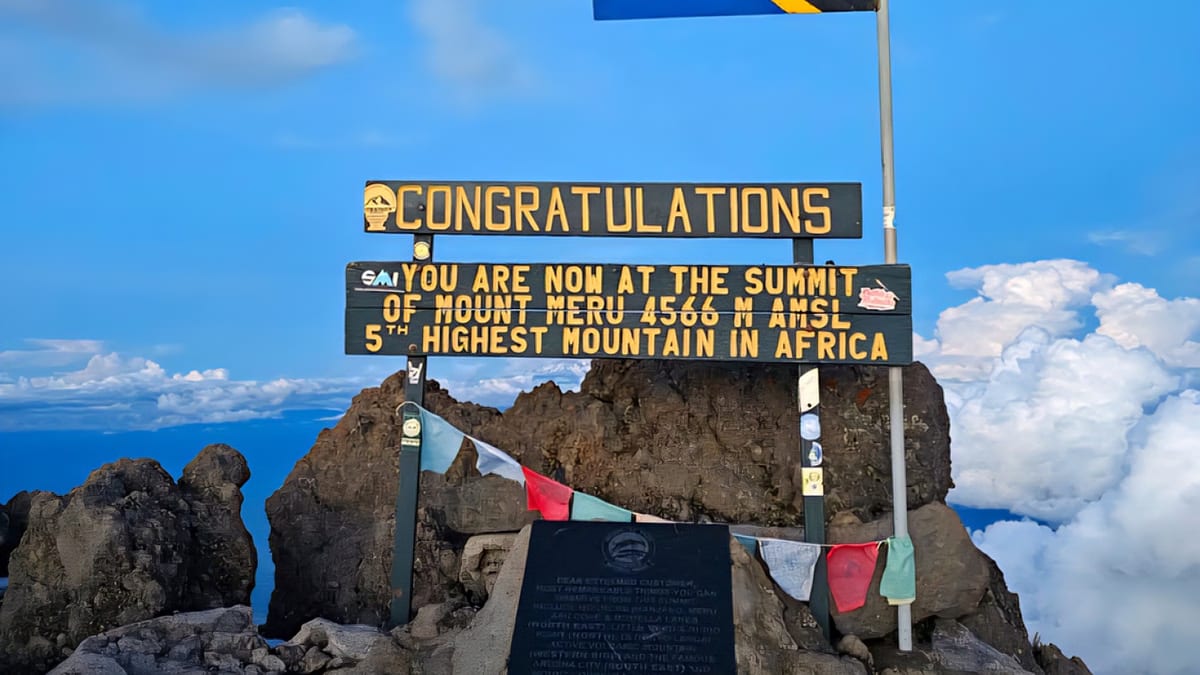
Mount Meru is Tanzania's second-highest mountain, standing at 4,566 meters (14,980 feet) above sea level. Located within Arusha National Park, it's a stunning volcanic peak that offers trekkers a unique alpine experience. The mountain features diverse ecosystems ranging from lush rainforest at lower elevations to alpine desert near the summit, known as Socialist Peak. Mount Meru is often overlooked in favor of Mount Kilimanjaro, but it provides an equally rewarding and less crowded trekking experience.
A typical Mount Meru trek takes 4 days to complete. This timeframe allows trekkers to acclimatize properly while ascending through different ecological zones—rainforest, heathland, moorland, and alpine desert—before reaching the summit at Socialist Peak. The 4-day itinerary is designed to balance physical exertion with adequate rest and acclimatization, making it suitable for moderately fit trekkers. This duration also makes it an excellent preparation trek for those planning to climb Mount Kilimanjaro afterward.
Mount Meru is located within Arusha National Park, which is home to diverse wildlife including buffalo, giraffes, zebras, antelopes, and various bird species. Due to the presence of wildlife in the national park, trekkers are accompanied by an armed ranger throughout the trek—a unique feature that sets Mount Meru apart from other mountain treks in the region. This armed ranger ensures your safety while allowing you to experience authentic wildlife encounters in their natural habitat. The presence of wildlife makes this one of Africa's most distinctive mountain experiences, combining high-altitude trekking with safari-like wildlife viewing.
Yes, Mount Meru is an excellent alternative to Mount Kilimanjaro and is often used as preparation for it. While Kilimanjaro is higher at 5,895 meters, Mount Meru at 4,566 meters offers several advantages: it's less crowded, provides better acclimatization opportunities, includes wildlife encounters with an armed ranger, and passes through more diverse ecosystems. The 4-day trek allows you to test your fitness and acclimatization ability in a shorter timeframe. Many experienced trekkers recommend climbing Mount Meru first to prepare physically and mentally before tackling the higher Kilimanjaro, while others simply prefer Mount Meru's unique combination of mountain trekking and wildlife viewing.
Essential items for a Mount Meru trek include: warm layers (temperatures drop significantly at altitude), a quality sleeping bag for mountain hut accommodation, waterproof jacket and pants for rainforest sections, sturdy hiking boots with good ankle support, sun protection (hat, sunscreen, sunglasses), a headlamp or flashlight, personal medications, toiletries, and a camera. Since the trek passes through rainforest, heathland, moorland, and alpine desert zones, you'll experience varying weather conditions. Bring moisture-wicking clothing for the lower elevations and insulating layers for higher altitudes where temperatures can drop below freezing. Trekking poles are also recommended to reduce strain on your knees during descent. Personal trekking gear and sleeping bags are typically not included in trek packages, so plan accordingly.
A comprehensive Mount Meru trek package typically includes: Arusha National Park entrance fees, a professional mountain guide, an armed park ranger for wildlife safety, porters to carry your gear, a cook to prepare meals, mountain hut accommodation throughout the trek, all meals during the trek, drinking water, transport to and from Momella Gate, government taxes and permits, and a summit certificate upon completion. This all-inclusive approach means you can focus entirely on the trekking experience without worrying about logistics. However, items like international flights, visa fees, travel insurance, personal trekking gear, sleeping bags, tips for guides and staff, and personal expenses are typically not included and should be arranged separately.
The best times to trek Mount Meru are during the dry seasons: January to February and June to October. These periods offer the most stable weather conditions, clearer skies for summit views, and easier trekking conditions. The long dry season (June to October) is particularly popular as it provides consistent weather and excellent visibility. During the rainy seasons (March to May and November to December), trails become muddy and slippery, cloud cover increases, and summit visibility decreases, making the trek more challenging. However, the wet season brings lush green scenery if you're willing to trek in more difficult conditions. For the best combination of weather, visibility, and trekking comfort, plan your Mount Meru trek during the dry seasons.
Yes, a professional mountain guide is essential for Mount Meru trekking and is included in all organized trek packages. The guide provides expertise on the route, helps with acclimatization, offers safety guidance, and shares knowledge about the mountain's ecology and geology. Additionally, an armed park ranger accompanies all trekkers throughout the trek due to wildlife present in Arusha National Park. This ranger ensures your safety around animals and is a unique feature of Mount Meru trekking. Attempting to trek Mount Meru without a guide and ranger is neither permitted by park regulations nor recommended for safety reasons. The combination of a professional guide and armed ranger makes Mount Meru one of the safest and most supported mountain trekking experiences in Africa.
Mount Meru is considered a moderately challenging trek, suitable for people with reasonable fitness levels and some hiking experience. While it's lower than Mount Kilimanjaro (4,566m vs 5,895m), the terrain is steeper and more technical in places, particularly on the final ascent to Socialist Peak. The 4-day timeframe requires good cardiovascular fitness and mental determination. The trek passes through diverse ecosystems—rainforest, heathland, moorland, and alpine desert—each presenting different challenges. Altitude is a factor, though the lower elevation compared to Kilimanjaro means slightly less risk of altitude sickness. The presence of an armed ranger and professional guide, combined with porter support and adequate acclimatization time, makes the trek manageable for determined trekkers in good health. Prior hiking experience is beneficial but not absolutely necessary if you're reasonably fit.
Mount Meru trekking requires several permits and fees since the mountain is located within Arusha National Park. These include Arusha National Park entrance fees and government permits and taxes. Most organized trek packages include these fees in their pricing, along with all associated costs for guides, rangers, porters, and accommodation. When booking a trek, ensure that all park fees and permits are explicitly included in the package price to avoid unexpected costs. Additionally, you'll need to arrange your own visa for Tanzania if required by your nationality, and travel insurance is highly recommended but typically not included in trek packages. It's advisable to book through established tour operators who handle all permit applications and ensure compliance with park regulations.
 Elia SafarisArusha, Tanzania5.0(8 reviews)
© 2026 SafariFind. All rights reserved.