 1 / 4
1 / 4 4 daysprivate
Loading SafariFind...
1 / 4Arrival in Tanzania – Transfer to Ngorongoro Area
Karatu
Meals: Dinner
Ngorongoro Area to Central Serengeti National Park
Serengeti National Park
Meals: Breakfast, Lunch, Dinner
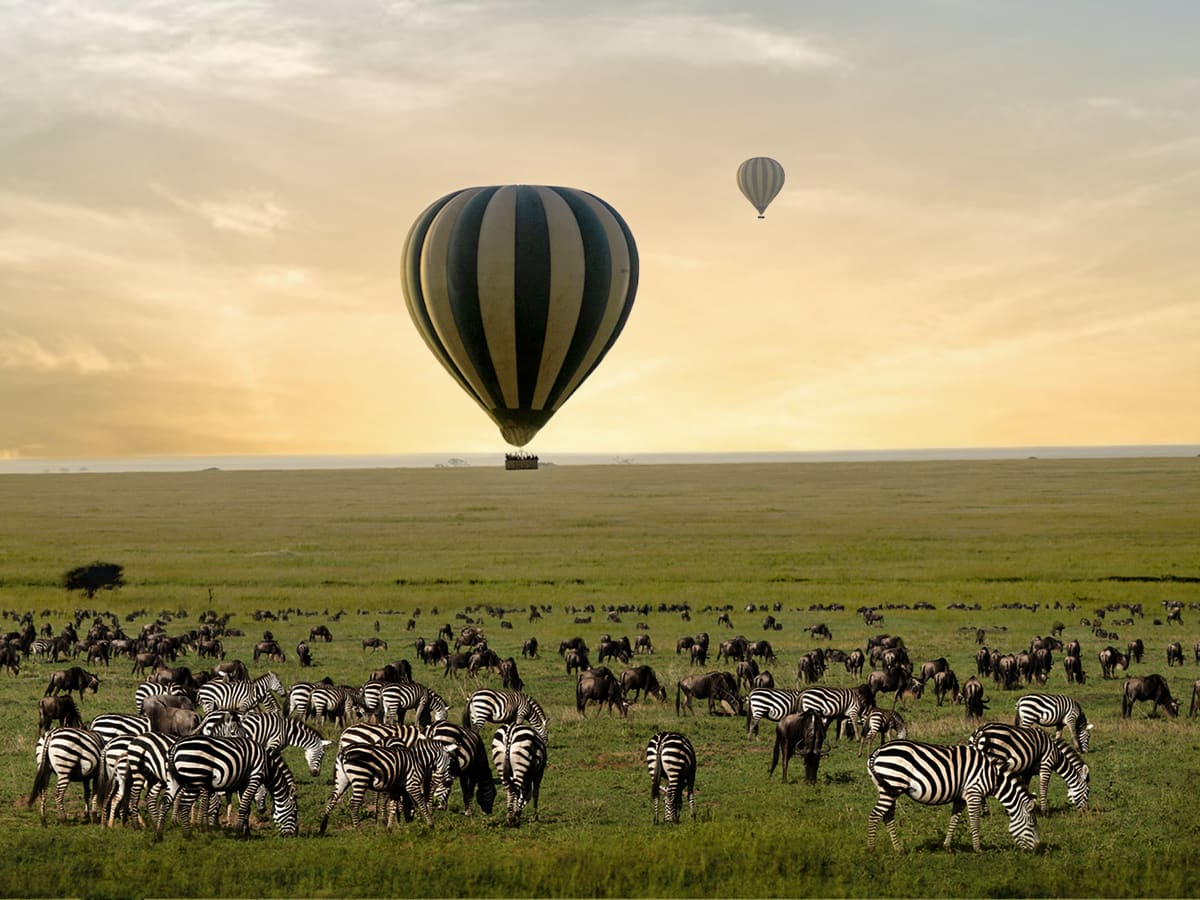
Hot Air Balloon Safari & Full-Day Game Drive in Central Serengeti
Serengeti National Park
Meals: Breakfast, Lunch, Dinner
Serengeti – Ngorongoro Crater – Arusha
Ngorongoro Crater
Meals: Breakfast, Lunch
High Season
Jun 2026 – Oct 2026
Low Season
Nov 2026 – May 2027
| Season | Solo traveler | 2 people | 3 – 4 people | 5 – 6 people | 7+ people | Child rate | Single suppl. |
|---|---|---|---|---|---|---|---|
High Season Jun 2026 – Oct 2026 | $3,610 | $2,400 | $2,160 | $2,040 | $1,920 | $1,680 | $720 |
Low Season Nov 2026 – May 2027 | $3,070 |
Child rate applies to travelers under 12 years. Single supplement applies to solo travelers taking their own room.
The Serengeti is home to an incredible diversity of wildlife, making it one of Africa's premier safari destinations. You can expect to see lions, elephants, leopards, cheetahs, giraffes, zebras, buffalo, wildebeest, hyenas, and numerous antelope species. The park also hosts abundant birdlife, making it excellent for bird watchers. The vast plains and varied habitats support over 1.5 million large animals, so wildlife viewing opportunities are exceptional throughout the year, though the best sightings depend on the season and animal migration patterns.
Yes, the Ngorongoro Crater is one of the best places in Africa to see the Big Five, which includes lions, elephants, buffalo, leopards, and black rhinos. The crater floor is a self-contained ecosystem with a high concentration of wildlife in a relatively compact area, making it one of the most reliable locations for Big Five sightings. The unique geography of the crater creates ideal conditions for spotting these iconic animals, and many visitors successfully encounter all five species during a crater game drive.
A hot air balloon safari is a unique wildlife viewing experience where you float silently above the savannah in a hot air balloon, typically at sunrise. This perspective offers unparalleled panoramic views of the landscape and wildlife below, allowing you to see vast areas of terrain and animal movement patterns impossible to observe from ground level. The gentle, quiet nature of balloon travel means animals are undisturbed, and you can drift peacefully over the plains while witnessing the African wilderness awakening. Most balloon safaris conclude with a champagne or bush breakfast in the field, making it a truly memorable and romantic experience. It's considered a once-in-a-lifetime highlight for many safari travelers.
A 4-day safari is an ideal duration for experiencing Tanzania's major highlights, including both the Serengeti and Ngorongoro Crater. This timeframe allows you to spend quality time on game drives in each location, participate in a hot air balloon experience, and appreciate the landscapes without feeling rushed. While shorter safaris (2-3 days) are possible, they offer limited wildlife viewing opportunities and less time to explore different habitats. Longer safaris (5-7+ days) provide even more extensive exploration and increase chances of rare animal sightings. For most travelers, 4 days strikes the perfect balance between experience quality and practical travel constraints.
The Serengeti offers excellent wildlife viewing year-round, but the best time depends on what you want to see. The dry season (June to October) is generally considered peak season, with concentrated wildlife around water sources and excellent visibility. This period also coincides with the Great Migration, when millions of wildebeest and zebras move across the plains. The wet season (November to May) brings lush landscapes, abundant birdlife, and calving season, with fewer tourists and lower prices. Each season offers distinct advantages: dry season for predator activity and migration, wet season for scenery and breeding animals. Your choice depends on personal preferences and what wildlife behavior interests you most.
Packing for a safari requires thoughtful preparation. Essential items include neutral-colored, lightweight clothing (khaki, tan, green) for game drives, as bright colors can disturb wildlife. Bring layers for early morning and evening game drives when temperatures drop significantly. Sun protection is critical: pack a wide-brimmed hat, sunglasses, high-SPF sunscreen, and a lightweight long-sleeved shirt. Comfortable, closed-toe hiking boots or sturdy walking shoes are essential for uneven terrain. Other important items include binoculars for wildlife viewing, a camera with extra batteries and memory cards, insect repellent, personal medications, and toiletries. Bring a light rain jacket for unexpected showers, even in dry season. Since accommodations are typically comfortable with electricity, you can pack less than you might expect, but check with your operator for specific recommendations based on season and lodge amenities.
Visa requirements for Tanzania depend on your nationality. Many countries' citizens can obtain a visa on arrival at Tanzanian airports, while others can apply for an e-visa online before travel. Some nationalities qualify for visa-free entry for short stays. It's essential to check Tanzania's official immigration website or consult your nearest Tanzanian embassy well in advance of your trip, as requirements change and processing times vary. Most safari operators can provide guidance on visa procedures, but you remain responsible for ensuring your documents are in order. Plan to apply at least 4-6 weeks before your departure date to allow sufficient processing time.
While specific vaccination requirements vary based on your medical history and origin country, certain vaccinations are commonly recommended for Tanzania travel. Yellow fever vaccination is frequently advised, and proof of vaccination may be required if you're traveling from certain countries. Malaria prophylaxis is typically recommended, particularly for lower-altitude areas like the Serengeti and Ngorongoro regions. Other vaccinations to discuss with your travel health clinic include typhoid, hepatitis A and B, and routine immunizations. Consult a travel medicine specialist or your doctor 4-6 weeks before departure to receive personalized recommendations based on your health status, itinerary, and the time of year you're traveling. They can also prescribe appropriate malaria prevention medications and advise on other health precautions.
Tanzania safari costs vary widely depending on season, accommodation quality, group size, and specific inclusions. Budget safaris might range from $150-300 per person per day for shared accommodations and basic amenities, while mid-range safaris typically cost $300-600 per person per day with comfortable lodges and quality service. Luxury safaris can exceed $1,000+ per person per day with premium accommodations and exclusive experiences. Additional costs to consider include international airfare, travel insurance, visa fees, travel vaccinations, alcoholic beverages, tips and gratuities, and optional activities. Hot air balloon experiences, when not included in package pricing, typically add $400-600 per person. Peak season (June-October) commands higher prices than shoulder or low seasons. Request detailed quotes from operators that clearly outline what's included and excluded to accurately budget your safari adventure.
The Ngorongoro Crater is a UNESCO World Heritage Site and one of Africa's most remarkable natural wonders. Formed millions of years ago by a volcanic collapse, it's the world's largest intact volcanic caldera, creating a stunning amphitheater-like landscape. The crater floor, roughly 260 square kilometers, functions as a self-contained ecosystem with permanent water sources and year-round grazing lands, supporting an estimated 25,000 large animals. This concentration of wildlife in a defined area makes it one of the best places in Africa for reliable Big Five sightings. The crater's unique geology, dramatic scenery, and exceptional wildlife viewing opportunities make it an essential destination for any Tanzania safari. Descending into the crater for a game drive offers an otherworldly experience, surrounded by towering walls and abundant wildlife in this natural sanctuary.
© 2026 SafariFind. All rights reserved.
| $2,040 |
| $1,840 |
| $1,740 |
| $1,640 |
| $1,680 |
| $720 |
