 1 / 9
1 / 9 4 daysprivate
4-Day Classic Tanzania Safari: Tarangire, Serengeti & Ngorongoro Crater
byAquiline SafarisTrusted
Instant Booking
Loading SafariFind...
1 / 9byAquiline SafarisTrusted
Arusha – Tarangire National Park
Tarangire National Park
Meals: Lunch, Dinner
Karatu – Serengeti National Park
Serengeti National Park
Meals: Breakfast, Lunch, Dinner
Full-Day Serengeti Safari – Karatu
Serengeti National Park
Meals: Breakfast, Lunch, Dinner
Ngorongoro Crater – Arusha
Ngorongoro Crater
Meals: Breakfast, Lunch
Year Round
Year-round
| Season | Solo traveler | 2 people | 3 – 4 people | 5 – 6 people | 7+ people | Child rate | Single suppl. |
|---|---|---|---|---|---|---|---|
Year Round Year-round | $2,460 | $1,760 | $1,670 | $1,580 | $1,760 | $1,230 | $530 |
Child rate applies to travelers under 12 years. Single supplement applies to solo travelers taking their own room.
Tarangire National Park is renowned as one of Tanzania's premier wildlife destinations, particularly famous for its large elephant populations. You can expect to see herds of African elephants, buffalo, zebras, wildebeest, giraffes, lions, leopards, and various antelope species including impalas and elands. The park is also home to over 300 bird species, making it excellent for birdwatchers. The Tarangire River serves as a vital water source, especially during dry seasons, which concentrates wildlife viewing opportunities along its banks.
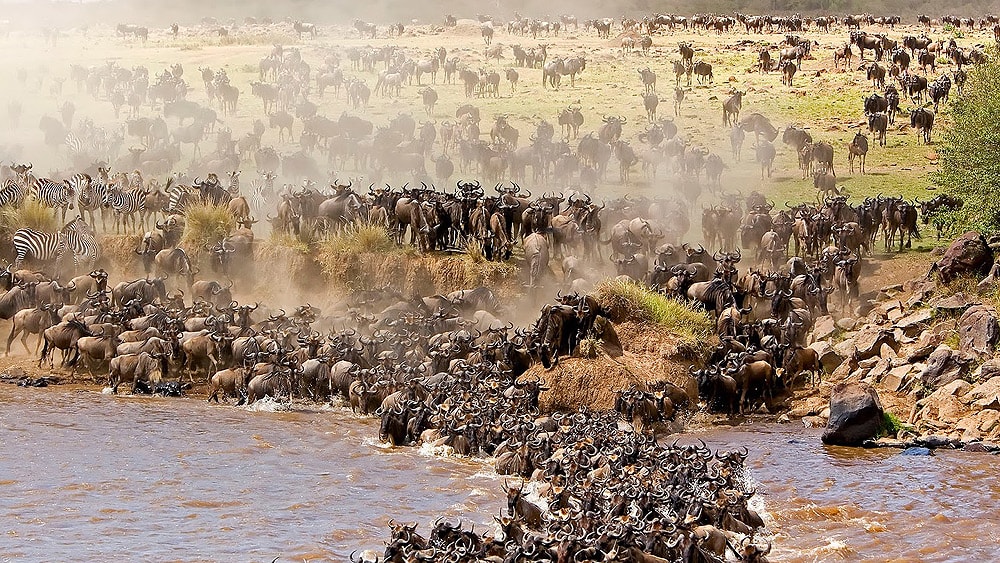
The Serengeti offers excellent wildlife viewing year-round, but the best times depend on what you want to see. The dry season (June to October) is ideal for general wildlife viewing and the famous wildebeest migration, when animals congregate around remaining water sources. The wet season (November to May) offers lush landscapes, fewer tourists, and excellent birdwatching, though some roads may be challenging. For the Great Migration river crossings, July to August is typically peak season. Consider visiting during shoulder months (May-June or September-October) for a balance of good wildlife viewing and fewer crowds.
The Ngorongoro Crater is one of the world's largest intact volcanic calderas and a UNESCO World Heritage Site. Its unique ecosystem supports an estimated 25,000 large animals year-round, including lions, elephants, zebras, wildebeest, buffalo, and rhinos, all contained within a natural amphitheater. The crater's walls rise about 600 meters, creating a self-contained environment with permanent water sources and diverse habitats. The stunning geological formations, combined with exceptional wildlife concentration and accessibility, make it one of Africa's most spectacular natural wonders and a highlight of any Northern Tanzania safari.
A 4-day safari is an excellent duration for experiencing Northern Tanzania's three main attractions: Tarangire National Park, Serengeti National Park, and Ngorongoro Crater. This timeframe allows you to spend meaningful time in each location without feeling rushed, with typically one full day in Tarangire, one to two days in Serengeti, and a crater visit on the final day. If you have more time, 5-7 days would allow for deeper exploration and more wildlife encounters, while 3 days is possible but more condensed. Four days strikes a good balance between comprehensive wildlife viewing and comfortable travel without excessive time in vehicles.
Pack neutral-colored clothing (khaki, olive, tan, brown) that blends with the landscape and doesn't disturb wildlife—avoid bright colors and white. Bring lightweight, breathable fabrics for warm days and a warm layer for cool mornings and evenings. Essential items include a wide-brimmed hat, sunglasses, high-SPF sunscreen, insect repellent, and a good camera with extra batteries and memory cards. Wear sturdy, closed-toe hiking boots for game walks and comfort during long vehicle hours. Don't forget binoculars, a small backpack, toiletries, and any personal medications. A light rain jacket is useful during wet seasons. Most safari lodges provide basic amenities, but consider bringing your preferred toiletries and any specific medications you need.
Most international visitors require a visa to enter Tanzania. Visa requirements vary by nationality, so check with the Tanzanian embassy or consulate in your country well before travel. Many nationalities can obtain a visa on arrival at Kilimanjaro International Airport or apply online through Tanzania's e-visa system in advance. The e-visa process is typically straightforward and takes a few days. Ensure your passport is valid for at least six months beyond your travel dates. Additionally, while not a visa requirement, Tanzania recommends or requires certain vaccinations such as yellow fever for some travelers—consult your healthcare provider about recommended immunizations before departure.
Travel insurance is highly recommended for any international safari trip. Comprehensive travel insurance should cover trip cancellations, medical emergencies, evacuation, lost luggage, and travel delays. Given that safaris involve remote locations and travel to areas where medical facilities may be limited, emergency evacuation coverage is particularly important. Some insurance policies specifically cover adventure activities, which may be relevant depending on optional activities you plan. While not mandatory, travel insurance provides peace of mind and financial protection against unexpected circumstances. Review policy details carefully to ensure coverage meets your specific needs, including any pre-existing conditions and activities you plan to undertake.
Safari costs in Tanzania vary significantly based on accommodation quality, group size, season, and operator. A 4-day Northern Tanzania safari can range from budget-friendly options with basic lodges to luxury experiences with high-end accommodations. Costs typically include park fees, accommodation, meals, guides, and vehicle transport. Budget safaris may start around $1,000-1,500 per person, while mid-range options range from $2,000-4,000 per person, and luxury safaris can exceed $5,000+ per person. Private safaris are more expensive than group tours. Peak season (June-October) commands higher prices than shoulder or wet seasons. When budgeting, remember that international flights, travel insurance, visas, tips, and optional activities are typically additional expenses not included in the safari package price.
Each destination offers distinct safari experiences. Tarangire is famous for its massive elephant concentrations and scenic river landscape, making it ideal for elephant enthusiasts and photographers. The Serengeti is known for vast open plains, the Great Migration, and diverse predator populations including lions and leopards—offering classic African safari scenery and drama. The Ngorongoro Crater is unique as a contained ecosystem where animals are concentrated in one volcanic caldera, providing exceptional wildlife viewing density and accessibility without extensive driving. Tarangire is best for elephant encounters, Serengeti for migration and predator action, and Ngorongoro for convenient, concentrated wildlife viewing. Combining all three provides the most comprehensive Northern Tanzania safari experience with varied landscapes and wildlife opportunities.
A comprehensive Northern Tanzania safari package typically includes all national park entrance fees, professional English-speaking guides, private or shared 4x4 safari vehicles, accommodation at selected lodges or camps, all meals (breakfast, lunch, and dinner), bottled water during game drives, and airport transfers. Some packages include government taxes and VAT. However, packages generally exclude international airfare, travel insurance, visa fees, alcoholic beverages, tips and gratuities for guides and staff, personal expenses, and optional activities. Before booking, clarify exactly what's included and excluded, as different operators may have varying inclusions. Additional costs to budget for typically include travel insurance, visa fees, tips (usually 10-15% of the package cost), alcoholic drinks, and any optional activities like hot air balloon rides or guided walks.
© 2026 SafariFind. All rights reserved.
