 1 / 51 / 5
Loading SafariFind...
1 / 5Arrival & Descent into Ngorongoro Crater
Ngorongoro Crater
Meals: Lunch, Dinner
Full Day in Ngorongoro – Big Five Game Drive
Ngorongoro
Meals: Breakfast, Lunch, Dinner
Journey to the Serengeti – Gateway to the Great Migration
Serengeti National Park
Meals: Breakfast, Lunch, Dinner
Deep Immersion in the Serengeti – Migration Spectacle
Serengeti National Park
Meals: Breakfast, Lunch, Dinner
Serengeti to Arusha – Departure & Reflection
Arusha
Meals: Breakfast
Year Round
Year-round
| Season | Solo traveler | 2 people | 3 – 4 people | 5 – 6 people | 7+ people | Child rate | Single suppl. |
|---|---|---|---|---|---|---|---|
Year Round Year-round | $4,010 | $4,010 | $2,150 | $1,980 | $1,950 | $990 | $1,540 |
Child rate applies to travelers under 12 years. Single supplement applies to solo travelers taking their own room.
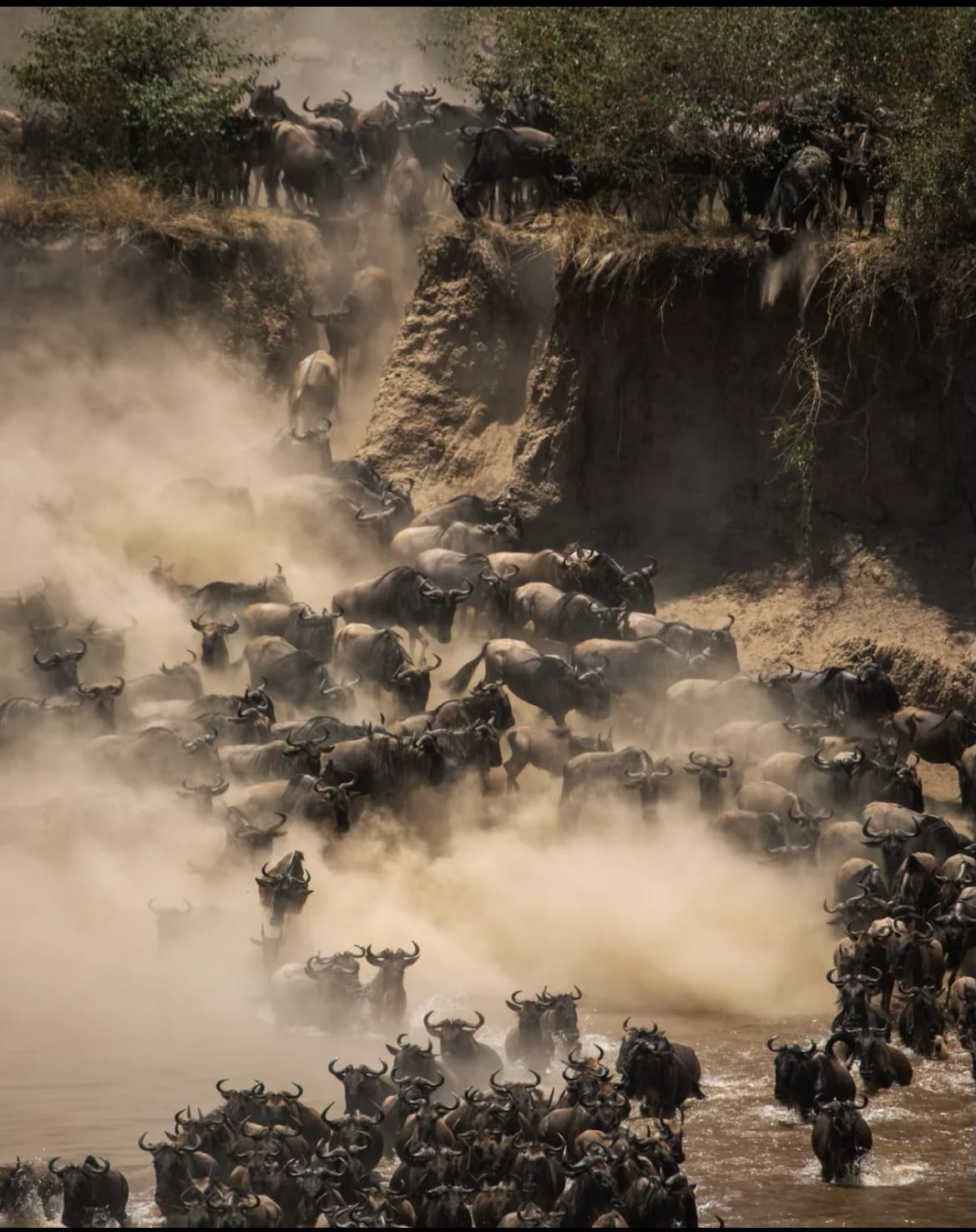
The Great Migration is a year-round phenomenon, but the timing of peak experiences varies by season. July and August offer the most dramatic river crossings as massive herds move northward across the Serengeti. If you prefer to witness the calving season with newborn animals and intense predator activity, January and February on the southern plains are ideal. The migration follows rainfall patterns and grazing cycles, so each season presents unique wildlife encounters. Your choice depends on whether you want to witness the spectacle of river crossings or the vulnerability and abundance of newborn calves.
The Serengeti and Ngorongoro Crater are home to some of Africa's highest concentrations of large mammals. You can expect to see the Big Five—lions, leopards, elephants, buffalo, and rhinoceros—along with cheetahs, hyenas, giraffes, zebras, wildebeest, and countless gazelle species. The Ngorongoro Crater, being a compact ecosystem, offers particularly dense wildlife viewing with animals concentrated in a relatively small area. Bird enthusiasts will also find over 500 bird species throughout both regions. The variety and abundance of wildlife in these ecosystems make encounters with multiple species per day highly likely.
Yes, a 5-day safari is an effective timeframe for experiencing the Great Migration. This duration is strategically designed to maximize wildlife encounters without excessive travel time, making it ideal for those with limited vacation days. By combining two distinct ecosystems—the Ngorongoro Crater and the Serengeti—you experience both concentrated wildlife viewing and the broader dynamics of the migration. Five days allows sufficient time for multiple game drives at dawn and dusk, when wildlife activity is highest, while still maintaining a manageable pace. However, longer safaris (7-10 days) do offer more flexibility and additional opportunities for sightings.
Absolutely. Tanzania's safari experiences, particularly in the Serengeti and Ngorongoro, are well-established and welcoming to first-time safari-goers. The itineraries are carefully designed with beginners in mind, professional guides are highly trained in wildlife behavior and safety, and lodges cater to all experience levels. Your guide will help you understand animal behavior, ecology, and photography techniques, transforming each sighting into a learning experience. The combination of comfort amenities and authentic adventure makes it accessible regardless of your prior safari experience. First-timers often find the Ngorongoro Crater particularly rewarding due to its higher density of wildlife in a more compact area.
Pack neutral-colored clothing (khaki, tan, olive, and gray) to blend in with the landscape and avoid startling wildlife. Essential items include binoculars for distant wildlife viewing, a quality camera with a good zoom lens, sunscreen with high SPF, a wide-brimmed hat, and sunglasses. Layers are crucial since early morning and evening game drives can be cool, while midday temperatures rise significantly. Comfortable walking shoes and closed-toe boots are recommended. Don't forget insect repellent, a headlamp or flashlight, and any personal medications. Your safari lodge will provide guidance on seasonal-specific packing, but these basics apply year-round. Avoid bright colors and perfumes, which can attract insects and disturb wildlife.
A typical safari day includes early morning game drives (usually 6-7 hours starting before dawn) and evening game drives (3-4 hours starting in late afternoon). These timing choices align with peak wildlife activity when predators hunt and animals are most active. Most safari operators schedule game drives at dawn and dusk because these are the cooler parts of the day when animals are most visible and active. Midday drives are less common but may occur depending on your itinerary and guide's strategy. In a 5-day safari, you'll typically have 8-10 hours of game driving per day, which provides excellent opportunities for wildlife encounters while allowing rest and meal time at your lodge.
While specific vaccination requirements depend on your home country and current health conditions, most travelers to Tanzania are advised to consult with a travel health clinic 4-6 weeks before departure. Yellow fever vaccination is commonly recommended, and malaria prophylaxis is typically advised, particularly for the Serengeti and Ngorongoro regions. Routine vaccinations (measles, polio, tetanus) should be current. It's essential to check with your doctor or a travel health clinic for personalized recommendations based on your medical history and the current health situation. Your safari operator can provide guidance on health precautions, but professional medical advice is crucial for your safety and well-being.
A comprehensive safari package typically includes accommodation at selected lodges, all meals (breakfast, lunch, and dinner), a private 4x4 safari vehicle, a professional English-speaking guide, bottled water during game drives, airport transfers, and all national park entrance fees. Government taxes and VAT are usually included in the quoted price. However, exclusions typically cover international airfare, visa fees, travel insurance, alcoholic beverages, tips and gratuities for guides and staff, personal expenses, optional activities, and travel vaccinations. It's important to clarify with your operator exactly what's included and excluded, as packages can vary. Pre- and post-safari accommodation outside the main itinerary is usually not included.
River crossings are unpredictable natural events, so preparation involves both practical and mental readiness. Your guide will position your vehicle strategically based on recent wildlife movement reports, animal behavior patterns, and seasonal timing. During July and August, crossings are most likely as herds move northward. Bring a good camera with fast autofocus and a zoom lens, as you'll want to capture these intense moments from a safe distance. Wear neutral colors to avoid startling animals. Most importantly, practice patience—crossings can take hours or may not occur on a given day, as they're driven by natural instinct rather than schedule. Your guide's experience and knowledge of animal behavior significantly increase your chances of witnessing this spectacle. Even if you don't see a crossing, the experience of being in the midst of millions of migrating animals is extraordinary.
The Ngorongoro Crater is a UNESCO World Heritage Site and one of the world's largest intact calderas, creating a unique ecosystem unlike typical safari plains. Its defining characteristic is the concentration of wildlife in a relatively compact area—the crater floor spans only about 260 square kilometers but supports an estimated 25,000 animals. This density means higher probability of sightings compared to vast open plains. The crater functions as a natural amphitheater where lions, elephants, buffalo, rhinos, and countless other species thrive in remarkable abundance. The landscape's dramatic geology, combined with the enclosed ecosystem, creates an intimate safari experience. Descending into the crater feels like entering a lost world, and the combination of scenery and wildlife encounters makes it one of Africa's most distinctive safari destinations.
© 2026 SafariFind. All rights reserved.
