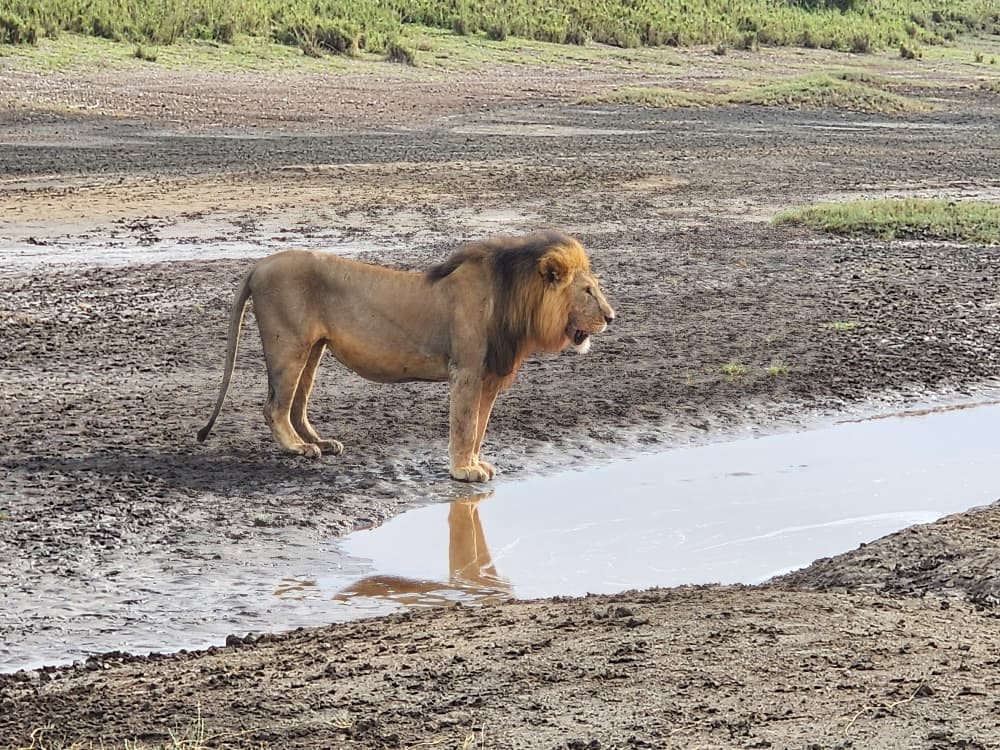
 1 / 71 / 7
Loading SafariFind...
1 / 7Arusha → Tarangire National Park
Tarangire National Park
Meals: Breakfast, Lunch, Dinner
Tarangire → Central Serengeti
Serengeti National Park
Meals: Breakfast, Lunch, Dinner
Central Serengeti Safari
Serengeti National Park
Meals: Breakfast, Lunch, Dinner
Northern/Western Serengeti (Migration Focus)
Serengeti National Park
Meals: Breakfast, Lunch, Dinner
Serengeti Full Day Exploration
Serengeti National Park
Meals: Breakfast, Lunch, Dinner
Serengeti → Ngorongoro Conservation Area
Ngorongoro Crater
Meals: Breakfast, Lunch, Dinner
Ngorongoro Crater → Arusha
Arusha
Meals: Breakfast
Year Round
Year-round
| Season | 2 people |
|---|---|
Year Round Year-round | $3,140 |
Tanzania's Serengeti and Ngorongoro Crater are home to exceptional wildlife diversity. You can expect to see the Big Five: lions, leopards, elephants, buffalo, and rhinoceros (including the rare black rhino in the Ngorongoro Crater). The Serengeti also hosts massive herds of wildebeest, zebras, giraffes, cheetahs, hyenas, and numerous antelope species. The Ngorongoro Crater is particularly renowned for having one of the highest concentrations of wildlife in Africa, making it possible to see multiple big cats and the Big Five within a single day. Bird enthusiasts will also find over 500 bird species throughout these regions.
The Great Migration in Tanzania's Serengeti is a year-round phenomenon, but the timing varies by season. The main migration typically occurs between June and October, when massive herds of wildebeest and zebras move northward across the Serengeti plains in search of fresh grazing. During this period, you'll witness dramatic river crossings and intense predator-prey interactions. However, the migration is present throughout the year in different regions—herds move south from December to May. The best time depends on your preference: June to October offers the most dramatic crossings and concentrated wildlife viewing, while other months provide excellent wildlife sightings with fewer crowds.
The Ngorongoro Crater is a UNESCO World Heritage Site and one of the world's largest intact volcanic calderas, located in northern Tanzania. What makes it extraordinary for safari is its unique ecosystem: the crater floor supports one of the highest densities of wildlife in Africa, with an estimated 25,000 large animals living within its 260-square-kilometer area. This means you have an exceptional chance of seeing the Big Five—including the rare black rhino—often within a single day of game drives. The crater's natural amphitheater creates a contained environment where wildlife congregates around limited water sources, making animal sightings remarkably reliable. The stunning geological formations and diverse habitats within the crater also make it visually spectacular.
Yes, 7 days is an ideal duration for experiencing Tanzania's major safari destinations. A week-long safari allows you to spend sufficient time in multiple ecosystems—such as Tarangire National Park, the Serengeti, and the Ngorongoro Crater—rather than rushing through them. This timeframe provides multiple game drives in each location, increasing your chances of witnessing diverse wildlife and natural phenomena like the Great Migration (depending on season). It also allows for travel days between destinations and acclimatization time. For first-time safari-goers, 7 days strikes the perfect balance between experiencing Tanzania's iconic landscapes and wildlife without excessive travel fatigue.
Packing for a Tanzania safari requires consideration of both wildlife viewing comfort and the climate. Bring neutral-colored, lightweight clothing in earth tones (greens, tans, browns) as bright colors can disturb wildlife. Include long-sleeved shirts and pants for sun protection and insect defense, especially for early morning and evening game drives. A warm layer or fleece is essential for dawn drives when temperatures drop significantly. Other essentials include a wide-brimmed hat, sunglasses, high-SPF sunscreen, insect repellent, and comfortable walking shoes. Binoculars and a camera with a good zoom lens are invaluable for wildlife photography. Don't forget personal medications, a basic first-aid kit, and toiletries. Neutral-colored safari clothing helps you blend into the landscape and respects wildlife viewing ethics.
A 7-day Tanzania safari package typically includes all park entrance fees, accommodation, all meals (breakfast, lunch, and dinner), private 4x4 vehicle transportation, a professional English-speaking guide, bottled water during game drives, airport transfers, and government taxes. However, costs vary significantly based on accommodation quality (budget to luxury lodges), season (peak vs. low season), and operator. Most packages exclude international airfare, travel insurance, visa fees, alcoholic beverages, tips and gratuities, personal expenses, and optional activities like hot air balloon safaris. It's important to clarify what's included in your specific package and budget separately for non-included items. Travel insurance and visa costs should be factored into your total budget.
Visa requirements and health recommendations for Tanzania depend on your nationality and current health status. Most visitors require a visa to enter Tanzania, which can typically be obtained on arrival or in advance through the Tanzanian embassy. Regarding vaccinations, yellow fever vaccination is often recommended or required, particularly if you're arriving from certain countries. Malaria prophylaxis is strongly recommended for all safari regions, and you should consult with a travel health clinic 4-6 weeks before your trip. Additional vaccinations such as hepatitis A, typhoid, and routine immunizations are commonly advised. Since health and visa requirements change frequently and vary by nationality, check with your country's official health authority and the Tanzanian embassy well before your departure to ensure you have current information.
Tarangire National Park is renowned for its massive elephant herds—some of the largest concentrations in Africa—and its distinctive ancient baobab trees that dot the landscape. The park's name comes from the Tarangire River, which is a vital water source that attracts wildlife year-round. Beyond elephants, the park supports diverse wildlife including lions, giraffes, zebras, buffalo, and numerous antelope species. Tarangire is also a bird watcher's paradise with over 500 bird species recorded. What makes Tarangire special is that it offers excellent safari experiences in a less crowded setting compared to the Serengeti, allowing for more intimate wildlife encounters. The park's varied ecosystems—from riverine forests to acacia woodlands—create scenic diversity and excellent game viewing opportunities.
Yes, seeing the Big Five in a single day is most reliably possible in the Ngorongoro Crater, which has one of the highest concentrations of wildlife in Africa. The crater's contained ecosystem and abundance of large animals make it feasible to encounter lions, leopards, elephants, buffalo, and rhinos (including the rare black rhino) within 24 hours. In the broader Serengeti and Tarangire regions, seeing all five in one day is possible but less guaranteed, as animals are spread across vast areas. Success depends on wildlife movement, seasonal patterns, guide expertise, and luck. However, across a 7-day safari covering multiple parks, you have excellent chances of seeing all five species. The key is spending multiple game drives in different areas and working with experienced guides who know where to find specific animals.
A hot air balloon safari is a remarkable optional experience that offers a completely different perspective of the Serengeti landscape and wildlife. From the air at sunrise, you gain a breathtaking aerial view of the vast plains, wildlife herds, and the dramatic landscape that's impossible to appreciate from ground level. It's particularly spectacular during the Great Migration, when you can see massive herds moving across the plains. The experience typically lasts 1-2 hours and includes a champagne breakfast afterward. While it's an additional cost beyond the standard safari package, many travelers consider it a once-in-a-lifetime experience worth the investment. The best time for balloon safaris is during the dry season when weather conditions are most favorable. If wildlife photography is important to you, the aerial perspective provides unique photo opportunities.
 Pumba ReisenArusha, Tanzania
© 2026 SafariFind. All rights reserved.