 1 / 4
1 / 4 7 daysprivate
7-Day Machame Route Trek – Kilimanjaro Climb
Highlights
- One of the most scenic Kilimanjaro routes
Loading SafariFind...
1 / 4Machame Gate to Machame Camp
Kilimanjaro National Park
Meals: Dinner
Machame Camp to Shira Camp
Kilimanjaro National Park
Meals: Breakfast, Lunch, Dinner
Shira Camp to Lava Tower to Barranco Camp
Kilimanjaro National Park
Meals: Breakfast, Lunch, Dinner
Barranco Camp to Karanga Camp
Kilimanjaro National Park
Meals: Breakfast, Lunch, Dinner
Karanga Camp to Barafu Camp
Kilimanjaro National Park
Meals: Breakfast, Lunch, Dinner
Barafu Camp to Uhuru Peak to Mweka Camp
Kilimanjaro National Park
Meals: Breakfast, Lunch, Dinner
Mweka Camp to Mweka Gate
Mweka Gate
Meals: Breakfast
Year Round
Year-round
| Season | 2 people |
|---|---|
Year Round Year-round | $3,080 |
The Machame Route is one of the most popular and scenic trekking paths up Mount Kilimanjaro, located in Tanzania. It earned the nickname 'Whiskey Route' because it's known for being slightly more challenging and rewarding than other routes, offering excellent opportunities to enjoy a celebratory drink at camp after a successful day's trek. The route is famous for its stunning scenery, diverse landscapes ranging from lush rainforests to alpine deserts, and one of the highest summit success rates on the mountain. It follows the 'climb high, sleep low' principle, which means trekkers ascend to higher altitudes during the day but return to lower elevations to sleep, allowing the body to acclimatize gradually to the thin air.
The Machame Route typically takes 7 days to complete, making it one of the longer routes on Mount Kilimanjaro. This extended timeframe is actually one of the route's greatest advantages because it includes an additional acclimatization day, which significantly improves your chances of successfully reaching Uhuru Peak (5,895m), the mountain's highest point. The extra day allows your body to adjust gradually to the increasing altitude, reducing the risk of altitude sickness and increasing your summit success rate compared to shorter routes.
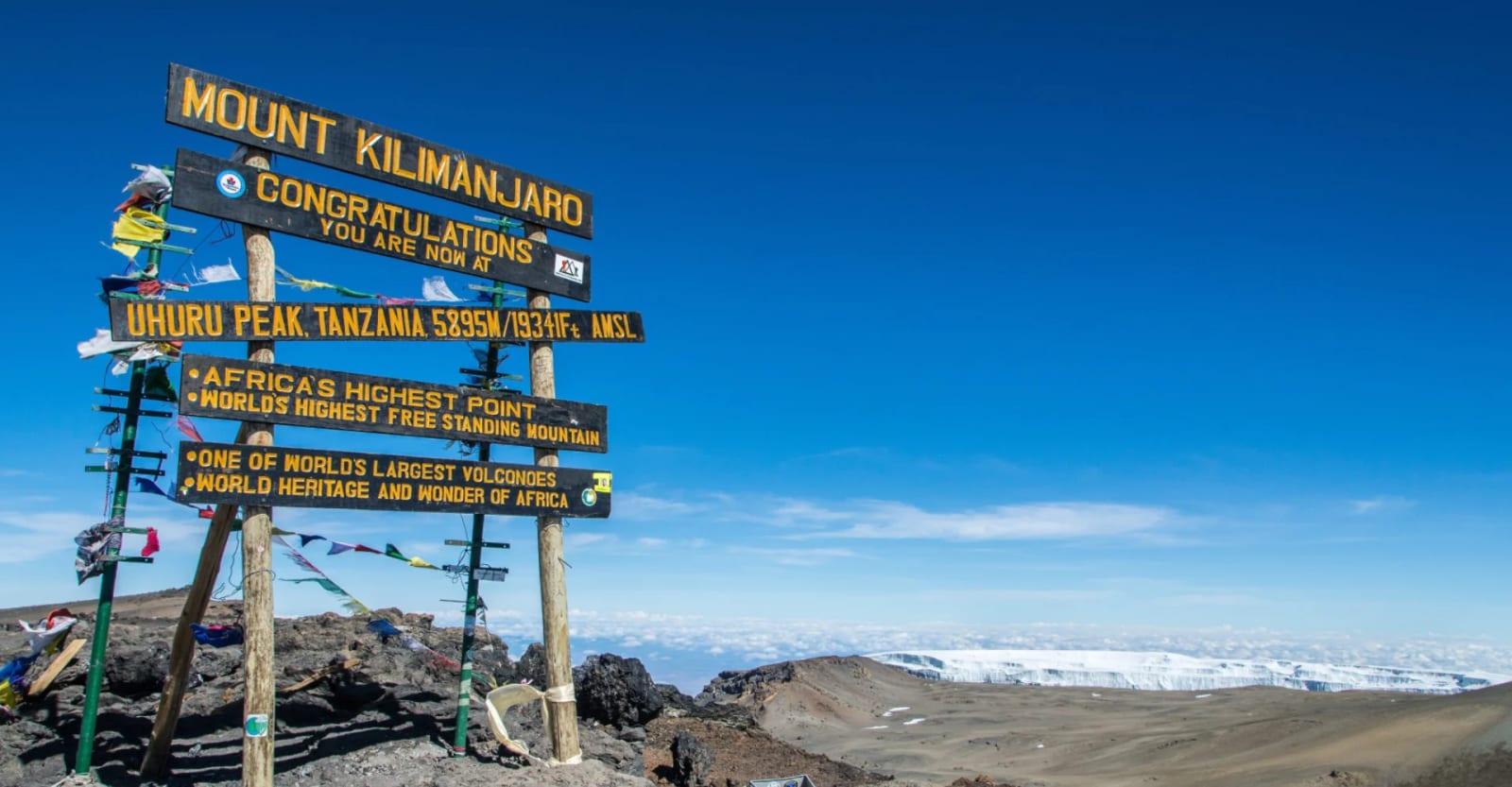
Mount Kilimanjaro's highest point is called Uhuru Peak, which stands at 5,895 meters (19,341 feet) above sea level. Uhuru Peak is located on the crater rim of Kibo, Kilimanjaro's highest volcanic cone. Reaching Uhuru Peak is the ultimate goal for most trekkers climbing the mountain. The Machame Route is specifically designed to help climbers successfully summit Uhuru Peak by providing excellent acclimatization opportunities throughout the 7-day trek.
One of the most remarkable aspects of climbing Mount Kilimanjaro is the incredible variety of landscapes you'll encounter. On the Machame Route, you'll trek through five distinct ecological zones: lush rainforests at lower elevations, moorlands with alpine vegetation, alpine desert terrain with sparse plant life, glaciers and snow fields near the summit, and finally the snow-capped peak itself. This dramatic change in scenery as you ascend creates one of the most visually stunning trekking experiences in the world, often described as 'walking from the equator to the Arctic' in just seven days.
A comprehensive Kilimanjaro trekking package typically includes several essential components: Kilimanjaro National Park entrance fees and permits, professional mountain guides with expertise in high-altitude trekking, assistant guides to provide additional support, porters to carry most of your gear, and a cook to prepare meals. The package also covers all camping equipment including mountain tents and sleeping mattresses, all meals and drinking water throughout the trek, rescue fees for emergency situations, transport to and from the mountain gate, government taxes, and a summit certificate upon successful completion. However, packages typically exclude international flights, visa fees, travel insurance, personal trekking gear, sleeping bags, tips for guides and support staff, and personal expenses.
Altitude sickness is a legitimate concern for anyone climbing Mount Kilimanjaro, as you'll be ascending to 5,895 meters where oxygen levels are significantly lower than at sea level. However, the Machame Route is specifically designed to minimize this risk through its 'climb high, sleep low' acclimatization strategy. The 7-day itinerary, which includes an additional acclimatization day compared to shorter routes, allows your body to gradually adapt to the thinner air. This extended timeline is one of the primary reasons the Machame Route has one of the highest summit success rates on Kilimanjaro. To further reduce altitude sickness risk, stay well-hydrated, eat regularly, move slowly ('pole pole' in Swahili), and inform your guide of any symptoms immediately.
Mount Kilimanjaro can be climbed year-round, but the best times are during the dry seasons: January through March (the short dry season) and June through October (the long dry season). These periods offer the clearest skies, best visibility of the summit, and the most stable weather conditions. The dry seasons provide the highest probability of successful summit attempts and the most enjoyable trekking experience. The rainy seasons (April-May and November-December) are still climbable but involve muddy trails, reduced visibility, and lower success rates. Many experienced climbers prefer June through October as it offers the most reliable conditions.
Personal trekking gear is essential for a Kilimanjaro climb and is typically not included in standard packages. You'll need sturdy, well-broken-in hiking boots suitable for rocky terrain, a warm sleeping bag rated for temperatures well below freezing (since you'll be sleeping at high altitudes), moisture-wicking clothing layers for varying temperatures, a waterproof rain jacket, warm fleece or down jacket, hat, gloves, and sunscreen. Other important items include a headlamp or torch, water bottles or hydration pack, personal toiletries, medications (including altitude sickness prevention if recommended by your doctor), and a camera. Since porters carry most of your gear, pack efficiently in a large duffel bag. Avoid cotton clothing, which retains moisture; instead, wear synthetic or wool layers that dry quickly and provide insulation even when wet.
Travel insurance is highly recommended for any Kilimanjaro trek and is typically not included in standard climbing packages. Your insurance should specifically cover high-altitude trekking, mountain rescue and evacuation (which can be expensive), and medical emergencies. Some standard travel insurance policies exclude mountaineering activities above certain elevations, so verify that your policy covers Kilimanjaro climbing. Evacuation insurance is particularly important since rescue operations at high altitudes can cost thousands of dollars. Before purchasing, carefully read the policy terms to ensure it covers the specific activities and altitudes involved in your trek.
Climbing Mount Kilimanjaro is more about mental determination and acclimatization than extreme fitness. While you don't need to be a professional athlete, a reasonable level of cardiovascular fitness is necessary. Ideally, begin training 4-6 weeks before your trek with activities like hiking, running, cycling, or stair climbing to build endurance. The key is the ability to walk for 5-7 hours at a moderate pace on consecutive days while carrying a light daypack. The slow pace of the climb ('pole pole') and the expert guides who adjust the rhythm to your capability make it achievable for people of varying fitness levels. However, age is not a limiting factor—people in their 60s, 70s, and even 80s have successfully summited. The most important factor is your mental determination to succeed and your body's ability to acclimatize to altitude.
 Elia SafarisArusha, Tanzania5.0(8 reviews)
© 2026 SafariFind. All rights reserved.