 1 / 4
1 / 4 7 daysprivate
7-Day Mara River Crossing Safari
Highlights
- Witness the Great Wildebeest Migration
Loading SafariFind...
1 / 4Arrival in Arusha
Tarangire National Park
Meals: Dinner
Arusha to Tarangire National Park
Karatu
Meals: Breakfast, Lunch, Dinner
Karatu to Central Serengeti
Serengeti National Park
Meals: Breakfast, Lunch, Dinner
Central Serengeti to Northern Serengeti
Serengeti National Park
Meals: Breakfast, Lunch, Dinner
Full Day Mara River Crossing Safari
Mara River
Meals: Breakfast, Lunch, Dinner
Northern Serengeti to Ngorongoro Conservation Area
Ngorongoro Crater
Meals: Breakfast, Lunch, Dinner
Ngorongoro Crater & Return to Arusha
Arusha
Meals: Breakfast
Year Round
Year-round
| Season | 2 people |
|---|---|
Year Round Year-round | $3,700 |
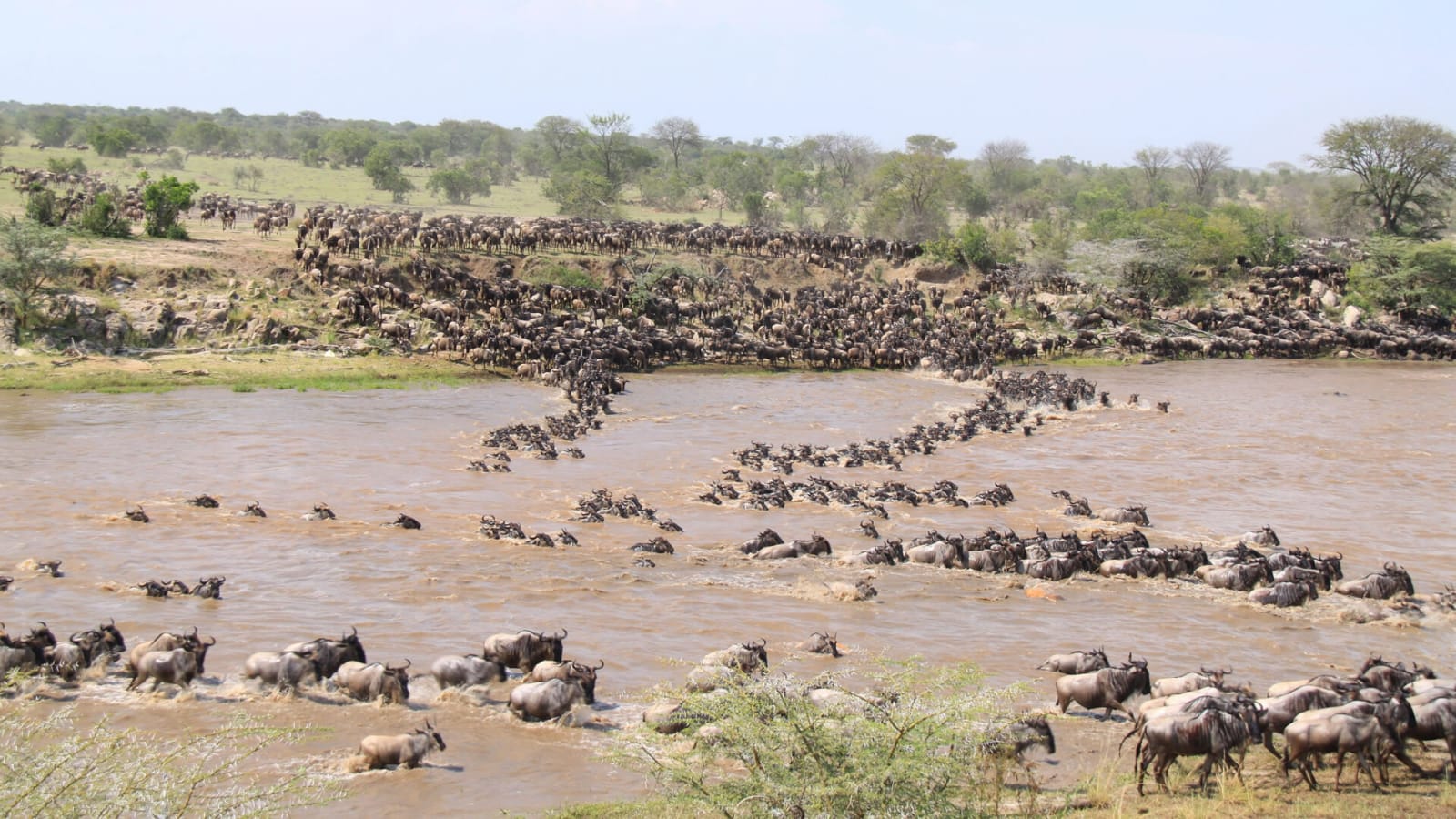
The best time to witness the Great Wildebeest Migration and the dramatic Mara River crossings is between July and October. During these months, hundreds of thousands of wildebeests, zebras, and gazelles migrate northward through the Serengeti in search of fresh grazing lands. The river crossings are particularly spectacular during this period, as the massive herds must navigate crocodile-filled waters while evading predators like lions and hyenas. The exact timing of peak crossings can vary slightly each year depending on rainfall patterns, so consulting with experienced safari operators about current conditions is recommended.
A Serengeti safari offers exceptional opportunities to see Africa's most iconic wildlife. You'll encounter the Big Five—lions, elephants, buffalo, leopards, and rhinoceros—along with massive herds of wildebeests, zebras, and various gazelle species. The park is also home to hyenas, cheetahs, wild dogs, giraffes, antelopes, warthogs, and numerous bird species. The Great Wildebeest Migration, occurring between July and October, brings hundreds of thousands of animals through the northern Serengeti, creating one of nature's most dramatic wildlife spectacles. Each season offers different viewing opportunities, with varying concentrations of animals in different regions of the park.
A 7-day safari is an excellent duration for experiencing Tanzania's diverse wildlife and natural wonders comprehensively. This timeframe allows you to visit multiple destinations—such as the Serengeti National Park, Ngorongoro Crater, and Tarangire National Park—while having sufficient time to maximize wildlife viewing opportunities. With seven days, you can spend multiple days in prime wildlife areas, increasing your chances of witnessing significant events like the Great Wildebeest Migration and Mara River crossings during peak season (July-October). Shorter safaris of 3-4 days are possible but offer less flexibility and fewer viewing opportunities, while longer safaris allow for even deeper exploration.
The Ngorongoro Crater is a UNESCO World Heritage Site and one of Tanzania's most remarkable natural features. It's a massive volcanic caldera that collapsed millions of years ago, creating a self-contained ecosystem. The crater floor hosts a diverse array of wildlife including lions, elephants, buffalo, zebras, wildebeests, and numerous bird species, all thriving in this unique environment. What makes Ngorongoro special is its high concentration of animals in a relatively contained area, offering excellent wildlife viewing opportunities. The crater is also historically significant as home to the Maasai people. Visiting the Ngorongoro Crater as part of a multi-destination safari provides a different landscape and wildlife experience compared to the open plains of the Serengeti.
For a seven-day Tanzanian safari, pack lightweight, neutral-colored clothing suitable for early morning and evening game drives when temperatures are cooler, along with sun protection for midday hours. Essential items include a wide-brimmed hat, high-SPF sunscreen, sunglasses, and insect repellent. Bring binoculars for wildlife viewing, a camera with extra batteries and memory cards, and a good book for downtime. Comfortable walking shoes and closed-toe hiking boots are important for safety and comfort during activities. A light jacket or fleece is useful for cool mornings and evenings. Personal medications, toiletries, and any specific health items should be included. While bottled drinking water is typically provided during safari activities, consider bringing a reusable water bottle. Check weather conditions for your specific travel dates, as temperatures and rainfall vary seasonally.
Visa requirements for Tanzania depend on your nationality. Many countries' citizens can obtain a visa on arrival at Tanzanian airports, while others require advance application through a Tanzanian embassy or consulate. Some nationalities qualify for visa-free entry for short periods. It's essential to check the current visa requirements with the Tanzanian embassy or official government website well before your planned travel dates, as regulations can change. Additionally, ensure your passport is valid for at least six months beyond your intended stay. Some countries also participate in the East African Community travel arrangements, which may affect entry requirements. Starting the visa process early ensures smooth travel preparation and avoids last-minute complications.
Before traveling to Tanzania for a safari, consult with a travel health clinic at least 4-6 weeks before departure. Yellow fever vaccination is often recommended and sometimes required, depending on your origin country. Malaria prophylaxis is typically advised, particularly for the Serengeti and surrounding regions, as malaria-carrying mosquitoes are present. Vaccinations for typhoid, hepatitis A and B, and routine immunizations should be current. Travelers should use insect repellent containing DEET, wear long sleeves and pants during dawn and dusk when mosquitoes are most active, and sleep under mosquito nets if available. Carry a comprehensive travel health insurance policy that covers medical evacuation. Drink only bottled or purified water, and be cautious with food from unfamiliar sources. Consult official health authorities and your healthcare provider for the most current health recommendations for your specific travel plans.
The Great Wildebeest Migration is an annual natural phenomenon involving over one million wildebeests, along with hundreds of thousands of zebras and gazelles, traveling in a massive circular route across the Serengeti and Masai Mara ecosystems. The migration is driven by seasonal rainfall and grass availability. Starting around July, the herds move northward toward the Mara River in the Serengeti's northern region, where they face their greatest challenge—crossing crocodile-infested waters while predators like lions, hyenas, and leopards wait on the banks. The river crossings are particularly dramatic because thousands of animals must wade through deep water and strong currents, and many don't survive. The spectacle is dramatic because it represents one of nature's most raw and intense survival events, combining the sheer scale of animal movement with the primal struggle between prey and predator. By October, the herds begin their southward journey, completing the annual cycle.
A comprehensive safari package typically includes accommodations at safari lodges, all meals throughout your stay, professional English-speaking guides, transportation in a private safari vehicle, park entrance fees, and airport transfers. Most packages also provide bottled drinking water during game drives and special site fees like those for the Ngorongoro Crater. However, several costs usually fall outside the package and are the traveler's responsibility. These typically include international flights, visa fees, travel insurance, personal expenses, alcoholic and soft beverages at lodges, and optional activities beyond the standard itinerary. Tips for guides and lodge staff are also generally not included, though they're customary in East Africa. When booking a safari, clarify exactly what's covered in your package price to avoid unexpected expenses and budget appropriately for exclusions. Reading the detailed inclusions and exclusions list carefully ensures you understand the true cost of your safari experience.
Tanzania is generally considered a safe destination for safari tourism, with well-established wildlife tourism infrastructure and experienced operators. National parks and safari areas are professionally managed with trained guides who prioritize visitor safety. However, like any travel destination, it's important to take standard precautions. Follow your guide's instructions carefully during game drives and activities, as they understand wildlife behavior and safety protocols. Avoid traveling alone in unfamiliar areas, use registered taxis or pre-arranged transfers, and be aware of your surroundings in towns and cities. Check current travel advisories from your government before booking. Purchase comprehensive travel insurance that covers medical emergencies and evacuation. Stick to established tourist routes and reputable operators. The wildlife itself poses no threat when proper safari protocols are followed—guides maintain safe distances from animals. With reasonable precautions and use of established safari operators, most travelers have safe and memorable experiences in Tanzania.
 Elia SafarisArusha, Tanzania5.0(8 reviews)
© 2026 SafariFind. All rights reserved.