8 daysprivate
8-Day Mid-Range Safari & Scenic Tour of Namibia
Highlights
- Game drive
- National Park
Loading SafariFind...
Windhoek - Sossusvlei
Sossusvlei
Meals: Dinner
Sossusvlei & Deadvlei Excursion
Deadvlei
Meals: Breakfast, Dinner
Sossusvlei - Swakopmund
Swakopmund
Meals: Breakfast
Swakopmund
Swakopmund
Meals: Breakfast
Swakopmund - Etosha National Park
Etosha National Park
Meals: Breakfast, Lunch, Dinner
Full-Day Game Drive in Etosha
Etosha National Park
Meals: Breakfast, Lunch, Dinner
Etosha National Park - Windhoek
Windhoek
Meals: Breakfast
Windhoek Departure
Windhoek
Meals: Breakfast
Year Round
Year-round
| Season | Solo traveller | 2 people | 3 – 4 people | 5 – 6 people | 7+ people | Child rate | Single suppl. |
|---|---|---|---|---|---|---|---|
Year Round Year-round | $3,710 | $2,473 | $2,226 | $2,102 | $1,978 | $1,731 | $742 |
Child rate applies to travelers under 12 years. Single supplement applies to solo travelers taking their own room.
Etosha National Park is one of Africa's premier wildlife destinations, home to an incredible diversity of animals. You can expect to see lions, elephants, giraffes, zebras, wildebeest, antelopes, rhinos, and numerous bird species. The park's famous salt pan creates natural gathering points where animals congregate, especially during the dry season, making wildlife viewing particularly rewarding. The abundance and variety of animals you encounter will depend on the season and specific areas explored during your game drives.
The best time for a Namibia safari is during the dry season, typically from May to September. During these months, wildlife congregates around water sources, making animals easier to spot on game drives. Temperatures are mild and comfortable for outdoor activities. However, Namibia can be visited year-round. The wet season (November to March) offers lush landscapes and excellent bird watching, though wildlife viewing can be more challenging as animals disperse across the landscape. Consider your priorities—wildlife viewing favors the dry season, while scenic photography and bird watching can be excellent in the green season.
A minimum of two full days in Etosha National Park is recommended for a meaningful safari experience. This allows time for multiple game drives at different times of day, when wildlife behavior varies. With two days, you'll have a good chance of spotting a diverse range of animals and experiencing the park's different landscapes. Longer stays (three or more days) provide even greater opportunities for wildlife encounters and allow for more relaxed exploration of this vast park, which covers approximately 22,000 square kilometers.
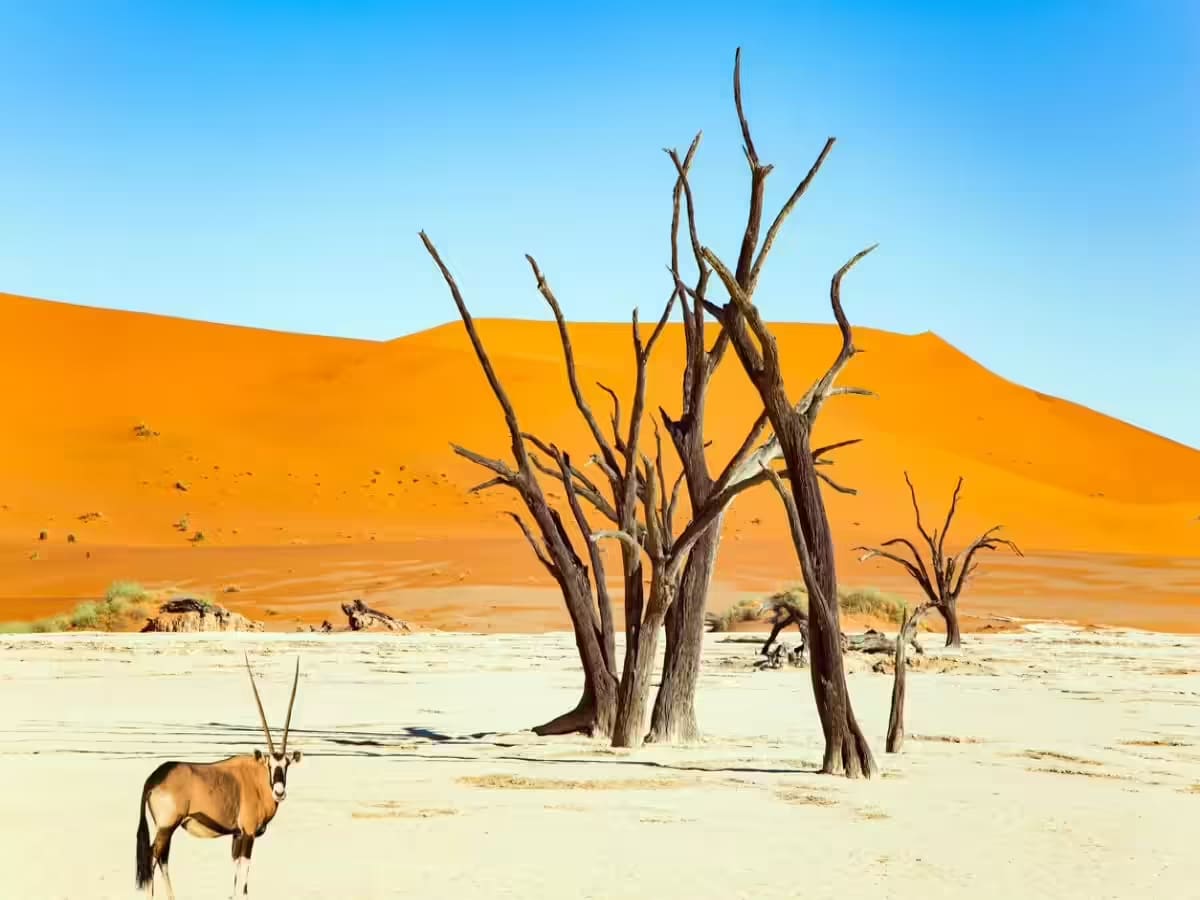
Sossusvlei is a stunning salt and clay pan nestled within the Namib Desert, surrounded by some of the world's highest sand dunes. It's a UNESCO World Heritage Site and one of Namibia's most iconic destinations. The dramatic contrast between the white pan, red-orange dunes, and blue sky creates surreal, otherworldly landscapes perfect for photography. Nearby Deadvlei features ancient, dead camel thorn trees set against towering dunes—a hauntingly beautiful sight. Visiting Sossusvlei offers a unique desert experience that combines adventure (climbing the dunes), natural wonder, and unforgettable photo opportunities.
Pack lightweight, breathable clothing in neutral colors for safari game drives, as bright colors can disturb wildlife. Bring a warm layer for early morning and evening game drives, as temperatures can drop significantly. For desert activities, pack a wide-brimmed hat, high SPF sunscreen, and sunglasses—the sun is intense. Comfortable walking shoes are essential for exploring Sossusvlei's dunes and Swakopmund. Don't forget a camera with extra batteries and memory cards. Bring binoculars for wildlife viewing and a refillable water bottle. If you plan to explore coastal areas, pack a light jacket for ocean breezes. Consider a small daypack for game drives and excursions.
Namibia is generally considered one of Africa's safest countries for tourists. It has a stable political environment, well-developed tourism infrastructure, and a welcoming culture. The main tourist areas, including Windhoek, Swakopmund, Sossusvlei, and Etosha National Park, are well-established and regularly visited by international travelers. As with any destination, standard travel precautions are advisable: avoid displaying valuables, be aware of your surroundings in urban areas, and follow guidance from local guides. Using registered tour operators and staying on designated safari routes ensures a safe and secure experience. Check current travel advisories from your government before departure for the most up-to-date information.
Sossusvlei and Deadvlei are two distinct but nearby attractions in the Namib Desert. Sossusvlei is a salt and clay pan surrounded by towering red-orange sand dunes, often featuring shallow water during the rainy season, creating a striking contrast of colors. Deadvlei, located just beyond Sossusvlei, is a white clay pan dotted with dead camel thorn trees that died centuries ago due to drought. The trees, bleached white by the sun and set against massive dunes, create a haunting, surreal landscape. Both offer spectacular photography opportunities, but Deadvlei's stark, ghostly appearance makes it particularly photogenic, while Sossusvlei offers more varied scenery and the possibility of water reflections.
Yes, a 4x4 vehicle is essential for a Namibia safari, particularly for accessing Etosha National Park and exploring the desert regions around Sossusvlei. Many roads in these areas are unpaved and sandy, requiring high-clearance, four-wheel-drive vehicles for safe navigation. A professional 4x4 safari vehicle provides comfort, safety, and optimal positioning for wildlife viewing and photography. The vehicle also allows access to remote areas where wildlife congregates. Using a properly equipped 4x4 with an experienced driver ensures you can navigate challenging terrain safely while maximizing your safari experience and reaching prime viewing locations.
Climbing the dunes at Sossusvlei typically takes 1 to 3 hours, depending on which dune you choose, your fitness level, and how much time you spend at the top. The most popular dune, often called 'Big Daddy,' is a challenging climb taking approximately 45 minutes to an hour to reach the summit, with descent taking slightly less time. The sand is soft and can be physically demanding, but the panoramic views from the top are spectacular. Many visitors spend additional time photographing and enjoying the landscape. It's best to climb early in the morning or late afternoon to avoid the intense midday heat and to capture the best light for photography. Bring plenty of water and wear sturdy, closed-toe shoes.
Vaccination requirements for Namibia depend on your country of origin and medical history. Yellow fever vaccination is not typically required for entry into Namibia itself, but it may be required if you're traveling from certain African countries. However, it's recommended to consult with a travel health clinic or your doctor at least 4-6 weeks before your trip. Common recommendations include vaccinations for hepatitis A and B, typhoid, and routine immunizations. Malaria prophylaxis may be recommended for certain regions, particularly in the northern parts of Namibia. Travel insurance that covers medical emergencies is strongly advised. Check with your healthcare provider and Namibia's official health requirements for the most current information.
© 2026 SafariFind. All rights reserved.

