 1 / 7
1 / 7 8 daysprivate
8-Day Of Uganda’s Best Wildlife Safari
Highlights
- Witness Mountain Gorillas in their natural habitat
Loading SafariFind...
1 / 7Arrival in Uganda and transfer to your hotel in Entebbe
Entebbe
Meals: Dinner
Transfer to Kibale National Park
Kibale Forest National Park
Meals: Breakfast, Lunch, Dinner
Chimpanzee tracking and Bigodi Swamp walk
Kibale Forest National Park
Meals: Breakfast, Lunch, Dinner
Drive to Queen Elizabeth National Park
Queen Elizabeth National Park
Meals: Breakfast, Lunch, Dinner
Morning Game Drive and Boat cruise safari in Queen Elizabeth National Park
Queen Elizabeth National Park
Meals: Breakfast, Lunch, Dinner
Transfer to Bwindi Impenetrable Rain Forest
Bwindi Impenetrable Forest
Meals: Breakfast, Lunch, Dinner
Gorilla Trekking
Bwindi Impenetrable Forest
Meals: Breakfast, Lunch, Dinner
Transfer back to Entebbe
Entebbe International Airport
Meals: Breakfast
Year Round
Year-round
| Season | 2 people |
|---|---|
Year Round Year-round | $3,920 |
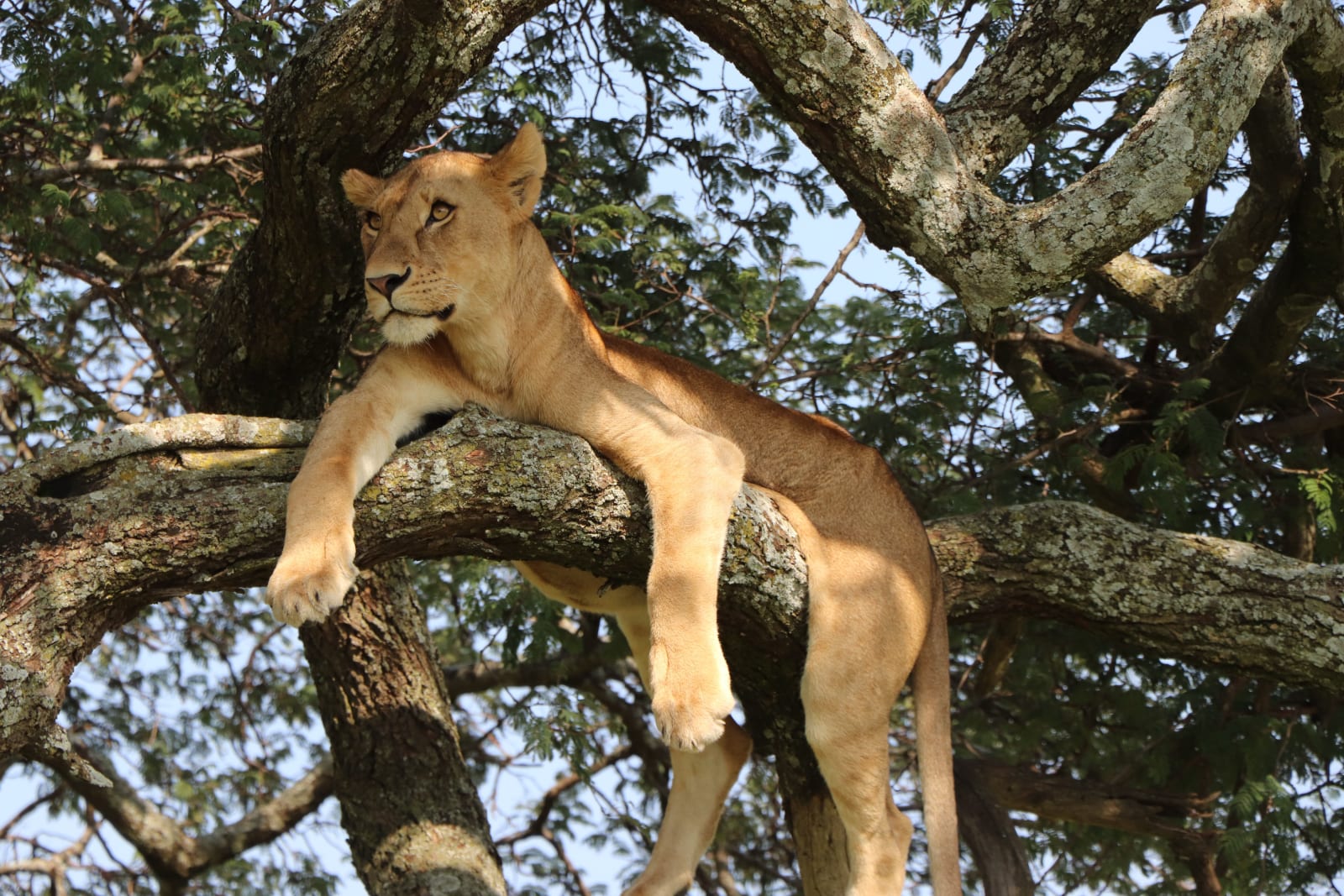
Uganda is one of Africa's most ecologically diverse destinations, offering exceptional wildlife viewing opportunities. You can encounter lions in their natural habitat, often spotted lounging in the branches of ancient fig trees, as well as a remarkable variety of other species across the savanna and rainforest ecosystems. The country is particularly famous for its mountain gorillas in Bwindi Impenetrable National Forest, where you can experience the awe-inspiring encounter of standing face-to-face with a silverback gorilla. Beyond these iconic animals, Uganda's diverse habitats support elephants, buffalo, antelopes, primates, and over 1,000 bird species, making it an ideal destination for comprehensive wildlife observation.
Uganda can be visited year-round, but the best safari experiences generally occur during the dry seasons. The primary dry season runs from June to August, offering excellent game viewing as animals congregate around water sources and vegetation is less dense, making wildlife easier to spot. The secondary dry season from January to February also provides good conditions. However, Uganda's rainforests, including Bwindi where mountain gorillas live, can be visited during the wetter months (March to May and September to November), as the lush environment supports diverse wildlife and the rain typically falls in the afternoons. Consider your priorities: if gorilla trekking is your main goal, any month works, but combine it with savanna wildlife viewing during the dry seasons for optimal experiences.
An 8-day safari is an excellent duration for experiencing Uganda's diverse ecosystems and wildlife comprehensively. This timeframe allows you to explore multiple destinations, including time in the savanna regions and the rainforests, while minimizing travel fatigue. Eight days provides sufficient time for gorilla trekking in Bwindi, which requires a full day including travel and the trek itself, plus additional days for savanna game drives where you can observe lions, elephants, and other wildlife in their natural habitats. Shorter safaris of 3-5 days are possible but limit your ability to experience Uganda's full ecological diversity. Longer trips of 10+ days allow for more in-depth exploration and multiple gorilla trekking attempts if desired.
Pack layers for Uganda's varying climates across different altitudes and ecosystems. Bring lightweight, neutral-colored clothing for game drives (greens and tans help with wildlife viewing), long pants and closed-toe shoes for protection against insects and terrain, and a warm jacket or fleece for early morning game drives and higher elevations near the Rwenzori Mountains. Waterproof gear is essential, including a rain jacket and pack cover, as Uganda experiences regular rainfall. Don't forget sun protection: sunscreen, a wide-brimmed hat, and sunglasses. For gorilla trekking in rainforests, wear sturdy hiking boots with good grip and gaiters to protect against mud and insects. Bring binoculars for wildlife viewing, a camera with extra batteries, and any personal medications. Neutral-colored clothing is recommended over bright colors to avoid disturbing wildlife during game drives.
Uganda is a welcoming and increasingly popular safari destination with a strong tourism infrastructure. Most safari areas are well-established and regularly visited by international tourists. Your safety is enhanced by traveling with professional, English-speaking guides who are trained in wildlife safety protocols and familiar with the terrain. Private 4x4 vehicles provide secure transportation, and accommodations are selected for visitor comfort and security. As with any international travel, it's wise to check current travel advisories from your government before booking, obtain comprehensive travel insurance, and follow your guide's instructions regarding wildlife interactions and safety procedures. The key to a safe safari experience is choosing reputable operators and following established guidelines—Uganda's tourism industry has developed excellent safety standards for visitor protection.
Visa requirements for Uganda depend on your nationality. Most visitors require a visa, which can typically be obtained on arrival at Entebbe International Airport or applied for in advance through the Ugandan embassy or online via the e-visa system. The process is generally straightforward and tourist visas are usually valid for 90 days. However, visa requirements vary significantly by country of origin, so it's essential to check the official Uganda Immigration website or contact your nearest Ugandan embassy well before your travel dates. Additionally, ensure your passport is valid for at least six months beyond your intended departure date. Some nationalities may qualify for visa-free entry or visa-on-arrival schemes, so verify your specific situation early in your travel planning.
A comprehensive Uganda safari package typically includes all essential components for a seamless experience. Most packages cover all national park entrance fees, allowing you unrestricted access to wildlife viewing areas. Accommodation is provided throughout your journey at selected lodges or camps. All meals—breakfast, lunch, and dinner—are included daily, ensuring you're well-nourished for active days. Transportation is via private 4x4 safari vehicles, offering comfort and optimal wildlife viewing angles. You'll have a professional, English-speaking guide accompanying you throughout, providing expert knowledge about wildlife, ecosystems, and cultural insights. Practical inclusions typically feature bottled water during game drives, airport transfers for convenience, and government taxes and VAT. However, packages usually exclude international airfare, travel insurance, visa fees, personal expenses, tips and gratuities, and optional activities, so factor these into your budget planning.
Uganda safari costs vary based on several factors including accommodation quality, season, group size, and specific itinerary. An 8-day safari package typically ranges from mid-range to luxury pricing depending on lodge selections and included experiences. Budget considerations should account for what's included in your package—most comprehensive packages cover park fees, meals, guides, and transportation, which represents significant value. Additional costs to budget separately include international airfare, travel insurance (highly recommended), visa fees, personal expenses, gratuities for guides and staff, and optional activities like additional gorilla trekking permits or cultural visits. Gorilla permits in particular represent a substantial cost but are essential for mountain gorilla encounters. Booking during shoulder seasons (March-May or September-November) may offer better rates than peak seasons. Contact safari operators for detailed quotes based on your specific preferences and travel dates.
Mountain gorilla trekking in Uganda's Bwindi Impenetrable National Forest is one of Africa's most profound wildlife experiences. The experience involves hiking through dense, misty rainforest terrain—sometimes challenging but deeply rewarding—to locate a habituated gorilla family. Once found, you spend an unforgettable hour observing these magnificent creatures in their natural habitat, watching silverback males, mothers with infants, and juveniles as they feed and interact. The trek duration varies from 2 to 8 hours depending on gorilla location, and the forest environment is cool and humid with steep terrain. Physical fitness helps but isn't always essential—guides adjust pace to group abilities. The experience is profoundly moving; standing in the presence of a silverback gorilla creates a soul-stirring connection to wildlife that few experiences match. Permits are required and limited daily, making advance booking essential. The combination of challenging terrain and incredible wildlife encounter makes gorilla trekking a transformative travel experience.
Yes, Uganda's ecological diversity makes it uniquely suited for combining gorilla trekking with traditional savanna safari experiences. An 8-day itinerary provides sufficient time to experience both the ancient, misty rainforests of Bwindi where mountain gorillas live, and the legendary African savanna where you can observe lions lounging in fig trees, elephants, buffalo, and countless other species. This combination is one of Uganda's greatest advantages as a safari destination—you're not limited to a single ecosystem type. The country bridges two entirely different worlds in one journey, allowing you to experience the thunderous presence of a silverback gorilla and the majesty of savanna wildlife within the same trip. This comprehensive approach requires strategic itinerary planning to balance trekking days with game drive days and account for travel between regions, which is why an 8-day safari is an ideal duration for capturing both experiences without excessive rushing.
 Africa Moja SafarisKampala, Uganda
© 2026 SafariFind. All rights reserved.