 1 / 4
1 / 4 8 daysprivate
8-Day Serengeti Wildebeest Migration Safari
Highlights
- Witness the Great Wildebeest Migration
Loading SafariFind...
1 / 4Arrival in Arusha
Tarangire National Park
Meals: Breakfast, Lunch, Dinner
Arusha to Tarangire National Park
Karatu
Meals: Breakfast, Lunch, Dinner
Karatu to Central Serengeti National Park
Serengeti National Park
Meals: Breakfast, Lunch, Dinner
Full Day Game Drive in Central Serengeti
Serengeti National Park
Meals: Breakfast, Lunch, Dinner
Central Serengeti to Northern Serengeti
Serengeti National Park
Meals: Breakfast, Lunch, Dinner
Full Day Wildebeest Migration Safari
Serengeti National Park
Meals: Breakfast, Lunch, Dinner
Northern Serengeti to Ngorongoro Conservation Area
Ngorongoro Crater
Meals: Breakfast, Lunch, Dinner
Ngorongoro Crater & Return to Arusha
Arusha
Meals: Breakfast
Year Round
Year-round
| Season | 2 people |
|---|---|
Year Round Year-round | $4,400 |
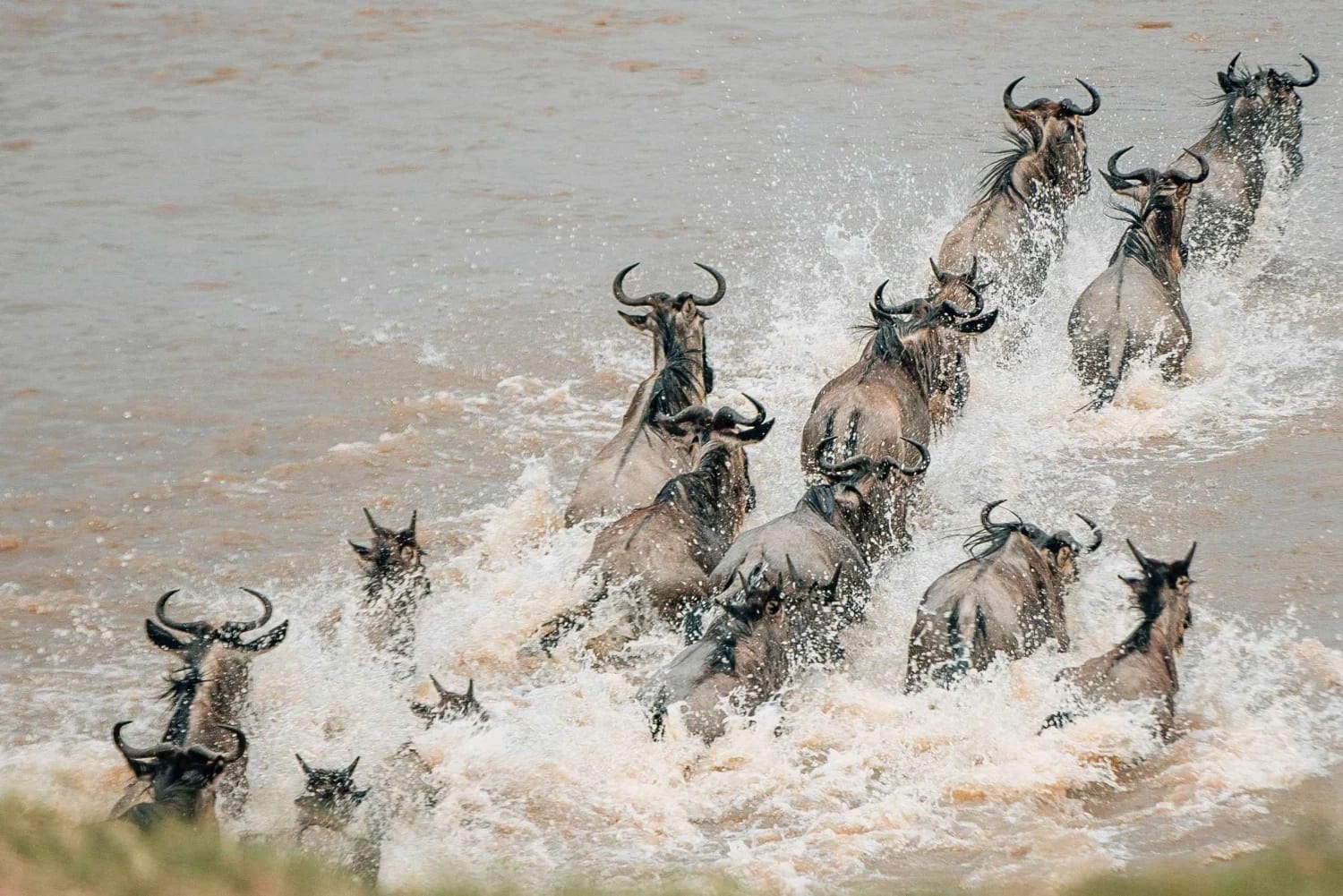
The Great Wildebeest Migration in Serengeti is a year-round phenomenon, but the timing of key events varies seasonally. From December to March, you'll witness the calving season on the southern plains, where hundreds of thousands of wildebeest calves are born. From June to October, the herds move northward, and you may witness dramatic river crossings as they navigate crocodile-infested waters. The exact timing depends on rainfall patterns, so the best month for your visit depends on which stage of the migration you want to experience. Many travelers prefer July to September for the famous river crossings, though this is also peak season.
The Serengeti is one of Africa's most biodiverse ecosystems. During a Serengeti safari, you can expect to see the Big Five — lions, African elephants, African buffalo, leopards, and rhinoceros. Beyond these iconic species, you'll encounter over two million wildebeest, hundreds of thousands of zebras and gazelles, hyenas, cheetahs, giraffes, warthogs, and numerous bird species. The Serengeti's predator-prey dynamics mean you have excellent chances of witnessing hunts and other dramatic wildlife interactions. The specific animals you see will depend on the season and your location within the park during your visit.
Yes, 8 days is an excellent duration for a comprehensive Serengeti safari experience. This timeframe allows you to spend multiple days in Serengeti National Park to maximize your chances of witnessing the Great Wildebeest Migration and other wildlife encounters, while also including visits to other remarkable ecosystems like Ngorongoro Crater and Tarangire National Park. With 8 days, you'll have sufficient time for morning and afternoon game drives, which significantly increases your wildlife viewing opportunities. This duration strikes a good balance between immersion in the safari experience and practical travel considerations.
For a Serengeti safari, pack lightweight, neutral-colored clothing in earth tones (khaki, tan, green, gray) that blend with the landscape and don't attract insects. Bring layers, as mornings and evenings can be cool despite daytime heat. Essential items include a wide-brimmed hat, high-SPF sunscreen, sunglasses, and a good camera with a zoom lens. Comfortable walking shoes and closed-toe hiking boots are important for nature walks. Other necessities include binoculars, a headlamp or flashlight, insect repellent, and any personal medications. Pack a light rain jacket, as the Serengeti can experience unexpected showers. Avoid bright colors and perfumes, which can disturb wildlife. Most lodges have limited laundry facilities, so pack enough clothing for your stay, though some accommodations do offer washing services.
Visa requirements for Tanzania depend on your nationality. Most visitors require a visa, which can typically be obtained on arrival at Kilimanjaro International Airport or obtained in advance from a Tanzanian embassy or online through the e-visa system. The process is generally straightforward, but processing times and requirements vary by country. We recommend checking the official Tanzanian government immigration website or contacting your nearest Tanzanian embassy at least 4-6 weeks before your travel to confirm requirements for your specific nationality. You'll also need a passport valid for at least six months beyond your travel dates. Travel insurance that covers medical evacuation is highly recommended for safari travel.
The cost of a Serengeti safari varies based on several factors, including accommodation quality, season, group size, and specific activities included. Budget safaris may start around $2,000-$3,000 for 8 days, while mid-range options typically range from $3,500-$6,000, and luxury safaris can exceed $8,000-$15,000 or more. Our 8-day package includes park entrance fees, professional guides, private 4x4 vehicles with pop-up roofs, all accommodation, meals, bottled water, and airport transfers. Additional costs to budget for include international flights, visa fees, travel insurance, personal expenses, alcoholic and soft drinks, tips for guides and staff, and any optional activities. Traveling during shoulder seasons (April-May or November) typically offers better value than peak season (June-October).
A comprehensive Serengeti safari package typically includes several key components. Park entrance fees and gate passes allow access to protected areas. Professional English-speaking guides provide expert wildlife knowledge and navigation. Private 4x4 safari vehicles with pop-up roofs offer comfortable viewing and photography opportunities. Accommodation at safari lodges or camps is provided throughout your stay. Meals are included as specified in your itinerary, ensuring you're well-fed during your adventure. Bottled drinking water keeps you hydrated during game drives. Additional inclusions often cover crater service fees and government taxes. Airport transfers provide convenient transportation to and from your accommodation. However, items typically excluded are international flights, visa fees, travel insurance, personal expenses, alcoholic and soft drinks, optional activities, and tips for guides and lodge staff, which should be budgeted separately.
Yes, both Serengeti National Park and Ngorongoro Crater offer excellent opportunities to see the Big Five — lions, African elephants, African buffalo, leopards, and rhinoceros. Serengeti is particularly renowned for its large predator populations, including abundant lions and leopards. The Ngorongoro Crater, a UNESCO World Heritage Site, is one of the best places in Africa to see all five species in a compact area, making it highly efficient for Big Five viewing. Your chances of spotting all five species increase significantly with an 8-day safari that includes both locations and multiple game drives. Early morning and late afternoon drives offer the best wildlife viewing opportunities, as animals are most active during these cooler parts of the day.
The Ngorongoro Crater is the world's largest intact volcanic caldera and one of Africa's most remarkable natural wonders. Located in northern Tanzania, it's a UNESCO World Heritage Site that encompasses a self-contained ecosystem within its 2,000-meter-deep crater walls. The crater floor spans approximately 260 square kilometers and supports an estimated 25,000 large animals, including all of the Big Five, making it one of the highest concentrations of wildlife in Africa. The crater's unique geography creates a natural amphitheater that concentrates wildlife, offering exceptional viewing opportunities. The stunning landscape features diverse habitats — from grasslands to acacia forests to a soda lake — supporting varied wildlife species. A visit to Ngorongoro Crater is essential for any Tanzania safari, as it provides unparalleled wildlife viewing and breathtaking scenery that complements your Serengeti experience.
The drive from Serengeti National Park to Ngorongoro Crater typically takes 4-5 hours, depending on road conditions, your specific starting point within Serengeti, and the route taken. The journey traverses varied terrain, including national park roads that can be rough and require a 4x4 vehicle. This drive is usually incorporated into your safari itinerary as a transfer day, allowing you to experience the Tanzanian landscape and potentially spot wildlife en route. Your safari operator will arrange this transfer as part of your package, and it's an opportunity to break up your time between these two incredible destinations. It's advisable to start early in the morning to maximize daylight and minimize travel fatigue, and your guide can point out interesting features and wildlife along the way.
 Elia SafarisArusha, Tanzania5.0(8 reviews)
© 2026 SafariFind. All rights reserved.