Wildlife Corridors & Habitats in South Africa (2026)
South Africa's wildlife depends on connected habitats, from protected reserves and private conservancies to freshwater, coastal and marine ecosystems. In 2026, habitat fragmentation, infrastructure, human-wildlife conflict, illegal wildlife trade and climate pressures remain major challenges, while corridor planning, restoration and community conservation provide practical solutions.

Quick answer: South Africa's conservation future depends not only on protecting individual parks, but also on keeping the habitats between them connected. Roads, fences, agriculture, urban growth and other infrastructure can fragment wildlife ranges, while community-led conservation, protected areas, habitat restoration and carefully planned corridors can help animals move between feeding, breeding and water sources .
There is no single national "conservation status" for South Africa's habitats: conditions vary by ecosystem, species and landscape. The evidence reviewed for 2026 shows both meaningful conservation action and continuing pressure from habitat loss, fragmentation, illegal wildlife trade, human-wildlife conflict and climate-related change .
Last reviewed July 2026. Conservation data changes — see the cited sources for the latest figures.
Why habitats and wildlife corridors matter in South Africa
Protected areas are essential, but many wide-ranging animals cannot spend their entire lives inside a single reserve. Connectivity allows wildlife to move between suitable habitats and access food, water and mates. It can also reduce the isolation created when reserves are surrounded by farms, settlements, roads, railways or fences .
In South Africa, this issue affects large mammals such as elephants and rhinos, threatened carnivores, amphibians, seabirds and plants. The research identifies Tembe Elephant Park as a South African project involving threatened species and community conservation, while other projects address the western leopard toad in Cape Town, threatened seabirds in Addo Elephant National Park's marine protected area and succulent species affected by illegal trade .
The term wildlife corridor describes a connected route or landscape that enables animals, plants or ecological processes to move between habitat areas. A pinch point is narrower: it is a specific crossing location where animals regularly encounter a road, fence or other barrier. Research from a Southern African conservation landscape warns that concentrating on pinch points without protecting the corridor's full length can create an incomplete form of connectivity planning .
That distinction matters for safari destinations. A safe road crossing may reduce immediate collisions, but it cannot replace the wider habitat that animals need before and after the crossing. Effective conservation therefore combines land-use planning, habitat protection, ecological monitoring, community agreements and infrastructure design .
South Africa's habitat challenge: fragmentation and pressure
South Africa contains a combination of terrestrial, freshwater, coastal and marine habitats. The conservation sources describe these systems as increasingly affected by agricultural expansion, deforestation, urban growth, roads, railways, fences, energy infrastructure and water infrastructure . The result is not simply less habitat: it is habitat divided into smaller or less functional pieces.
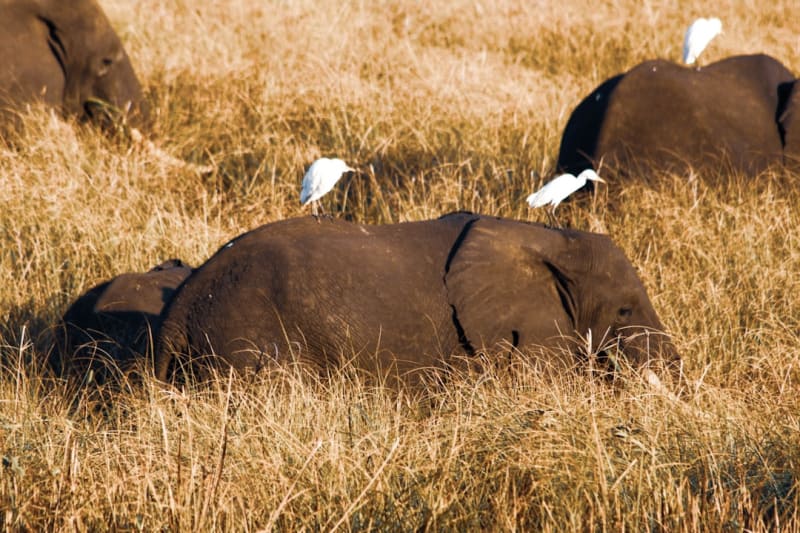
Fragmentation can restrict seasonal movement, separate breeding groups and make it harder for wildlife to reach water or forage across a changing landscape. For elephants, Wild Tomorrow describes loss of wild space as a major regional challenge, with expanding human populations, agriculture and infrastructure encroaching on elephant territories. The organisation also notes that fences can prevent elephants from moving in search of water, food and mates .
Human-wildlife conflict is closely linked to this pressure. When wildlife and people use the same shrinking or interrupted landscape, encounters can become more frequent or more costly for communities. WWF identifies human-wildlife conflict alongside habitat loss, fragmentation and degradation as a major conservation concern in Southern Africa, and highlights community wildlife enterprises and nature-based tourism as potential incentives for conservation .
Key threats to wildlife corridors and habitats
Illegal wildlife trade and poaching
Illegal wildlife trade remains a direct threat to South Africa's wildlife and to the organisations managing reserves. The research does not provide a current national poaching total for 2026, so a responsible overview should not present an unsupported figure. It does, however, document South African projects addressing threatened species, rhino protection, illegal trade in succulent plants and ranger capacity .
Wild Tomorrow works in South Africa to equip and train anti-poaching rangers protecting elephants, rhinos, pangolins and other species. Its described "Wildlife CSI" training is intended to improve the collection of forensic evidence at poaching scenes and strengthen cooperation between rangers, police and prosecutors .
Poaching also affects habitat management indirectly. When conservation budgets are diverted towards emergency security, less capacity may be available for ecological restoration, monitoring, community engagement and long-term corridor planning. The IUCN's review of African conservation projects emphasises that species-focused action can deliver immediate outcomes, but long-term success still depends on healthy and connected ecosystems .
Development, roads, fences and land-use change
Linear infrastructure can split otherwise continuous habitat. WWF specifically identifies roads, railways and fences as features that disrupt essential migration corridors across Southern Africa . Agricultural expansion, urban growth and associated infrastructure add further pressure to remaining habitat .
Corridor conservation therefore involves more than drawing a line on a map. Land-use plans must account for how people live and work, where infrastructure is proposed, which habitats are still functional and where wildlife actually moves. The Southern African corridor research found that conservation organisations often focused on protecting crossing points, while the full corridors received less attention .
Climate and ecological change
Climate change increases the value of connected landscapes because species may need to shift their movements as water availability, vegetation and temperatures change. The research provided for this article does not quantify South Africa's climate-driven habitat losses, so the effect is best stated cautiously: protecting connectivity can preserve options for movement, while fragmented landscapes give wildlife fewer alternatives when local conditions change .
Invasive species are another habitat-management concern. Across 91 African conservation projects assessed by IUCN, projects removed invasive species from more than 7,200 hectares, demonstrating that habitat condition and connectivity require active management rather than protection on paper alone .
What is being done: corridors, restoration and protected areas
Landscape-scale conservation
WWF reports that it is helping establish three Mega Living Landscapes in South Africa, described as more than 34 million acres of connected conservation and working lands . The organisation presents these landscapes as part of a broader effort to connect ecosystems while supporting the global 30x30 biodiversity goal .
Landscape-scale models matter because they recognise that conservation takes place across different land-tenure types. National parks, private reserves, community conservancies, farms and working lands may all contribute to connectivity when agreements, incentives and management standards align. However, connectivity should not be assumed simply because properties are adjacent: the Southern African corridor study shows that planning, governance and local negotiation determine whether a corridor functions in practice .
South African parks and projects
Tembe Elephant Park appears in IUCN's African conservation portfolio through a threatened-species and community-conservation project implemented by Wildlife ACT Fund Trust in South Africa . Somkhanda, a South African community-linked conservancy, is also documented as using wildlife conservation, monitoring teams, field rangers and habitat management as part of its operating model . These examples illustrate the connection between habitat protection, local employment, threatened species and tourism value, while also showing that conservation outcomes depend on long-term financing and sound governance .
In Cape Town, Friends of Tokai Park worked on active restoration of fragmented habitat for the Endangered western leopard toad . The project demonstrates that corridor thinking is not limited to elephants or large reserves: restoring small, fragmented urban or peri-urban habitats can benefit species whose movement depends on local patches and wetland-linked landscapes.
Marine and coastal connectivity also matter. The IUCN portfolio records work to continue monitoring and appropriate management of threatened seabirds in the Addo Elephant National Park marine protected area . The conservation landscape is therefore broader than the classic terrestrial safari image: rivers, wetlands, coastlines and offshore habitats are part of South Africa's biodiversity infrastructure.
Restoration and evidence-led management
IUCN's 2026 assessment reviewed 91 conservation projects across Africa. Collectively, the projects restored nearly 989,400 hectares of habitat, removed invasive species from more than 7,200 hectares and improved management across 39 million hectares . These are portfolio-wide African results, not South African totals, and should not be presented as national South African achievements.
The wider lesson is relevant to South Africa: restoration must be measured, targeted and maintained. Monitoring vegetation, wildlife movement, road crossings, invasive species and community outcomes helps managers decide whether a corridor is functioning rather than merely designated .
Communities and tourism's role
Corridors pass through lived-in landscapes. Conservation is more durable when communities have a meaningful role in decisions and receive fair benefits from protecting habitat. WWF identifies community management, wildlife-based enterprises and nature-based tourism as mechanisms that can support rural economies and create incentives for conservation .
Somkhanda provides a South African example in the research: conservation and wildlife utilisation are linked with employment for monitoring teams and field rangers, while threatened species can increase the reserve's appeal to visitors and investors . This does not mean tourism automatically produces conservation benefits. Revenue-sharing, transparent governance, responsible land management and accountability are necessary if local people are to support corridors over the long term .
Travellers who are comparing a South Africa safari cost in 2026 should ask what is included in the price and where conservation or community fees go. SafariFind travellers can book conservation-supporting safaris, but the strongest choice is an operator or lodge that can explain its local partnerships, employment practices and conservation contributions clearly.
For visitors researching a how safari tourism funds conservation in South Africa guide, the important question is not simply whether a property says it is "eco-friendly". Ask for specific information about habitat restoration, wildlife monitoring, local procurement, ranger support, community benefit-sharing and independent reporting.
Results and setbacks: an honest 2026 picture
| Area | Evidence of progress | Remaining challenge |
|---|---|---|
| Habitat restoration | IUCN's African portfolio reports nearly 989,400 hectares restored and more than 7,200 hectares cleared of invasive species . | These are Africa-wide figures, not South African totals; restoration must remain connected and maintained . |
| Landscape connectivity | WWF describes three planned South African Mega Living Landscapes covering more than 34 million acres of connected conservation and working lands . | Roads, railways, fences, agriculture and development continue to fragment habitat . |
| Species protection | South African projects address elephants, rhinos, pangolins, the western leopard toad, succulent plants and threatened seabirds . | Illegal wildlife trade, habitat encroachment and limited conservation resources remain ongoing pressures . |
| Community conservation | Somkhanda links threatened species, habitat management, ranger employment and local conservation activity . | Community conservation requires durable financing, clear rights, monitoring and fair benefits . |
The central setback is fragmentation between policy ambition and implementation. A corridor can appear on a plan while day-to-day management concentrates only on the most visible crossing locations. Conservation organisations, infrastructure planners, landowners and communities must therefore coordinate across the whole route, not only at a road or fence pinch point .
How travellers can help responsibly
- Choose lodges, reserves and operators that explain how visitor revenue supports conservation and local communities, rather than relying on vague sustainability claims .
- Ask whether the property contributes to habitat restoration, wildlife monitoring, ranger support or community-led conservation.
- Respect guide instructions, remain inside designated areas and never pressure guides to approach animals or leave established routes.
- Do not buy wildlife products or souvenirs made from protected species. Illegal wildlife trade is a documented concern for South African conservation projects .
- Support conservation beyond the flagship animals. Wetlands, amphibian habitat, coastal ecosystems, seabirds and native plants are all part of a connected conservation landscape .
- Consider a locally owned or community-linked safari business where the benefit pathway is transparent and verifiable .
For practical trip planning, a guide to affordable safari packages to South Africa from the United States can help compare trip styles without treating the lowest price as the only measure of value. Responsible travel is ultimately about choosing experiences that support well-managed landscapes and the people who live alongside them.
Conclusion
South Africa's wildlife corridors are not just routes for elephants or other large mammals. They are part of a wider system linking reserves, farms, conservancies, wetlands, coastlines and communities. The strongest conservation approach combines protected areas with habitat restoration, evidence-led monitoring, wildlife-safe infrastructure, ranger support and fair community participation .
Progress is visible in landscape initiatives, restoration work and targeted projects at places such as Tembe Elephant Park, Somkhanda, Tokai Park and Addo's marine protected area. Yet the continuing pressure from fragmentation, illegal wildlife trade and human-wildlife conflict means connectivity must be protected as a long-term process, not treated as a completed mapping exercise .
Frequently Asked Questions
What is the current conservation status of wildlife corridors in South Africa in 2026?
South Africa has active corridor, restoration and landscape-scale conservation initiatives, but corridors remain under pressure from habitat fragmentation, roads, railways, fences, agriculture, development and human-wildlife conflict .
Why are wildlife corridors important in South Africa?
Corridors help wildlife move between habitats to find food, water and mates, and can reduce the isolation caused by fragmented reserves and infrastructure .
What are the biggest threats to South Africa's wildlife habitats?
The main threats identified in the research are habitat loss, fragmentation and degradation; agricultural and urban expansion; roads, railways and fences; illegal wildlife trade; human-wildlife conflict; and pressure on freshwater and other ecosystems .
Which South African conservation projects support habitats and corridors?
Examples in the research include WWF's three South African Mega Living Landscapes, threatened-species and community conservation work at Tembe Elephant Park, conservation activity at Somkhanda, western leopard toad habitat restoration at Tokai Park and seabird monitoring in Addo Elephant National Park's marine protected area .
How does tourism help wildlife conservation in South Africa?
Nature-based tourism can support rural economies and create incentives for communities to conserve wildlife, while safari reserves may use tourism value to support habitat management, monitoring and ranger employment . Benefits depend on transparent governance and fair local participation.
Can a road crossing solve a wildlife corridor problem?
Not by itself. A road crossing may protect an important pinch point, but research from Southern Africa warns that focusing only on crossing points can leave the wider corridor unprotected .
What can safari travellers do to support conservation?
Travellers can choose operators and lodges that explain their conservation and community partnerships, avoid wildlife products, follow guide instructions and ask how visitor revenue supports habitat, rangers and local people .
Are South Africa's conservation figures the same as Africa-wide figures?
No. The IUCN figures of nearly 989,400 hectares restored, more than 7,200 hectares cleared of invasive species and 39 million hectares under improved management apply to 91 projects across Africa, not to South Africa alone .
Does habitat conservation only benefit elephants and rhinos?
No. The South African projects in the research also address pangolins, the western leopard toad, succulent plants, threatened seabirds and broader ecosystem management .
Sources
- What works in conservation? New study identifies the approaches delivering the strongest results for Africa's wildlife
- Wildlife corridors in a Southern African conservation landscape: the political ecology of multispecies mobilities along the arteries of anthropogenic conservation(official)
- Southern Africa | WWF
- Conservation Messages for Elephants
- Tackling Emerging Conservation Threats in Africa: African Wildlife Initiative Rapid Action Grants 2019–2024
- IUCN SOS Projects
- African Conservancies Volume: Towards Best Practices
Related to
Ready to start your safari adventure?
Explore curated safari packages and find your perfect African adventure with verified operators.